Les bâtisseurs de la paix du nord du Kenya : modèle qui s'étend aux autres nations africaines
Les bâtisseurs de la paix du nord du Kenya : modèle qui s'étend aux autres nations africaines
EurekAlert || Centre Shalom pour le règlement des conflits et la réconciliation || 02 juillet 2017
Fondé à la suite de la violence nationale post-électorale de 2007-08, le Centre Shalom du Kenya est le pionnier d'une formule de prévention des conflits entre groupes rivaux.
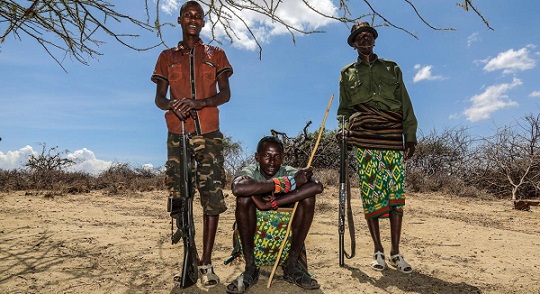
Un prêtre catholique irlandais et ses collègues du Shalom Centre travaillent dans des régions du nord du Kenya où les fusils d'assaut sont aussi courants dans les foyers que les casseroles.
L'anarchie est répandue dans les régions isolées du Kenya limitrophes de l'Ouganda, du Soudan du Sud, de l'Éthiopie et de la Somalie, et les biens familiaux comprennent, en moyenne, 1,6 AK-47, l'arme de choix également des bandes organisées de rongeurs de bétail.
Entre-temps, de faibles institutions, des frontières poreuses et des changements climatiques se combinent pour rendre les conditions plus dures, favorisant une concurrence historique parfois violente sur des ressources limitées entre les 11 communautés ethniques du nord du Kenya avec lesquelles le Centre travaille.
Plus récemment, les conflits sur les positions officielles et les nouvelles frontières administratives entraînées par la politique sont devenus monnaie courante. Préoccupation immédiate des artisans de la paix : les élections générales du 8 août au Kenya. En 2007-2008, la violence postélectorale, alimentée par les combats politiques, les représailles et les luttes contre le pouvoir, a fait environ 1 300 morts, 60 000 mutilés et 600 000 déplacés.
Le Shalom Center for Conflict Resolution and Reconciliation, fondé par le P. Patrick Devine en 2009, qui travaille aussi bien dans les bidonvilles de Nairobi, a cultivé une approche unique de la résolution des conflits, son succès reconnu et célébré avec une foule de prix internationaux.
Et le modèle s'étend à d'autres parties de l'Afrique, à commencer par la Côte d'Ivoire, la Tanzanie et la République centrafricaine, avec d'autres projets de création de centres en Éthiopie, au Soudan du Sud, au Nigéria et en République démocratique du Congo.
Le succès du modèle repose sur une vaste recherche sur les domaines de plainte et les questions qui provoquent des conflits, puis sur une collaboration avec les principaux écheveaux d'opinion communautaires. — aînés, femmes, jeunes et chefs influents — de parvenir à une compréhension commune de l'histoire et de la définition actuelle d'une source de conflit, tout en renforçant la confiance et la coopération pour trouver des solutions.
Par le biais d'ateliers, Shalom crée un héritage de règlement des conflits, formant à ce jour plus de 9 600 dirigeants communautaires en tant que artisans de la paix.
Les stratégies comprennent également le développement humain durable dans les collectivités en conflit par le biais de projets. La construction d'écoles interethniques et interreligieuses à énergie solaire, de centres médicaux et de projets relatifs à l'eau a donné des résultats durables.
La philosophie du P. Devine, un vétéran de 29 ans du ministère africain : Les conflits sont créés par des besoins humains non satisfaits et l'incapacité des institutions faibles à aider les gens à concrétiser leur potentiel. L'objectif de la coexistence pacifique de Shalom est simple : « aider les gens à devenir les architectes de leur propre avenir ».
La méthodologie basée sur la base de Shalom, dit-il, englobe la prévention et la transformation — « se plonger profondément dans les facteurs sociaux, économiques, historiques, culturels et religieux qui contribuent aux comportements extrémistes qui causent des destructions et des traumatismes importants aux individus et aux communautés. La conjecture et la spéculation ne sont pas une base pour l'élaboration des politiques."
Les conflits dans la région peuvent être liés à plusieurs causes principales : la rareté et la mauvaise gestion des ressources environnementales de base, l'insécurité des infrastructures, la faiblesse des institutions et l'économie politique de la gouvernance, les terres tribales historiques et les conflits culturels, qui contribuent tous à une prolifération inutile des armes légères illégales.
« Chaque conflit a un souvenir », dit le P. Devine, honoré en 2013 par le Prix international de l'entraide, et récemment nommé pour le prestigieux Prix international de la paix Tipperary en Irlande. « Lorsque les causes des conflits sont non seulement identifiées, mais également acceptées par les parties concernées, les techniques de consolidation de la paix permettent d'envisager un avenir constructif. »
Le personnel international de recherche et de terrain du Centre Shalom de Nairobi est expert en théorie et en pratique de la gestion des conflits. Tous ont au moins un niveau de maîtrise. « Et je n'ai jamais rencontré un groupe avec la persévérance, l'engagement et la constance du personnel de Shalom », dit le père Devine.
Le but n'est pas ce qu'il appelle une « paix négative » ou simplement une fin de combat, mais plutôt une « paix positive », où les deux parties dans un conflit voient les avantages de protéger les autres.
"Il y a plus qu'assez dans l'environnement pour que tout le monde ait besoin," dit-il, "mais pas assez pour que tout le monde avide."
Le P. Devine explique pourquoi il a fondé Shalom : « Je ne voulais pas passer encore 25 ans à faire face aux symptômes du conflit et de la pauvreté, ni à mettre de l'argent dans un tamis sans résultats substantiels endurables. »
« Notre centre aide les habitants de cette région à sortir des courants de conflit en cours, un environnement dans lequel les gens sont constamment tués, mutilés et déplacés, empêchant les valeurs sociales et religieuses, telles que la vérité, la justice, la paix, la miséricorde et la réconciliation, de prendre racine. Le développement ne peut pas non plus être soutenu si les écoles, les hôpitaux, les programmes et les centres religieux sont régulièrement rendus inopérants en raison de conflits.
Le P. Devine souligne le caractère non sectaire du travail du centre. « Shalom ne devrait appartenir à aucune tradition religieuse », dit-il. "Si nous pouvons instaurer la paix dans le monde, nous pouvons tous trouver notre chemin vers Dieu."
Lors d'une réunion de l'UE qui s'est tenue en mai à Bruxelles pour examiner la situation humanitaire en Afrique, au Yémen et en Syrie, Joe McHugh, ministre d'État irlandais chargé de la diaspora et du développement outre-mer, a noté l'impossibilité d'un développement durable sans paix.
Il a souligné Shalom's « grand travail » et a salué le centre pour faire des progrès dans « la réconciliation des conflits interethniques où, pour la première fois dans une région particulière même avec la sécheresse et des défis massifs, la paix tient ».
« S'il y a des exemples qui fonctionnent, nous devrions les examiner et les soutenir.
Laura Basell, professeure à l'Université Queen's à Belfast et archéologue en Afrique depuis 20 ans, loue Shalom's, une équipe internationale diversifiée et hautement qualifiée.
« Ce qui m'impressionne particulièrement, c'est le fondement théorique de Shalom, axé sur l'éducation, l'autonomisation et le dépassement des frontières ethniques et religieuses afin de s'attaquer aux causes profondes des conflits », dit-elle.
Le révérend Devine a démontré que Shalom est une institution qui parle non seulement par l'articulation verbale de ses principes directeurs, mais surtout par ses actes. Bien qu'il reste beaucoup à faire, leur travail fait clairement la différence entre les individus et les collectivités entières, une réalisation merveilleuse.
Le Dr Michael Comerford, directeur du conseil d'administration de Shalom au Soudan du Sud :
"Depuis le début, j'ai été frappé par la méthodologie du Centre Shalom pour résoudre les conflits et promouvoir la paix, qui a évité des solutions rapides aux problèmes qui existaient depuis des années, sinon des générations. Il y avait quelque chose à propos de « prendre du temps pour travailler avec les gens » qui m'a semblé nouveau. L'approche consistait à travailler directement avec les communautés locales et leurs dirigeants, en prenant le temps d'établir des relations entre les communautés, en prenant le temps de construire la paix.
Le Shalom Centre for Conflict Resolution and Reconciliation est soutenu par des organisations partenaires et un réseau de donateurs visionnaires, principalement des États-Unis, du Royaume-Uni et de l'Irlande.
Avec un budget inférieur à $1M US par an et des frais généraux faibles (7%), Shalom met à profit les dons de ses partisans pour maximiser son travail sur le terrain dans les zones tribales, en particulier dans les terrains semi-arides, et dans les plus grands bidonvilles des centres urbains d'Afrique de l'Est.
Le Centre se concentre sur la cause profonde de la violence dans les terres tribales d'Afrique orientale. Il a été créé en 2009 à la suite de la persistance de la violence et de la dislocation généralisées dans le nord du Kenya, et à la suite des élections contestées au Kenya. Shalom a eu un impact majeur sur les initiatives de paix dans ce domaine stratégique vital de l'Afrique.
Le travail du Centre est strictement non sectaire et étroitement aligné avec les organisations de la société civile. Le P. Patrick Devine est le directeur exécutif de l'organisation, dirigeant une équipe internationale d'experts en résolution de conflits de diverses origines et disciplines religieuses qui sont basés au Kenya et dans les pays voisins.
Approche de Shalom pour la consolidation de la paix :
Offrir une formation de qualité en gestion des conflits aux communautés locales.
Mener des recherches auprès des communautés locales sur les causes de la violence.
Collaborer avec les dirigeants locaux et les influenceurs d'opinion pour s'assurer qu'ils font partie de la solution à long terme pour prévenir les conflits; les engager dans des ateliers de résolution de problèmes.
Promouvoir la construction et l'élaboration de projets qui profitent à de nombreux groupes dans une collectivité, y compris ceux qui sont de l'autre côté d'un conflit.
Mener une éducation pour la paix dans les écoles primaires et secondaires et avec des groupes d'opinion influents dans les environnements de conflit, afin de délégitimer l'utilisation de la force pour résoudre les conflits.
Shalom bénéficie de protocoles d'entente avec les gouvernements de l'Afrique de l'Est qui composent l'Autorité intergouvernementale pour le développement (IGAD). Le Centre collabore également avec des collèges et universités internationaux et régionaux dans le cadre de cours sur la consolidation de la paix, ainsi qu ' avec des associations et des conseils religieux en Afrique.
Shalom met ses conclusions à la disposition des partenaires, des gouvernements concernés, des représentants ethniques, des Nations Unies et des organisations régionales.
Des interventions de haut niveau aident à mieux faire connaître ce modèle réussi de développement de la paix afin qu'il puisse être mis en œuvre dans d'autres environnements de conflit. L'an dernier, le père Patrick a donné un cours à la Harvard Law School et, en janvier, il a fait un exposé à un groupe de diplomates de Washington, d'universitaires et de praticiens de la paix sur la prévention de la radicalisation et de l'extrémisme.
Source: EurekAlert...