7 organisations américaines exhortent le gouvernement à accorder la priorité à la liberté religieuse et à la persécution des minorités religieuses au Soudan
7 organisations américaines exhortent le gouvernement à accorder la priorité à la liberté religieuse et à la persécution des minorités religieuses au Soudan
Assez de projet || Par assez d'équipe || 29 juin 2017
Dans un lettre conjointe, sept organisations américaines ont exhorté le secrétaire d'État Rex Tillerson à examiner les questions relatives à la liberté religieuse et à la persécution des minorités religieuses au Soudan dans le cadre de tout examen stratégique relatif à la politique américaine.
Les signataires, qui comprennent des groupes religieux et des groupes de défense des droits de l'homme, mettent en garde contre la discrimination, la détention, la violence et la destruction des églises par le régime de Khartoum. Ceux qui vivent dans des zones de conflit comme le Kordofan méridional et le Nil Bleu sont particulièrement vulnérables aux persécutions religieuses, qui sert de mécanisme pour diviser les communautés et exercer le contrôle de l'État, avertissent les groupes.
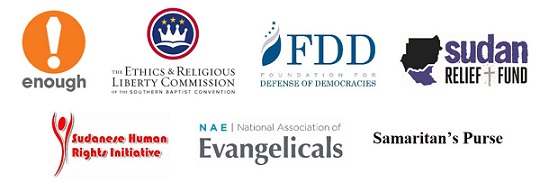
Les signataires sont les suivants : Projet suffisant; Commission de l ' éthique et de la liberté religieuse de la Convention baptiste du Sud; Fondation pour la défense des démocraties; Association nationale des évangéliques; Samaritans Purse; Fonds soudanais de secours; et Initiative soudanaise pour les droits de l ' homme.
Lire la lettre complète ci-dessous
29 juin 2017
L'honorable Rex Wayne Tillerson
Secrétaire d'État
Département d'État américain
2201, rue C NW
Washington, DC 20520
Cher Secrétaire Tillerson,
Étant donné que le Département d'État s'attache actuellement à analyser les actions du Gouvernement soudanais et l'avenir de la politique américaine, nous vous invitons à examiner les questions relatives à la liberté religieuse et à la persécution des minorités religieuses au Soudan dans le cadre de tout examen stratégique relatif à la politique américaine.
Une minorité importante de Soudanais ne suit pas l'école d'Islam approuvée par l'État. Ce groupe comprend les musulmans chiites, les musulmans quarans, diverses confessions chrétiennes et les adeptes des religions traditionnelles dans les districts du mont Nouba, à Kordofan, et dans les parties les plus méridionales du Nil Bleu. Soudan Les lois discriminatoires restreignent les libertés des groupes minoritaires et les privent de leurs droits constitutionnels.
La Constitution soudanaise garantit la liberté de culte et d'établissement et d'entretien des lieux de culte. Toutefois, la réalité est que les membres des groupes religieux et ethniques minoritaires sont victimes de discrimination et de harcèlement. En particulier, ceux qui vivent dans des zones de conflit principalement au Kordofan méridional et au Nil Bleu sont particulièrement vulnérables à la discrimination fondée sur la religion en tant que mécanisme de fragmentation entre les groupes et exercent ainsi le contrôle de l ' État.
Le Soudan a été désigné pays particulièrement préoccupant par le département d'État américain depuis 1999, la Commission américaine sur la liberté religieuse internationale recommandant que le Soudan reste sur la liste dans son examen de 2016. Cette question critique de la liberté religieuse doit être abordée dans la politique des États-Unis, et nous exhortons le Département d ' État à prendre conscience de cette question en ce qui concerne ses rapports actuels et à créer un nouvel engagement avec le Gouvernement soudanais axé sur les questions de paix et de droits de l ' homme, qui traite pleinement de la conduite du Gouvernement soudanais en ce qui concerne la liberté religieuse et la persécution des minorités religieuses.
Nous avons mis en lumière un certain nombre de domaines de préoccupation liés à la liberté religieuse et à la persécution, ainsi que les mesures que le Gouvernement soudanais doit prendre :
Liberté de culte
En février 2017, le gouvernement soudanais a publié un décret administratif pour la démolition ou la saisie de 27 églises dans l'État de Khartoum. Le décret était justifié par des «irrégularités de construction». Cependant, il suit une tendance à la destruction par l'État des lieux de culte chrétiens et au harcèlement des chefs religieux. Une affaire conjointe a été introduite par les églises qui devaient être démolies, mais la démolition des églises a commencé avant même que le verdict ait été rendu officiellement et un recours a pu être formé.
Le 4 avril 2017, un ancien de l'église, M. Yonan Abdullah, a été tué après avoir été poignardé lors d'une attaque contre l'école de l'Église évangélique soudanaise, une des églises identifiées pour être démolies. Des membres de la congrégation avaient organisé une réunion pacifique pour protester contre les tentatives d'expulsion, à la suite d'un raid antérieur où des membres de la police avaient battu la congrégation avec des conduites d'eau et arrêté 26 personnes.
Beaucoup des églises citées pour la démolition dans le décret sont bien établies et sont en service depuis jusqu'à 30 ans. Il n'est pas possible de remplacer les églises démolies depuis juillet 2014, le Ministre soudanais de l'orientation religieuse et des dotations a annoncé que le gouvernement ne délivrerait plus de permis pour la construction de nouvelles églises, déclarant que les églises existantes étaient suffisantes pour la population chrétienne vivant au Soudan après la sécession du Soudan du Sud en 2011. Comme il est également illégal de se réunir en public sans l'autorisation du gouvernement, ces restrictions ont pour effet d'empêcher les chrétiens soudanais de se réunir pour adorer.
Apostasie
L ' article 126 du Code pénal soudanais stipule que tout musulman qui déclare publiquement qu ' il adopte une religion autre que l ' islam est coupable d ' apostasie, crime passible de la peine de mort. En 2014, Mériam Ibrahim a été accusée d'apostasie et condamnée à mort en pendaison pour avoir refusé de renoncer à sa foi chrétienne. Mme Ibrahim n ' a été libérée que sous une forte pression internationale, après avoir donné naissance en prison sans avoir accès à un traitement médical approprié.
Même après tant d'attention internationale sur cette affaire, les autorités soudanaises ont continué à accuser des individus d'apostasie, l'utilisant souvent comme moyen d'intimidation et de contrôle. Par exemple, Mohamed Salih, un militant politique laïque, a demandé à l'état civil de retirer sa religion déclarée de ses papiers d'identité. Le 8 mai 2017, M. Salih a été arrêté pour apostasie, passible d'une peine de mort. Il a été détenu pendant trois jours et, après une large couverture de son arrestation au Soudan, il a été déclaré mentalement inapte et libéré, décision qui a été prise sans évaluation complète et indépendante de la santé.
Malgré les recommandations répétées des membres de la communauté internationale en faveur de l'abolition de la loi sur l'apostasie, en février 2015, le Parlement soudanais a élargi la définition de l'apostasie en vertu de l'article 126. Une accusation d'apostasie peut maintenant être portée contre des musulmans dont les croyances et les pratiques ne sont pas conformes à l'interprétation de l'islam par le gouvernement.
Détention et harcèlement
Les personnes qui ont critiqué la destruction des lieux de culte par le gouvernement ont été harcelées. Par exemple, le chef du Conseil des Églises du Soudan, le révérend Moubarak Hamad, a appelé les autorités soudanaises à reconsidérer leur décision de démolir les églises lors d'une conférence de presse le 11 février 2017. Par la suite, il a été convoqué quotidiennement aux bureaux du Service national de renseignement et de sécurité (SNIS) de 8 heures à 21 heures jusqu'à la levée de l'ordonnance le 26 février 2017. Le révérend Hamad a été ordonné de ne pas parler en public des démolitions d'églises ou de l'emprisonnement des chefs d'église sans autorisation.
Les arrestations et les détentions forcées sont souvent utilisées pour faire taire les critiques du gouvernement soudanais concernant le traitement réservé aux groupes religieux minoritaires. En janvier 2017, Hydier Alsfai, Secrétaire Général du Parti Républicain, et sa femme Huda Kambal, Chef du Comité des Femmes du Parti Républicain, ont reçu l'ordre de se présenter quotidiennement au NISS, où ils ont été interrogés jusqu'à 11 heures sur leurs croyances et affiliations religieuses au Mouvement Républicain – un groupe religieux interdit. Leur détention a coïncidé avec l'anniversaire du fondateur du mouvement Mohammed Taha, condamné à mort par pendaison et exécuté pour apostasie le 18 janvier 1985. Les membres du Mouvement républicain ont historiquement commémoré cette date par des protestations pacifiques, mais ils sont néanmoins victimes de harcèlement et de représailles juridiques chaque année.
Charitable and humanitarian institutions with religious affiliations
The NGO Act controls and restricts NGO activity resulting in excessive executive control over the work of NGOs. All funding must be approved by the Humanitarian Aid Commission (HAC) and foreign funding must be approved by the Minister of Humanitarian Affairs. This constitutes an unreasonable interference in the activities of religiously affiliated NGOs and donors by the Executive. It is also practically unworkable.
While using legal restrictions to stifle charitable organization that are not affiliated with the version of Islam endorsed by the regime, the government goes to exceptional length to grant special privileges and protections to charitable organizations that are affiliated with the ruling Islamist movement. The Islamic Daawa Organization Act (1990) allows the Islamic Daawa Organization immunities and privileges which are not granted to other non-Muslim bodies, including preventing anyone from entering its headquarters unless they have previously obtained written permission from the organization’s executive director or his designee. In addition, the organization’s buildings and real estate are not subject to nationalization, seizure or search, except with its consent and the organization’s archives, correspondence, and parcels are immune from being searched, opened or confiscated except with the permission of the organization.
Due process
Defendants in cases related to freedom of religion are usually tried by public order courts where due process is not adhered to, including the right to a lawyer and a fair trial. These courts do not meet Sudanese or international fair trial standards. Defendants are often tried immediately or within a few days of being arrested. Judges issue summary rulings and defendants are often flogged on the spot and are frequently denied the right to appeal the decision. Defendants have limited access to defense counsel. In many cases contact with friends or relatives is prevented. Judges also do not inform the accused about the appeals process.
Moving forward
International pressure can be successfully deployed to address religious freedom and persecution in Sudan. In March 2017, a European Union envoy for freedom of religion and belief visited Sudan. During this time, the envoy met with Petr Jezek, a Czech Priest who had recently been released from prison following a presidential pardon. Rev. Jezek had been arrested along with Rev. Hasan Abd Al-Rahim and Mr Abd Al-Mawla in December 2015 and January 2016. They were convicted on charges of ‘inciting hatred between sects’ and ‘propagating false news’, after they provided funds for medical treatment to a Darfuri student who had been seriously injured during student protests in 2013. During its visit, the European envoy joined international calls for the release of Rev. Hasan Abd Al-Rahim and Mr. Abd Al-Mawla, and both were subsequently pardoned in May 2017.
A new policy track between the U.S. and Sudan should be created related to peace and human rights that could help ensure that fundamental rights are being addressed. Targeted network sanctions, focused on those officials most responsible for religious discrimination plus their businesses and collaborators, should be deployed in support of this track. Furthermore, no decision should be reached on permanently lifting sanctions on Sudan until the Sudan government takes the following actions:
Amend Sudan’s laws, including the Public Order Law, Personal Status Law and Criminal Law, so that they comply with Article 27 a, b and c of the Constitution, and with Sudan’s international human rights obligations.
Repeal Article 126 of the Sudanese Criminal Law, on apostasy, to bring it in line with international law regarding the freedom to change one’s religion.
Guarantee freedom of association, freedom of assembly and freedom of expression for all Sudanese citizens and residents, and to take measures to actively protect those rights for minority groups, in accordance with international human rights law.
Cease and investigate the widespread practices of intimidation and harassment of non-Muslims, and recognize in law the right to freely express one’s religion privately and in public.
Cease the demolition of churches and provide adequate protection where they are in danger of being subject to violence. Also abolish limitations placed on the construction of new places of worship.
Remove travel restrictions placed on Sudanese and foreign religious officials.
Revise the Organization of Prisoners and Treatment of Inmates Act (1992), so that any early release is not applied in a discriminatory manner.
We are hopeful that the State Department will consider the actions of the Sudanese Government related to religious freedom as it currently focuses on determining U.S. policy toward Sudan and ensures that until these issues are fully addressed that the United States is using all the tools at its disposal to press for fundamental change in the regime’s practices.
Sincerely,
Enough Project
Ethics and Religious Liberty Commission of the Southern Baptist Convention
Foundation for Defense of Democracies
National Association of Evangelicals
Samaritains Purse
Sudan Relief Fund
Sudanese Human Rights Initiative
Source: Enough Project…