Le réseau religieux sur l'immigration révèle des contrastes forts par pays : du Bangladesh à l'Ouganda
Le réseau religieux sur l'immigration révèle des contrastes forts par pays : du Bangladesh à l'Ouganda
Crux || Par Claire Giangravè || 7 mars 2018
Depuis des siècles, le catholicisme s'étend sur le monde entier, avec des prêtres, des religieuses, des missionnaires et des militants laïcs – c'est-à-dire des gens qui sont dans les tranchées, et dans le savoir, presque partout sur la planète – représente une ressource unique pour prendre le pouls des événements actuels.
En ce qui concerne l'immigration, en particulier, du Bangladesh à l'Ouganda, les catholiques sont étroitement impliqués dans les flux migratoires, les problèmes d'approvisionnement en ressources et parfois même les gouvernements hostiles.
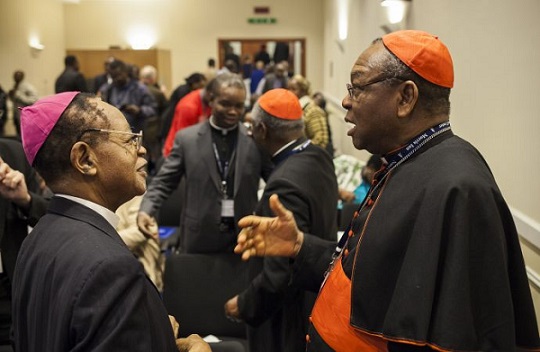
Un échantillon de ces experts religieux et laïcs de l'immigration s'est réuni mardi pour la réunion plénière annuelle de la Commission internationale catholique des migrations (ICMC) qui se tient du 6 au 8 mars à l'hôtel Crowne Plaza à Rome.
Aujourd'hui, l'immigration est à l'ordre du jour de chaque rencontre avec les autorités qui a lieu au Vatican, Secrétaire d'État, selon le pape le plus haut fonctionnaire, le cardinal italien Pietro Parolin, qui a pris la parole lors des remarques d'ouverture.
« La migration n'est aujourd'hui considérée que comme une urgence ou un danger, même si elle est devenue une caractéristique de nos sociétés », a-t-il dit, ajoutant que « cette période délicate appelle une orientation non hésitante » de l'Église.
Un point qui ressort clairement du rassemblement de Rome est que les situations concernant les migrants et les réfugiés diffèrent d'un pays à l'autre.
Alors que le clergé travaillant dans des pays comme l'Ouganda et la Thaïlande a fait état d'une collaboration harmonieuse entre l'État et l'Église et d'une attitude positive à l'égard des immigrants dans leurs communautés, d'autres pays, comme le Bangladesh et le Kenya, doivent s'attaquer à des questions telles que l'épuisement des ressources, la xénophobie et les conflits religieux et sociaux.
Les jeunes, les familles et l'Église se réunissent en Ouganda et en Thaïlande
Lorsque le Soudan du Sud s'est débarrassé de la guerre civile et de la famine, des familles entières se sont installées dans les environs de l'Ouganda pour chercher refuge et une vie meilleure. Au cours des douze derniers mois, l'ONU estime qu'environ un million de Sud-Soudanais ont inondé la frontière.
Selon le père Francis Ndamira, directeur de Caritas Ouganda, qui a assisté à la conférence, l'Église collabore avec le gouvernement, les organisations non gouvernementales (ONG) et d'autres groupes internationaux pour offrir des ressources et prendre soin des nouveaux immigrants.
De nombreux ménages et communautés du Soudan du Sud se sont installés dans le nord de l'Ouganda, en particulier depuis juin de l'année dernière. Près de 24 000 d'entre eux ont été aidés par Caritas, qui a fourni nourriture et éducation, tandis que les autorités locales ont donné des terres aux familles.
« Le gouvernement ougandais a été extraordinaire et est reconnu dans le monde entier, y compris par les Nations Unies, pour ses politiques très accueillantes », a déclaré Ndamira. "Les Ugandans dans leur ensemble pensent que c'est comme ça... ce n'est pas la première fois que cela se produit, les gens entrent et sortent depuis les années 1960, et en général, les Ougandais les reçoivent."
L'Église a fait venir des experts en agriculture et en microfinance, a ajouté le prêtre, afin que les familles puissent commencer à travailler sur la terre.
« Heureusement, le temps est très beau », a-t-il ajouté en plaisantant.
Les autres personnes qui fuient le Soudan du Sud ont été prises en charge par d ' autres organisations internationales et à but non lucratif, et le HCR a apporté du maïs, de la farine et des haricots.
"Il n'y a pas de véritable question de la faim ... ils sont capables de travailler et de produire leur propre nourriture sur ce petit terrain, qui est en même temps complété par ce qu'ils obtiennent du HCR", a déclaré Ndamira.
Il a ajouté que même s'il est peu probable que les Sud-Soudanais retourneront bientôt dans leur propre pays, « au moins ils espèrent en ce qu'ils ont des gens qui s'occupent d'eux ».
La crainte d'une diminution des ressources, en Ouganda en particulier l'eau et le bois de chauffage, demeure pertinente et le gouvernement a répondu en déployant 30 % du budget des réfugiés aux communautés qui les accueillent, qui sont investies dans des projets agricoles et commerciaux.
"Le gouvernement lui-même a une loi et une politique d'accueil des réfugiés, qui peuvent maintenant être trouvés dans tout l'Ouganda de tant de pays. Automatiquement, cela crée une bonne volonté », a déclaré Ndamira.
Déplacement de la loupe vers la Thaïlande, un pays qui compte plus de 100 000 immigrants et réfugiés de la frontière avec le Laos, le Cambodge, le Vietnam et le Myanmar, un dirigeant catholique local a déclaré mardi que l'objectif reste de construire « l'unité et la coexistence pacifique dans le pays ».
De l'avis de Mgr Joseph Pibul Visitnondachai de Thaïlande, où les catholiques sont une minorité, le message de l'Église sur l'immigration a réussi à atteindre la population.
"L'enseignement social du pape est en train de se lire et de prendre effet, de sorte qu'il est un principe directeur que nous pouvons suivre, en particulier pour aider les migrants et les réfugiés dans le pays", a-t-il déclaré.
Le gouvernement thaïlandais estime qu'entre deux et trois millions d'immigrants du Myanmar, dont beaucoup appartiennent à la minorité musulmane rohingya, vivent actuellement en Thaïlande, fuyant les persécutions et cherchant des possibilités de travail.
Visitnondachai a déclaré que l'Eglise a coopéré avec un réseau d'évêques des pays voisins et Aide à l'Eglise dans le besoin en Allemagne pour pourvoir à leurs besoins.
Selon l'évêque, le problème concernant le grand nombre de réfugiés rohingyas dans le pays a diminué au cours des années, car ils ont commencé à travailler dans de petites entreprises ou ont migré vers d'autres endroits.
"En ce qui concerne les Rohingyas, dans ce pays il n'y a pas de problème, mais il y a environ deux trois ans en raison du manque de collaboration entre les Rohingyas et la police, il y avait la traite des êtres humains", a-t-il déclaré.
"Maintenant, les personnes impliquées dans la traite des êtres humains ont été arrêtées et emprisonnées."
Visitnondachai a également souligné un « changement de culture » chez les jeunes générations, qui sont fermement opposés à la persécution des minorités, y compris les chrétiens, et sont ouverts à une société plus multiculturelle et dynamique.
Immigration : entre l'Église et l'État
Alors que les réfugiés rohingyas ne sont peut-être plus un problème en Thaïlande, le Bangladesh est actuellement en pleine crise, avec plus d'un million de Rohingyas installés dans sa région du sud-est.
« Ils se trouvent dans une mauvaise situation, même s'ils reçoivent de petits abris et que l'approvisionnement alimentaire est suffisant, je dirais qu'ils sont dans une mauvaise situation », a déclaré Mgr Gervas Rozario, évêque du diocèse de Rajshahi à Crux dans une interview.
Avec sa population déjà dense, le Bangladesh a fonctionné dans l'hypothèse qu'en fin de compte les Rohingyas seront réajustés à leur pays, ce qui est plus facile à dire qu'à faire, a dit l'évêque.
"Le gouvernement bangladais, ainsi que [l'Église], veulent qu'ils rentrent chez eux. Nous voulons qu'ils retournent vivre chez eux en paix et dans la dignité et les autres droits des citoyens », a déclaré M. Rozario.
Mais l'armée, qui détient le pouvoir au Myanmar, a entrepris de garder les Rohingyas hors du pays et l'évêque a également condamné le « nettoyage ethnique » perpétré contre la minorité musulmane. Il a ajouté qu'il n'y a pas longtemps, les forces militaires du Myanmar à la frontière du pays ont bardé les armes pour « créer la peur, la panique parmi les Rohingyas afin qu'ils n'osent pas y retourner ».
"La situation est vraiment mauvaise à cause du nombre et de l'espace de concentration. Ils sont dans des camps de concentration ! et le gouvernement [Myanmar] ne les autorise pas à entrer dans le pays », a déclaré Rozario.
Depuis le 25 août 2017, lorsqu'une grande vague de Rohingyas s'est échappée de l'autre côté de la frontière au Bangladesh, l'Église s'est employée à prendre soin d'eux et à subvenir à leurs besoins, et un tiers de tous les réfugiés se trouvent sous l'égide de Caritas.
"L'Église catholique est très petite [au Bangladesh], seulement 400 000 personnes sur une population de 160 millions, pas même deux pour cent! Notre aide était toujours la toute première », a déclaré l'évêque.
Bien que certaines personnalités publiques musulmanes au Bangladesh aient accusé l'Église d'avoir un programme secret de conversion, Rozario a déclaré que l'objectif des catholiques est de "aller là pour l'humanité" et de fournir l'amour, le soin et la charité.
Les tensions interreligieuses au Bangladesh ne sont pas rares, et l'évêque a déclaré que les minorités autochtones, tribales et chrétiennes sont souvent victimes de persécutions.
"Nous avons notre propre Rohingya", a dit Rozario. « Nous n'en parlons pas parce que le gouvernement ne le fait pas directement, mais il y a des forces puissantes, des forces maléfiques qui [persécutent] des minorités religieuses. »
D'une autre manière, un sentiment d'insécurité joue également dans l'expérience d'immigration du Kenya, où le flux de personnes entrant dans le pays a accru les craintes de laisser des extrémistes religieux.
"Ils glissent en entrant par la porte arrière et dans les sens du coin. La plupart sont des hommes venant de Somalie. Cela soulève la question du danger d'attaques, de ces personnes qui viennent ici pour faire des affaires al-Shabab », a déclaré le cardinal John Njue de Nairobi, au Kenya.
Le gouvernement du Kenya a pris des mesures pour forcer les gens à rentrer dans leur pays d'origine dans un effort de lutte contre l'immigration illégale, le cardinal a ajouté que, bien que « cela semblait être un pas très lourd pour certains », il était néanmoins « nécessaire ».
Njue a déclaré que les autorités kényanes étaient préoccupées par tout acte illégal ou violent qui pourrait se produire si les immigrants ne suivent pas le processus normal de régularisation. « La bienvenue est une sorte de générosité, par respect pour la dignité de la personne humaine. Mais quand cet accueil, ce respect, se transforme en une destruction de l'harmonie de la société, alors cela n'a pas de sens », a-t-il dit.
Source: Crux...