Les évêques de Zambie appellent à des élections pacifiques et transparentes
Les évêques de Zambie appellent à des élections pacifiques et transparentes
Zambie Conférence des évêques catholiques (ZCCB): Lettre pastorale sur les élections générales d'août 2016
"NON LONGER SERA VIOLENCE DANS VOTRE TERRE" (Ésaïe 60:18)
APPEL AUX ÉLECTIONS PAIXEFULES, CRÉDIBLES ET TRANSPARENTES
PRÉAMBULE
1. À tous les membres de l'Église catholique et à tous les hommes de bonne volonté. Nous vous saluons au nom de notre Seigneur Jésus-Christ dans les paroles de saint Paul:" Maintenant, que le Seigneur de la paix lui-même vous donne la paix en tout temps et de toutes façons. Le Seigneur soit avec vous tous » (2 Th 3, 16).
2. Comme nous sommes près du jour de l'élection du 11 août 2016, nous sommes contraints par l'amour du Christ (2 Co 5, 14) de parler une fois de plus à la nation sur des questions liées au processus électoral. Pour nous, chaque élection est un moment de grâce et une opportunité d'auto-évaluation en tant que nation. Il ne s'agit pas seulement de l'élection des dirigeants politiques, mais, comme nous l'avons déjà dit, il est opportun d'examiner nos résultats passés afin de se préparer à de meilleurs choix politiques pour l'avenir. C'est aussi le moment de célébrer notre indépendance démocratique plutôt que l'anxiété.
L'IMPORTANCE DES ÉLECTIONS EN LUMIÈRE DE L'ENSEIGNEMENT SOCIAL DE L'ÉCOLE
3. Nous vous écrivons cette lettre pastorale catholique et populaire de bonne volonté en Zambie pour vous rappeler votre devoir d'élire les dirigeants et la nécessité de maintenir la paix avant, pendant et après le jour du scrutin. Alors que chaque catholique a le droit et la liberté accordés à Dieu de décider pour qui voter et comment répondre à la question référendaire, l'enseignement de l'Église peut vous offrir quelques conseils précieux pour tenter de parvenir à un jugement éclairé qui fait progresser le bien commun, comme il a été noté par la Congrégation pour la Doctrine de la Foi dans sa note doctrinale concernant la participation des catholiques à la vie politique, qui affirme que «la fonction première de l'Église est d'instruire et d'éclairer les consciences des fidèles, en particulier ceux qui participent à la vie politique, afin que leurs actions puissent toujours servir la promotion intégrale de la personne humaine et du bien commun» (#1).
4. L'Eglise estime qu'une fois que les gens maintiennent et renforcent leur démocratie, ils ont de meilleures chances de participer activement et de façonner le développement de leur pays (cf. Lettre pastorale ZEC – Bâtir pour la paix, 1996). De plus, saint Jean-Paul II a enseigné dans son encyclique que: «L'Église valorise le système démocratique dans la mesure où elle assure la participation active des citoyens à faire des choix politiques, garantit aux gouvernés la possibilité d'élire et de tenir responsables ceux qui les gouvernent, et de les remplacer par des moyens pacifiques, le cas échéant» (Cf. saint Jean-Paul II, Centesimus Annus - « Cent ans, 1991#46). De plus, le Pape Benoît XVI note que: «... les élections représentent une plate-forme pour l'expression des décisions du peuple, et elles sont un signe de légitimité pour l'exercice du pouvoir... [Les élections libres et équitables] offrent une occasion privilégiée pour un débat public sain et serein, marqué par le respect des différentes opinions et des différents groupements politiques...» (Cf. Africae Munus, n° 81).
5. C'est pourquoi, alors que nous nous dirigeons vers les élections générales du 11 août 2016, nous appelons tous ceux qui veulent bien que la Zambie combatte vigoureusement les nombreux vices qui risquent de saper notre démocratie et de fausser ensuite notre processus électoral et de priver notre peuple de son libre arbitre.
CONDITIONS D'ÉLECTION PAIXFUL, CRÉDIBLE ET TRANSPARENTE
Comme nous l ' avons souvent noté, le libre arbitre du peuple est la marque de toute élection crédible. Nous devons donc accorder une attention particulière aux aspects essentiels qui peuvent renforcer ou réduire, voire nier, la crédibilité des prochaines élections. Certaines des conditions essentielles pour que toute élection soit pacifique, crédible et transparente sont les suivantes :
a) Atmosphère pacifique
6.1 La démocratie exige en premier lieu que tous les citoyens exercent leur droit de vote dans un environnement libre et pacifique. Bien que nous soyons fièrement acclamés d'être un pays pacifique, nous ne devrions jamais tenir les choses pour acquises. Compte tenu de la multiplication des actes de violence à motivation politique et de la persistance des tensions entre les membres des partis politiques, notre situation de paix est de plus en plus menacée.
6.2 Nous sommes profondément attristés par le nombre croissant de cas de violence politique à l'approche des élections d'août 2016. Nous sommes extrêmement déçus parce que la tendance actuelle est contraire à l'engagement pris à la nation par les 19 chefs de partis politiques lors d'une Indaba tenue le 29 mars 2016 et facilitée par les trois corps religieux (à savoir la Conférence épiscopale de Zambie (ZEC), le Conseil des Églises de Zambie (CCZ) et la Fellowship évangélique de Zambie (EFZ). Le peuple zambien espère que la signature du communiqué par les dirigeants des partis politiques donnera des résultats positifs.
6.3 Nous avons noté que les hauts dirigeants des partis politiques eux-mêmes sont ceux à blâmer pour cette violence parce qu'ils savent qui sont les perpétuateurs de cette violence. L'habitude d'un changement de doigt et de blâme fait monter la violence parce que les dirigeants politiques ne prennent pas leurs responsabilités lorsque les choses tournent mal. Alors que certains ont annoncé l'horreur de la violence lors de certains rassemblements politiques de dernière date, les voix condamnatrices n'ont pas été assez fortes pour dissuader divers cadres politiques qui ont continué d'appréhender la violence dans différentes parties du pays. Nous déplorons le fait que la vague de violence actuelle puisse avoir de graves répercussions sur la participation électorale, car de nombreux électeurs admissibles pourraient craindre d'aller voter en raison de problèmes de sécurité.
6.4 C'est pourquoi nous exhortons tous les responsables politiques de la division politique à faire tout leur possible pour assurer une gestion efficace des cadres et à réduire immédiatement leur rhétorique conflictuelle. Ce que les Zambiens attendent d'eux, c'est de se concentrer sur les principales questions de gouvernance et de développement qui aideront les électeurs à prendre des décisions éclairées.
b) Médias impartiaux
6.5 On ne saurait trop insister sur le rôle des médias dans le processus électoral. Tous les acteurs du processus électoral doivent avoir accès aux médias pour diffuser leurs programmes et programmes de manière plus efficace. Un média impartial qui traitera chaque joueur de la même manière est donc cardinal. Cela dit, nous croyons que les médias publics et privés devraient respecter le principe et l'éthique de l'équité et de la vérité.
6.6 Les médias publics assument davantage de responsabilités étant donné qu'ils sont soutenus par des fonds publics. Tous les contribuables, quels que soient leurs penchants politiques, sont donc actionnaires des médias publics. Tout effet de levier donné à un parti politique ou à un candidat facilite un avantage indu pour ce parti politique ou candidat et manipule donc les règles du jeu. Nous exhortons les médias publics à être professionnels, à assurer une couverture complète et équitable de tous les partis politiques.
6.7 Nous voulons également voir des médias privés et communautaires qui restent professionnels, accommodants et inclusifs dans leur couverture des enjeux. Nous voulons également une utilisation et une réception responsables des médias sociaux. De plus, nous exhortons tous les consommateurs des médias à critiquer les messages qu'ils reçoivent de divers médias car ce n'est pas tout ce qu'ils lisent, entendent ou regardent qui contient la vérité, en particulier les informations qu'ils reçoivent des médias sociaux.
6.8 Dans l'ensemble, nous voulons voir un média « professionnel en faisant des reportages véridiques, objectifs et factuels en informant le public. Nous voulons voir un paysage médiatique qui n'est pas polarisé où les médias publics sont des partis pro-ruling tandis que les médias privés sont des partis pro-opposition. Quelle que soit la plateforme médiatique qu'on utilise, elle ne devrait pas alimenter les discours haineux ni les insultes au nom du droit de s'exprimer librement. » (Qu'il y ait la paix parmi nous – une déclaration pastorale de la ZEC publiée le 23 janvier 2016, nos 27 et 28).
c) Application professionnelle de l ' ordre public par la police
6.9 Nous savons qu'il est du devoir de la police de protéger la vie et les biens et surtout de maintenir l'ordre. Nous appelons les services de police zambiens à s ' acquitter de leurs fonctions de maintien de l ' ordre, de manière professionnelle et efficace, sans pressions indues de la part des partisans. Ils devraient être impartiaux et appliquer la loi équitablement à quiconque enfreint les lois de ce pays. La mise en oeuvre de la Loi sur l'ordre public a également suscité des préoccupations et nous avons demandé par le passé que la police mette en oeuvre la Loi sur l'ordre public de la manière la plus appropriée en veillant à ce qu'elle n'exerce aucune incohérence ou partialité lorsqu'elle traite avec différents groupes de personnes pour des infractions présumées ou lorsque les partis politiques ont fourni des avis pour la tenue de leurs réunions publiques et rassemblements politiques. Par-dessus tout, la police zambienne devrait être considérée comme servant et protégeant le peuple zambien de manière équitable et équitable.
d) La Commission électorale de Zambie (CEZ)
6.10 L'ECZ est l'organe légalement constitué chargé de gérer nos élections de manière à ce que le droit du peuple de choisir ses dirigeants ne soit pas entravé. Compte tenu des nombreuses pressions exercées sur la ZCE par divers groupes d'intérêt au cours des élections, les officiers de la ZCE ont besoin de niveaux élevés d'intégrité. L'ECZ ne doit pas être considérée comme une institution manipulée pour répondre aux intérêts d'un groupe ou d'un parti politique. La légitimité de son travail dépendra du degré d'indépendance de l'ECZ aux yeux du public. Nous exhortons donc les honorables commissaires et le personnel de l'ECZ à rester déterminés et à mener leurs activités de manière professionnelle en fournissant les mécanismes nécessaires au processus électoral qui garantiront des élections libres et régulières. Les officiers de l'ECZ doivent se rappeler que « le Seigneur exige l'équité dans chaque affaire; il fixe les normes » (Prov. 16:11). Bien sûr, nous reconnaissons que ce n'est pas une tâche facile. En même temps, nous savons que la tâche est possible. L'ECZ doit également travailler en étroite collaboration avec d'autres acteurs concernés pour assurer le respect du Code de conduite électoral par tous lors des prochaines élections. Lors de la plupart de nos élections, le code de conduite a été observé plus en infraction qu'en conformité. Nous espérons que cette tendance s'inversera désormais.
Pour qui devrions-nous parler?
7. On demande souvent à l'Église de nommer un parti ou un candidat spécifique que tous les chrétiens devraient se rallier. Certains politiciens malicieux ont même accusé l'Église de soutenir un parti politique ou un autre. D'autre part, certains politiciens ont utilisé le nom de l'Église pour gagner des kilométrages politiques. L'Église ne soutient ni ne soutiendra un parti politique ou un candidat particulier. C'est le libre choix qu'il laisse à son troupeau. L'Église embrasse les membres de diverses persuasions politiques et protège jalousement leur liberté d'association. Néanmoins, sur la base de nos principes chrétiens, l'Église peut fournir des conseils qui pourraient aider ses membres à faire des choix éclairés parmi les nombreux candidats et partis politiques qui se présentent pour l'élection.
8. S'inspirant de l'enseignement social de l'Église, les qualités que les candidats à la fonction politique devraient avoir sont les suivantes: compétence professionnelle en matière de programmes politiques, économiques et sociaux, courage de dire la vérité, souci de justice sociale, désir de travailler pour le bien commun au lieu de l'auto-enrichissement, disposition à utiliser le pouvoir pour le service, en particulier le service des pauvres et des défavorisés, ouverture au dialogue, bonne réputation morale, transparence et responsabilité envers les électeurs (Cf. Bâtir pour la paix, n° 11). Avant tout, les chrétiens doivent se rendre compte qu'ils ont la responsabilité morale de voter pour les candidats qui suivent l'exemple de Jésus, qui sont venus non pour être servis mais pour servir et qui se sont vidés pour le bien de tous (cf. Mc 10, 41-45). Nous devons aussi rappeler les précieux conseils donnés par Jethro à Moïse: "Mais choisissez parmi le peuple en général des hommes capables et pieux, dignes de confiance et incorruptibles, et nommez-les comme chefs du peuple..." (Ex 18, 21). Par conséquent, les chrétiens ne devraient pas voter pour des candidats qui sont arrogants et qui ont tendance à recourir à la violence, à des personnes ayant une réputation morale douteuse, à des personnes dont les antécédents de corruption et d'abus de pouvoir et de ressources publiques ont été prouvés et à des personnes qui mettent un intérêt sectaire ou ethnique étroit devant l'intérêt national et le bien commun.
RÉFÉRENDUM SUR LA BILLE RÉVISÉE DES DROITS
9. Nous partageons l ' inquiétude de nombreux citoyens zambiens sur la question du référendum, alors même que nous sommes près de nos élections d ' août de cette année. Peu a été fait par les organismes gouvernementaux concernés pour populariser le nouveau projet élargi de Charte des droits. Encore une fois, le temps semble être contre nous pour faire en sorte que notre peuple comprenne vraiment et objectivement le contenu de ce projet de loi et ce qu'il votera ou contre dans la question référendaire proposée : Acceptez-vous la modification de la Constitution zambienne et l'abrogation et le remplacement de l'article 79 de la Constitution zambienne? Nous sommes conscients que certaines préoccupations critiques ont été soulevées en ce qui concerne la complexité de la question référendaire elle-même ainsi que les symboles qui y sont attachés. D'autre part, nous estimons que bon nombre des modifications constitutionnelles que nous devons apporter pourraient améliorer la qualité de vie et la dignité de la population en raison de la réforme de la Charte des droits actuelle. Il est donc impératif que les acteurs gouvernementaux et non gouvernementaux, y compris l'Église, s'efforcent davantage d'éduquer les gens aux prochaines élections et de les conseiller de voter sagement sans les contraindre à voter oui ou non.
Notre appel
10. Nous appelons tous les Zambiens qui se sont inscrits comme électeurs à voter et à voter le jour du scrutin. Le vote n'est pas seulement un droit, mais aussi un devoir pour le pays d'aider à identifier et mettre en place des personnes crédibles qui feront de l'État une fonction dans la promotion du bien commun. Ne vous lassez jamais de voter, car votre apathie ne donnera qu'une plus grande chance aux opportunistes de porter la journée. S'intéresser à l'éducation des électeurs menée par des organisations de la société civile (OSC) non partisanes, assister aux rassemblements de différents partis politiques et candidats et écouter ce qu'ils ont à dire. Cela vous aidera à enrichir vos connaissances lors de la décision pour quel candidat ou parti voter.
11. A vous, chers dirigeants politiques, nous vous présentons ici le conseil suivant du Seigneur: "Mais il n'en sera pas ainsi parmi vous; celui qui serait grand parmi vous doit être votre serviteur et celui qui serait le premier parmi vous doit être esclave de tous. Car le Fils de l'homme lui-même n'est pas venu pour être servi, mais pour servir, et donner sa vie comme rançon pour beaucoup » (Mc 10, 43-45). Nous appelons tous les partis politiques à respecter les opinions des autres. Si vous voulez vraiment être choisi pour la gouvernance nationale, alors vous devez faire preuve d'engagement envers le bien commun qui transcende les intérêts partisans. Si vous êtes élu, vous aurez un devoir envers tous, y compris ceux qui ne sont pas vos membres ou n'ont pas voté pour vous et votre parti.
12. En outre, nous appelons toutes les organisations de la société civile à jouer un rôle important dans l ' éducation, l ' organisation et la mobilisation du public. Nous leur demandons de redoubler d'efforts pour faciliter la participation des citoyens à notre processus électoral. Ils devraient promouvoir l'alphabétisation des électeurs, organiser les personnes contre l'apathie et défier tous les acteurs du processus électoral de se comporter de manière objective et respectueuse des droits des autres acteurs du processus.
13. Nous appelons les organisations qui ont l ' intention de surveiller les élections à être bien préparées à cette tâche. Les moniteurs et les observateurs devraient être pleinement formés pour comprendre notre système et nos procédures électorales et acquérir des compétences sur la façon dont ils peuvent suivre de façon critique, analyser systématiquement et rendre compte objectivement des événements électoraux sans causer d'inquiétude et d'anxiété inutiles. Ils doivent au public de faire du bon travail. Ils devraient être également indépendants et exempts de toute manipulation et donner au public des informations véridiques sur le déroulement des élections.
14. À nos membres les plus estimés du clergé, nous vous exhortons à continuer de jouer le mandat donné par Dieu d'être une voix prophétique dans notre société. Cependant, faites-le de manière non partisane et sans sacrifier votre objectivité. Ne lassez jamais de proclamer le message de vérité, de justice, de paix, d'amour, d'unité, de pardon et de réconciliation. Comme l'exhorte saint Paul: «Ne nous lassons pas de faire le bien, car au bon moment nous récolterons une moisson si nous n'abandonnons pas» (Ga 6, 9).
15. En outre, nous appelons une fois de plus particulièrement nos propres prêtres catholiques à rester non partisans. Comme nous l'avons clairement dit dans notre déclaration au début de l'année : « La loi de l'Église est très claire à ce sujet (cf. Loi canonique 285 et Catéchisme de l'Église catholique # 2442). Il est moralement mauvais pour le prêtre catholique d'utiliser la chaire pour faire campagne pour, ou de-campagner tout parti ou parti politique. Dans la mesure où nous accueillons les politiciens catholiques pour célébrer la Messe avec nous, ils ne doivent avoir aucune plate-forme pour parler pendant les célébrations liturgiques » (Cf. Qu'il y ait la paix parmi nous, n°31).
16. À nos chers fidèles laïcs, nous vous invitons à participer au processus électoral. La politique n'est pas sale, elle est contaminée par nous. Notre devoir chrétien est de participer à la vie civique de notre société. Après tout, l'Évangile vous défie d'être "le sel de la terre ... et ... la lumière du monde ... " (Mt 5, 13-14). Profitez des possibilités offertes par vos structures et programmes pour vous renseigner sur les questions électorales et exhortez vos membres à participer en tant qu'électeurs et observateurs. Enfin, utilisez les jours restants pour consacrer des prières au succès des élections, mais aussi nous offrir à Dieu pour être ses instruments pour transformer la société en un monde meilleur. Comme déjà indiqué, vous êtes le sel de la terre et la lumière du monde. La politique doit donc avoir un goût différent là où vous avez été impliqué. Cela devrait être votre empreinte.
17. Nous vous en appelons tout particulièrement, les jeunes, avec la conviction que vous avez un plus grand intérêt dans l'avenir de cette nation. Nous vous demandons d'être les architectes d'une meilleure Zambie en étant les agents de la paix et de la réconciliation. Nous appelons nos jeunes à « se réfugier pour être utilisés comme de simples outils de violence par les politiciens » (Qu'il y ait la paix parmi nous, n° 26)
CONCLUSION
18. En conclusion, nous appelons tous les Zambiens à reconnaître que le vote est l ' un de leurs droits et devoirs fondamentaux. C'est aussi un devoir chrétien. C'est un moyen par lequel les citoyens choisissent pacifiquement et librement leurs dirigeants. Nous prions donc pour que tous les citoyens entrent aux élections législatives du 11 août dans un esprit d'honnêteté, en évitant les pots-de-vin et la tricherie. Nous prions également pour que tous les électeurs, les dirigeants des partis politiques et leurs cadres aient à cœur, la passion et l'engagement nécessaires pour construire la paix et éviter toutes les formes de violence. Comme l'exhorte saint Paul, « Faites tout ce qui est possible de votre part pour vivre en paix avec tout le monde » (Romains 12:18). Nous nous souvenons aussi de la Parole de Dieu qui inspire: «Car je connais les plans que j'ai pour vous, dit l'Éternel, pour le bien et non pour le mal, pour vous donner un avenir et une espérance» (Jérémie 29:11). Ces paroles du prophète Jérémie sont un témoignage clair de ce que Dieu désire pour tout son peuple. Dieu ne veut rien de plus que de voir son peuple jouir de la plénitude de la vie. Cependant, Dieu a besoin de notre coopération en tant que son peuple pour faire en sorte que cette espérance d'un avenir meilleur devienne une réalité. Les prochaines élections nous offrent l'occasion d'élire des dirigeants dotés des attributs et de la vision nécessaires à un avenir meilleur. Que Dieu bénisse notre nation!
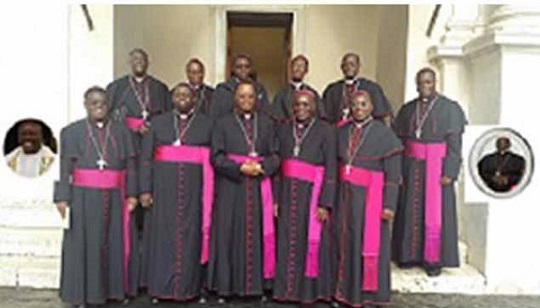
Publié à Kapingila House, Lusaka, le 17 juillet 2016 et signé par :
+ Mgr Telesphore-George Mpundu -Archbishop de Lusaka et Président de la ZEC
+ Révérend Dr. Alick Banda – évêque de Ndola et vice-président de la ZEC
+ Mgr Ignatius Chama -Archishop de Kasama
+ Révérend Raymond Mpezele – Administrateur apostolique de Livingstone
+ Révérend George Cosmas Zumaile Lungu – Évêque de Chipata
+ Révérend Charles Kasonde -Bishop de Solwezi
+ Révérend Evans ChinyamaChinyemba, OMI – Évêque de Mongu
+ Révérend Clément Mulenga, SDB – Évêque de Kabwe
+ Rt. Rev. Patrick Chilekwa Chisanga, OFM Conv -Bishop de Mansa
+ Révérend Moïse Hamungole -Bishop de Monze
+ Révérend Justin Mulenga – évêque de Mpika
+ Révérend Benjamin S. Phiri – Évêque auxiliaire de Chipata
+ Révérend Aaron Chisha – évêque émérite de Mansa
+ Mons. Valentine Kalumba, OMI – Evêque élu de Livingstone