Voir Au-delà des "communiqués des évêques catholiques", Mgr au Nigeria demande instamment
Voir Au-delà des "communiqués des évêques catholiques", Mgr au Nigeria demande instamment
CANAA || Par le Père Don Bosco Onyalla, Nairobi || 23 janvier 2017
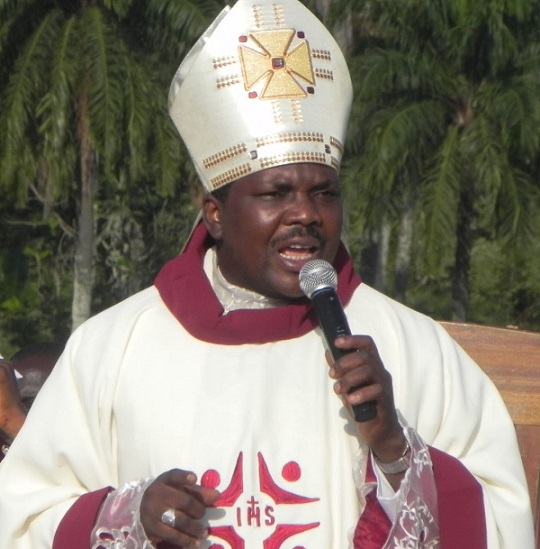
L'évêque catholique du diocèse d'Oyo au Nigéria, Mgr Emmanuel Adetoyese Badejo, a encouragé les Nigérians à regarder au-delà des déclarations de presse, que les évêques catholiques publient et en plus d'apprécier ces communiqués comme un moyen clé de témoigner du Christ, reconnaissent d'autres initiatives entreprises par l'Église.
« Je trouve regrettable, la façon dont certains commencent à regarder la publication de communiqués par la Conférence épiscopale catholique du Nigeria », a déclaré l'évêque Badejo dans une interview de samedi, expliquant : « Les gens en parlent comme si c'était le moins que l'Eglise puisse faire mais c'est en fait l'une des plus hautes sources de témoignage au Christ. »
Mgr Badejo, qui préside également le Comité épiscopal panafricain des communications sociales (CEPACS), a poursuivi en disant : « La publication de communiqués est un moyen d'enseigner et de faire entendre la voix de l'Église et c'est l'une des plus hautes responsabilités que la conférence puisse assumer. Même si l'Église ne faisait que parler, cela aurait été un grand témoignage pour le Christ. Mais l'Église fait beaucoup plus que ça. Le problème est que nous appartenons à une société aujourd'hui où les gens voient ce qui n'est pas et oublient de penser à ce qui est.
Il encourage les Nigérians à reconnaître d'autres initiatives importantes lancées et soutenues par l'Église au profit de tous dans la société et les services d'éducation et de santé sur place.
« Les gens ont tendance à ignorer complètement les efforts que l'Église a constamment déployés pour affecter la société nigériane dans sa mission d'éducation », a déclaré Mgr Badejo, ajoutant : « La création d'écoles, d'instituts d'enseignement, de centres de formation, même de séminaires et de maisons de formation sont des activités de l'Église qui ont transformé la société ».
Il a ensuite expliqué : « Beaucoup de gens ont été dans cette société qui ont fait beaucoup de bien qu'ils n'ont peut-être pas fait sans la formation qu'ils ont reçue de l'institut éducatif que l'Eglise a créé ».
Reconnaissant le rôle des religieuses catholiques dans le secteur de la santé, Mgr Badejo a déclaré : « L'Église a également fait preuve d'un engagement dans le domaine de la santé. Certaines personnes ignorent complètement le travail des sœurs à cet égard. Ils sont un groupe de travail silencieux mais actif et ils appartiennent à l'Église catholique."
On trouvera ci-dessous le texte intégral de l'interview de la CANAA, que Mgr Badejo avait avec la revue des Oblats de la Vierge Marie au Nigéria.
NiCE: Mon Seigneur, nous aimerions que vous commenciez par nous parler de vous, surtout pour le bénéfice de nos lecteurs qui ne savent pas grand chose de vous.
Évêque: Mon nom est Emmanuel Adetoyese Badejo. Je suis l'évêque du diocèse catholique d'Oyo. Je suis évêque depuis environ neuf ans maintenant et cette année est mon 30ème année comme prêtre. J'ai été ordonné pour l'ancien diocèse d'Oyo qui est maintenant le nouveau diocèse d'Oyo dont le diocèse d'Oshogbo a été taillé en 1995. L'évêque officiel du vieux diocèse d'Oyo, Mgr Julius Babatunde Adelapo, que j'ai succédé en tant qu'évêque d'Oyo Diocèse, était celui qui m'a envoyé étudier la communication à un moment donné. C'est en raison de ce fait que j'ai été nommé directeur des communications pour le Secrétariat catholique du Nigéria.
NiCE: En parlant de valeurs religieuses et sociales, comment décrirez-vous leur relation?
Évêque: Je pense que la religion est la source de toutes les valeurs d'une certaine façon. Les valeurs positives et les idéaux sont tous d'origine divine. Puisque Dieu a créé chaque être humain à son image et à sa ressemblance, plus un être humain désire devenir comme Dieu plus il génère et vit selon des valeurs, mais plus il vit contre les valeurs de la société, plus il s'écarte de la source de son existence qui est Dieu lui-même. Il existe donc un lien très étroit entre la religion et ce que nous connaissons comme valeurs sociales. Nous parlons de certaines valeurs comme des valeurs sociales aujourd'hui parce qu'elles ont été abandonnées de leur orientation religieuse au fil des ans. En tout cas, les valeurs sont ce qui rend la société plus habitable, plus humaine et plus accueillante pour l'espèce humaine.
NiCE: Quelle est votre évaluation des médias en ce qui concerne la promotion ou la promotion de valeurs en Afrique, en particulier celle de la coexistence pacifique?
Évêque: Depuis 1935, lorsque l'Église catholique a commencé à écrire sur les moyens de communication, elle a toujours déclaré que les moyens de communication sont un don positif de Dieu à l'humanité parce qu'ils permettent à l'humanité de s'étendre au-delà de parler d'une personne à l'autre. Comme l'indique l'un des documents de l'Église, communio et progressio, ils sont censés faire progresser le progrès et le bénéfice mutuel de tous les êtres humains. Malheureusement entre les mains de certains êtres humains sans scrupules, ils sont aujourd'hui plus utilisés pour l'exploitation, pour diviser les gens et même parfois pour promouvoir la lutte, les conflits et la guerre. Au cours des deux dernières années, les messages du Saint-Père ont essayé d'aborder ces questions. Il s'agit ici de celui qui tente d'aborder la question de la mondialisation où le Pape a demandé si les moyens de communication de masse qui ont fait du monde un village, nous ont fait voisins ou frères et sœurs. La réponse est non. Mais c'est ce qu'ils devraient faire.
NiCE: Comme vous l'avez souligné à juste titre, les valeurs fondamentales sont aujourd'hui directement et indirectement menacées dans notre société. Comment la Conférence épiscopale catholique du Nigéria et d'autres instances dirigeantes de l'Église africaine réagissent-elles à cette situation : outre la publication de communiqués, y a-t-il d'autres efforts à cet égard ?
Évêque: Permettez-moi de commencer par dire que je trouve regrettable la façon dont certaines personnes commencent à regarder la publication de communiqués par la Conférence épiscopale catholique du Nigéria. Les gens en parlent comme si c'était le moins que l'Église puisse faire, mais c'est en fait l'une des plus hautes sources de témoignage au Christ. La publication de communiqués est un moyen d'enseigner et de faire entendre la voix de l'Église et c'est l'une des plus hautes responsabilités que la conférence puisse assumer. Même si l'Église ne faisait que parler, cela aurait été un grand témoignage pour le Christ. Mais l'Église fait beaucoup plus que ça. Le problème est que nous appartenons à une société aujourd'hui où les gens voient ce qui n'est pas et oublient de penser à ce qui est.
Les gens ont tendance à ignorer complètement les efforts que l'Église a constamment déployés pour affecter la société nigériane dans sa mission d'éducation. La création d'écoles, d'instituts éducatifs, de centres de formation, même de séminaires et de maisons de formation sont des activités de l'Église qui a transformé la société. Beaucoup de gens ont été dans cette société qui ont fait beaucoup de bien qu'ils n'ont peut-être pas fait sans la formation qu'ils ont reçue de l'institut éducatif que l'Eglise a créé. L'Église a également fait preuve d'un engagement dans le domaine de la santé. Certaines personnes ignorent complètement le travail des sœurs à cet égard. Ils sont un groupe de travail silencieux mais actif et ils appartiennent à l'Église catholique.
Au cours du jubilé 2000, l'Église a décidé d'être encore plus agressive en ce qui concerne les questions sociales. C'est la source de la création de la Commission Justice Développement et Paix (JDPC). Pratiquement chaque diocèse du Nigeria a aujourd'hui un bureau de JDPC. Ils font une pléthore de choses pour les gens : l'autonomisation des femmes, l'acquisition de compétences, l'assistance juridique, l'aide à la libération des prisonniers, les facilités de crédit pour les personnes qui sont démobilisées, le suivi des processus électoraux et même l'enseignement des droits des citoyens dans une démocratie. Il y a donc une intervention continue de l'église dans la société.
Le Secrétariat catholique du Nigeria à de nombreuses étapes de la vie du pays a été un organe très efficace de la Conférence épiscopale catholique du Nigeria pour intervenir dans les questions de la société. Lorsque je travaillais au Secrétariat catholique du Nigéria, le secrétariat est devenu pratiquement le centre pour l'échange d'idées de personnes qui comptent, nous avons abordé les questions et même obtenu l'attention du gouvernement militaire à l'époque qui nous a avertis que nous allions probablement au-delà de nos frontières. Nous savions que nous ne allions pas au-delà de nos frontières; nous essayions juste de faire entendre la voix de l'Église dans les choses qui comptent dans la société. Plus récemment, la conférence a adopté une stratégie différente de la critique du gouvernement sur les pages du journal ou à la télévision. Au cours de la dernière année, la conférence a effectué environ trois visites au président de ce pays et à son cabinet pour énumérer les choses que la conférence enseignée devrait être soignée dans ce pays auquel le président doit prêter attention.
NiCE: La chaire qui a été un moyen très important de communiquer des valeurs est aujourd'hui largement abusée. Comment peut - on l'aider à garder sa gloire comme un lieu où Dieu dirige son peuple sur la bonne voie?
Évêque: L'Église catholique a récemment eu une conférence à Abuja sur le pentecôtisme et c'était une très bonne occasion d'interroger l'abus, l'abus, la sous-utilisation et la surutilisation de la chaire pour promouvoir toutes sortes de charlatanisme, idées et parfois anti-valeurs. Il y a aujourd'hui des gens qui de la chaire prêchent que la contraception est bonne. Certains prêchent de la chaire pour justifier l'avortement, pour justifier même le divorce et ils se disent pasteurs. Au fil des ans, les gens ont inventé des théologies et des doctrines et prêchent des homélies pour soutenir l'injustice. Même l'apartheid a ses propres apôtres et sa propre théologie à l'époque.
Pour sauver la chaire, nous devons d'abord réaliser que la chaire n'est plus seulement un morceau de bois traditionnel avec quelque chose d'aplat au sommet où vous pouvez mettre la Bible et parler aux gens. La chaire a déménagé à n'importe quel endroit où les êtres humains se rassemblent, ou peuvent écouter n'importe quoi. C'est peut-être à un rassemblement d'amis musulmans, sur le marché, quand je visite quelqu'un, ou sur la route où je rencontre un groupe d'hommes de police qui pourraient essayer d'extorquer de l'argent. Il m'a étonné plusieurs fois combien les gens sont réceptifs quand vous n'avez pas toute la paraphène de l'Église qui vous entoure.
Nos hôpitaux et nos écoles sont des chaires privilégiées. Quand les gens sont malades, ils sont les plus ouverts à la socilitation spirituelle et si nous leur donnons la guérison dans le corps tandis que nous essayons de leur donner la guérison dans l'âme. De même, si les enfants de la salle de classe apprennent les mathématiques, la géographie et l'histoire de nous, bien que ce ne soit pas la bible, et non les valeurs. Si ces gens qui travaillent pour les agents des ténèbres ont réalisé plus vite que nous que partout est une chaire, nous avons nous-mêmes à blâmer que nous ne l'avons pas réalisé assez rapidement. Nous devons donc rassembler nos cœurs et aller dans la bonne direction, rendre nos compétences acceptables et rendre notre message acceptable. Il n'est pas vrai que le christianisme ait été rejeté dans le monde.
NiCE: La liberté humaine est censée conduire à l'observation de valeurs qui ne sont pas opposées à la foi, à la raison et à la bonne morale. Le contraire semble être le cas aujourd'hui. Par quels moyens l'Église aide-t-elle la personne humaine à utiliser correctement la liberté?
Évêque: L'Église croit que la liberté humaine, bien que créée par Dieu et donnée comme don de Dieu, dépend d'une conscience bien formée. La conscience n'est pas la source des valeurs; Dieu est la source des valeurs et la conscience est leur témoignage. La conscience doit être formée dans d'autres pour témoigner efficacement des valeurs. L'Église a toujours formé des consciences par l'éducation, la catéchèse et les homélies. Malheureusement, les formateurs de conscience aujourd'hui sont beaucoup plus nombreux qu'il y a cinquante ans. Il y a cinquante ans, quiconque voulait penser à quelque chose de spirituel ou moral se tourne tout naturellement vers l'Église. Aujourd'hui, ils se tournent vers tout sauf l'Église. Ils écoutent la radio, écoutent de nouvelles musiques et regardent de nouvelles vidéos. Tout cela a une influence dominatrice sur eux. Ainsi, les gens choisissent mal aujourd'hui parce que leur conscience a été mal formée.
Le monde est comme il est aujourd'hui parce que le gouvernement qui est censé réglementer la société pour le mieux ne se soucie plus du bien-être holistique individuel. Donc l'Eglise est pratiquement laissée seule pour faire ce travail. La famille est la seule alliée que l'église puisse avoir aujourd'hui, mais elle a été affaiblie et arrangée contre de puissants ennemis tels que les médias et le gouvernement, et même l'environnement social est hostile à la vie de famille. Remerciez Dieu l'Eglise se tient debout haut et fort dans la prédication et la promotion des valeurs, mais elle doit travailler plus dur. Nous devons inventer de nouveaux moyens de former des consciences humaines. Nous devons former de nouveaux moyens de faire face aux agents de non-valeur qui sont parmi nous. Nous devons former de nouveaux moyens de colonisation des médias pour que les gens puissent entendre la voix de l'Église. Cela va prendre beaucoup d'efforts. Ça va vouloir dire mettre notre argent là où est notre bouche. Il va également signifier un examen de la formation de nos agents d'évangélisation pour répondre aux besoins d'aujourd'hui.
NiCE: De Gravissimum Education est n° 5 nous comprenons que la famille est la première école de vertu sociale. Pensez - vous que la famille demeure aujourd'hui le meilleur endroit pour communiquer les valeurs sociales et religieuses?
Évêque: Tant que les enfants ne seront pas encore produits sur les arbres, la famille restera le premier environnement où l'enfant apprend à apprécier l'humanité. La famille est la première organisation humanisante. L'Église a le privilège d'être l'interprète de la révélation, mais la famille est le berceau où tout ce qui doit être préparé. En fait, après que l'église ait enseigné à n'importe quel individu, il lui faut encore la famille pour y mettre un cachet par le témoin des parents par leur direction et encouragement. Le fait que l'Ancien Testament ait commencé par Dieu établissant la famille d'Adam et Ève et le Nouveau Testament en établissant la Sainte Famille est plus qu'une raison suffisante pour que nous ne changeions pas notre point de vue sur le fait que la famille demeure le lieu idéal et privilégié pour la formation de l'être humain.
NiCE: De votre expérience pastorale vécue en tant qu'évêque et expert en communication, par quels moyens pensez-vous que la famille peut être aidé à remplir sa tâche de communiquer des valeurs aujourd'hui.
Évêque: Par tous les moyens. Toutefois, de nombreux moyens ont été saisis par des agents et des organisations qui ne se soucient plus de la famille. Des personnes et des organisations extrêmement puissantes et extrêmement riches dans le monde sont mises en cause contre la famille afin que celle-ci puisse perdre le contrôle de la génération à venir. Ils se rendent compte qu'une fois que la famille forme des consciences populaires, certaines choses telles que le meurtre arbitraire d'êtres humains au nom de l'avortement ou de la liberté et la permission de divorcer arbitraire deviennent répugnantes pour eux. Ils essaient donc d'attaquer la famille depuis ses racines.
The United Nations many years ago established the age of choice at 18 but in the Unesco Calendar for this year, it is written that children should have the right to chose and to freely think. Some of these organizations have convinced African government especially, because they are struggling financially, to allow the teaching in the school curriculums what they call comprehensive sexuality education. It sounds good but indeed what it promotes apart from abortion and free contraception is lesbianism and gay culture. In this kind of environment the Church has to work much harder. Priests, sisters and other agents of evangelization have to be better formed, more aware and more committed to the monumental job of saving the family.
NiCE: We believe your recent visits to the poor in Benin Republic and the internally displaced persons in Maiduguri gave you a firsthand experience of human sufferings in diverse form. In what way can the media be in solidarity with such people?
Évêque: I must say that there is a segment of the media that is trying its best. But the media in Nigeria is really in captivity. It is in captivity for economic reasons; it is in captivity because it has become a one directional media with focus on political issues and with little or no attention on the issues affecting the poor and downtrodden. The level of human miseries in the camps in Maiduguri is indescribable and yet these people had a lot of hope, a lot of warmth in welcoming and a lot of appreciation. In the Republic of Benin, we met people who didn’t have much but were extremely happy, extremely faithful and extremely Christian. Perhaps, when people have less they believe more, it shouldn’t be but that seems to be the trend.
During my interview with a number of journalist, assembled by some Catholic media practitioners who were with us on that visit, I did mentioned this point to them: that in the final analysis the measure of the value of the media will be how much it has tried to bring the attention of the public to those who cannot speak for themselves. They did agree and some of them are trying but there are many influential people who will do everything to keep the stories out of the public eye. Sometimes, even government officials want to keep these stories low and simply write a few snippets about what government has being doing.
So there is a lot that the media could do but again this depends on the basic formation of consciences because the cameras cant by themselves decide what to record; It depends on the man who is behind the camera, nor can the pen decide what to write, it depends on the one who is holding the pen. If we have conscientious journalist who know that even if there are risk they ought to do what is right, they will be able to bring the attention of the general public to this poor underprivileged people. Many times, many people in the general public want to help but they do not know how. We need the media to bridge the gap.
NiCE: My Lord, what final words do you have for our esteem readers?
Évêque: I thank you for conducting this kind of interview and for the choice of the topic as well. I am sure that it will educate people beyond the confines of the Catholic Church. My final word to the readers is that this kind of interview, published, should be shared with others. Anyone among our readers, who is able to do something to help somebody, should do so gladly because such effort will not go unrewarded. I ask God to bless all of you for your efforts to enlighten his people. Thank you.
NiCE: Thank you very much my Lord.