SECAM Célébrer l'ACI Afrique à 5: Têtes au Ciel avec des pieds fermement sur le terrain
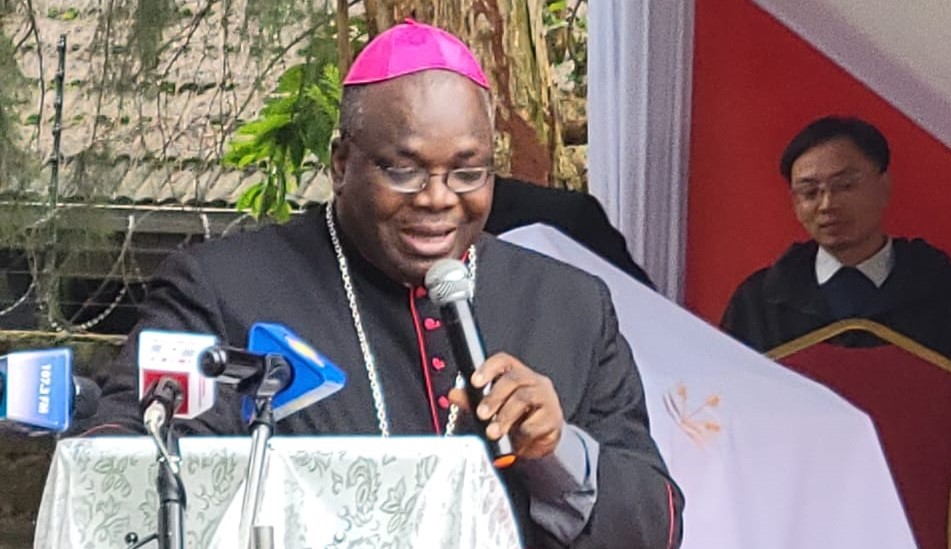
A l'occasion de la célébration du 5ème anniversaire de l'Association pour l'information catholique en Afrique (ACI Afrique), le 9 août 2024, au JJ MacCarthy Centre, Riverside Drive, Nairobi Kenya, Mgr Emmanuel Adetoyese Badejo, évêque d'Oyo et président du Comité épiscopal panafricain de communication sociale (CEPACS), a présenté un discours liminaire.
Vous trouverez ci-dessous l'adresse du Chef du CEPACS, département de communication du Symposium des Conférences épiscopales d'Afrique et de Madagascar (SECAM).
Vous trouverez ci-dessous l'adresse du Chef du CEPACS, département de communication du Symposium des Conférences épiscopales d'Afrique et de Madagascar (SECAM).
——-
Célébration de l'ACI Afrique à 5: Têtes au Ciel avec les pieds fermement sur le terrain
Un discours de M. Emmanuel Adetoyese Badejo,
Votre Excellence, Mgr Wallace Ng-ang-a, évêque auxiliaire de l'archidiocèse de Nairobi et président de la Commission de communication sociale, Conférence des évêques catholiques du Kenya (KCCB)
Excellences, M. George Wirncka, Directeur du marketing en Afrique,
Le Père Don Bosco Onyalla, Directeur et membres de l'Association pour l'information catholique, Afrique,
Les membres de la famille EWTN,
La Fraternité des Médias,
Des invités distingués ici présents,
C'est un grand honneur et un plaisir pour moi ici aujourd'hui de représenter le Symposium des Conférences épiscopales d'Afrique et de Madagascar, (SECAM) et plus particulièrement son président, Son Eminence, le cardinal Fridolin Ambongo Besungu, archevêque de Kinshasa. Je donne ce discours-programme en tant que Président du Comité épiscopal panafricain de la communication sociale (CEPACS) le comité qui représente le SECAM dans l'apostolat de communication de l'Église en Afrique pour marquer cette occasion propice de la célébration du 5ème anniversaire de l'ACI Afrique, qui a au cours de ces années, émergé comme un joyau de l'apostolat de communication de l'Église en Afrique. Je vous apporte des sentiments chaleureux de félicitations et de bonne volonté de tous ceux que je représente ici en tant qu'invité spécial.
ACI: Le voyage ici
Des invités distingués, cinq ans dans la vie de n'importe quelle organisation peut en effet sonner comme un court laps de temps. Toutefois, lorsque les objectifs pour lesquels cette entité a été établie ont été largement bien centrés, comme dans le cas de l'ACI, la célébration, même à l'âge de 1 an, est acceptable, sinon tout à fait opportune.
Le lancement d'ACI Afrique, officialisé sur la solennité de l'Assomption de la Bienheureuse Vierge Marie de 2019 s'est avéré être un événement important pour l'Eglise. Le Rédacteur en chef des pionniers, le Père Don Bosco Onyalla, qui a facilité son décollage, avait déjà acquis une expérience précieuse en tant que rédacteur en chef de l'Agence de presse catholique pour l'Afrique (CANAA), une agence de presse créée et parrainée par SECAM qui traversait des temps difficiles. Pour la bonne fortune, ACI a été mis en place comme un réseau d'information de l'Éternel Word Television Network (EWTN), fondé par Mère Angelica, PCPA, en 1981, qui était alors devenu un formidable réseau ayant existé pendant 28 ans. Cette expérience a bien compté pour l'ACI. J'applaudis et je remercie EWTN qui est actuellement le plus grand apostolat médiatique catholique au monde avec ses différents médias (chaînes de télévision, réseaux radio, publication, nouvelles et présence numérique) qui atteignent plus de 435 millions de foyers dans 160 pays et territoires.
Au cours de ces cinq années mouvementées, ACI Africa a fait de bons progrès, faisant état des événements en Afrique et dans ses îles du point de vue catholique, en anglais et en français, et souhaitant le faire bientôt en portugais, répondant ainsi aux trois groupes de langue officielle du SECAM. Il est réconfortant de savoir que depuis sa fondation, l'ACI a publié plus de 11 000 histoires pour l'évangélisation et l'information de Dieu.
Au moment du lancement de l'ACI Afrique, l'Eglise en Afrique avait souhaité une plate-forme d'information qui pourrait réaliser la vision SECAM's articulée lors de la création du CEPACS en 1973 à Ibadan, Nigeria, ce qui, on pourrait dire, représentait le lancement officiel de l'apostolat de communication en Afrique. Cette vision, mise à jour lors du Synode des évêques pour l'Afrique en 1994, exigeait que l'Eglise en Afrique coordonne son activité médiatique, poursuive la solidarité pastorale organique et projette l'identité et l'esprit de l'Eglise en tant que Famille de Dieu. Ces mêmes sentiments ont été améliorés et mis à jour à différentes occasions à ce jour. L'assemblée générale du CEPACS, qui s'est tenue à Lagos, au Nigeria, à l'occasion de son 50e anniversaire, en novembre 2024, a fait allusion à ce fait dans ses recommandations finales soulignant l'importance de « reconnaître le rôle noble de la communication sociale dans l'approfondissement de la foi et la promotion de l'esprit du Synode sur la synodalité sur le continent ».
En d'autres termes, l'Eglise a souhaité des entités médiatiques qui soutiendraient sa mission d'évangélisation, projeteraient son profil pastoral en tant que Famille de Dieu et promouvraient un échange synodal sain dans l'Eglise sur tout le continent tout en « aidant l'Afrique à raconter sa propre histoire » au monde.
Je félicite EWTN et tous ses visionnaires qui, en créant ACI Afrique, ont reconnu l'importance du témoignage et de l'expérience pastorale de l'Eglise en Afrique et ainsi, investis avec éloge dans l'amplifiement de la voix de l'Eglise ici. La validité de cette décision se manifeste clairement dans la contribution de l'Afrique au processus en cours du Synode sur la synodalité, son témoignage de la sainteté de la vie et du sacrement du mariage, sans oublier l'importance d'apporter des valeurs africaines chères de solidarité et la joie de vivre dans le monde entier.
ACI: comme les choses sont aujourd'hui
Le travail de l'ACI, qui transmet librement des informations des diocèses catholiques, des institutions, des chefs religieux, des prêtres, des religieux et des fidèles laïcs, de l'Afrique au monde entier, a considérablement amélioré l'exposition et la sensibilisation au travail et à la vie de l'Église en Afrique. Il a encouragé et inspiré de nombreux agents pastoraux et les fidèles, qui savent maintenant que les nouvelles sur les activités simples d'évangélisation et de pastorale qu'ils mènent à la base peuvent atteindre n'importe quelle partie du monde.
L'ACI, en tant qu'agence d'information catholique phare en Afrique, soutient donc déjà l'objectif du Synode sur la synodalité au sujet des fidèles se déplaçant davantage ensemble dans la participation, la communion et la mission. J'ai entendu dire que les moyens de diffusion des médias peuvent changer, mais un bon journalisme, ne peut changer. Je suis ravi de dire qu'ACI a amélioré les moyens et le contenu d'un bon journalisme catholique au cours de ces cinq années. Encore une fois, je dis kudos au rédacteur en chef et à ses collaborateurs.
J'ose dire que la vision du fondateur de l'ACI Prensa, à Lima, au Pérou, le missionnaire combonien le Père Adalbert Marie Mohm, a été réalisée même dans l'Eglise en Afrique. La vision du P. Mohm était d'avoir un flux de nouvelles catholiques vers le monde laïque et d'accroître la visibilité de l'Église catholique sur la place publique pour l'aider à servir la mission de l'Église. Remerciez Dieu pour ACI Afrique et je prie avec la prière du Synode: «Que l'Esprit Saint nous enseigne la manière dont nous devons aller à partir de maintenant, et comment nous devons poursuivre cette vision» (Ad sumus).
Chercher un avenir meilleur
Permettez-moi maintenant d'apporter deux points de vue importants à ce rendez-vous anniversaire. Premièrement, je demande que nous nous rappelions que sans communication, il n'y a pas d'évangélisation et qu'il n'y a pas d'Église parce que la communication est constitutive de l'annonce de l'Évangile et de la mission de l'Église. Cette vérité inlassable persiste même dans les trois concepts principaux du thème général du Synode sur la synodalité, à savoir la communion, la participation et la mission. Deuxièmement, je voudrais attirer notre attention sur l'appel du Synode lui-même pour que l'Église devienne une présence chrétienne impactée dans l'espace numérique. J ' espère que ce faisant, je contribuerai à la feuille de route et à la viabilité d ' une future vision de l ' ACI en Afrique.
- Le Divin, la Communication et la Mission de l'Eglise
Il y a une citation célèbre attribuée à Karl Rahner (1904-2004), l'un des grands théologiens catholiques du XXe siècle, qui dit : « Dans les jours à venir, vous serez soit mystique, soit rien du tout. »[1] Rahner ne parle pas d'un mystique comme quelqu'un enfermé dans un monastère, mais d'une personne baptisée qui éprouve Dieu dans la vraie vie ordinaire. C'est un homme ou une femme qui est conscient de la présence de Dieu dans la vie quotidienne, une personne baptisée qui sait qu'il y a une communication constante entre le Divin et la personne humaine. Cette réalité divine est celle qui fait de la communication un élément constitutif du bonheur, de l'accomplissement et de la satisfaction de sa créature, l'être humain. Quand l'être humain communique avec Dieu dans l'amour, nous appelons cette prière, cela signifie vraiment que les deux sont en communion.
Les implications de la théologie de la communication de Rahner, en premier lieu, est que, avant l'être humain, le désir de communiquer avec Dieu, il y a le désir de Dieu de communiquer avec ses créatures. L'essence de la communication de Dieu est donc, son amour pour l'humanité (Jean 3:17). C'est pourquoi la communication ne se déroule pas dans le vide mais dans un contexte, dans ce qui se passe dans la vie réelle, autour de nous et en nous.
L'Instrumentum Laboris pour la deuxième session de la XVIe Assemblée du Synode des Evêques sur la synodalité, soutient que même pendant le voyage synodal qui a commencé en octobre 2021, nous devons croire que Dieu a toujours été en conversation avec l'Eglise – le peuple de Dieu. Même dans les moments où le voyage synodal nous a exposés à des expériences douloureuses, Dieu était avec son peuple. Ainsi, nous trouvons ce passage:
Par son Église, guidée par son Esprit, le Seigneur veut raviver l'espérance dans le cœur de l'humanité, restaurer la joie et sauver tous, surtout ceux dont les visages sont tachés de larmes et qui lui crient dans l'angoisse. Leurs cris atteignent les oreilles de tous les disciples du Christ, hommes et femmes qui marchent dans les profondeurs des affaires humaines.
À cet égard, les mots d'ouverture emblématiques de Gaudium Et Spes inspirent également l'Église :
Les joies et les espoirs, les chagrins et les angoisses des hommes de cet âge, en particulier ceux qui sont pauvres ou en aucune façon affligés, ce sont les joies et les espérances, les chagrins et les angoisses des disciples du Christ. En effet, rien de vraiment humain ne fait écho dans leur cœur.
Cela signifie que Dieu, dont la nature même est l'amour, ne s'arrêterait à rien, qu'il utilisera tous les aspects de sa création pour se communiquer à tout moment au point qu'un être humain qui grandit en étroite union avec lui par la prière, découvre la présence divine dans chaque facette de l'expérience humaine – dans la douleur ou l'anxiété, la joie ou la douleur, la pauvreté ou les richesses, l'espérance ou le désespoir[2].
Cela dit-il quelque chose aux médias catholiques et aux communicateurs ? Bien sûr ! En fait, Rahner contribue à mettre en évidence la pertinence et le sens de la communication humaine dans le contexte de notre foi et de notre ministère dans l'Église. Dans ce monde, l'Église est censée défendre la communication authentique sur les traces du Christ, le communicateur parfait, dont la mission était d'enseigner tout sur la Bonne Nouvelle et le Royaume de Dieu[3]. Dans le contexte de cette compréhension, la Constitution dogmatique de l'Église, Lumen Gentium, dit de la mission de l'Église:
Puisque l'Église est en Christ comme un sacrement ou comme un signe et un instrument à la fois d'une union très étroite avec Dieu et de l'unité de toute la race humaine, elle désire maintenant se déployer plus pleinement aux fidèles de l'Église et au monde entier sa propre nature intérieure et sa mission universelle[4].
Ici, la Théologie de la Communication souligne la tâche et l'urgence de transmettre l'Evangile. Nous y trouvons un impératif pour les communicateurs de l'Église, d'entrer en relation authentique avec Dieu afin qu'ils puissent communiquer avec Dieu et à propos de Dieu, de leur expérience personnelle et de leur connaissance, à son peuple en particulier les marginalisés.
Que se passe - t - il lorsqu'un communicateur ou un média religieux n'établit pas une telle relation avec Dieu? Sans cette relation personnelle avec Dieu, un communicateur de l'Église ne peut devenir qu'un danger pour le peuple de Dieu; une cause de désinformation et de désinformation numéro 1; un athée dont le travail devient identique aux échafaudages du chantier de la tour Babel. Une telle maison de presse ou un tel communicateur ne peut tout simplement pas inspirer l'espérance ni témoigner de la présence mystérieuse de Dieu parmi son peuple.
- Faire notre mission dans l'espace numérique II
Au cours des trois dernières années, le chemin de la synodalité a mis en évidence le fait que l'Église n'a pas seulement une mission dans le monde, mais plutôt que sa nature même est mission. L'Église existe pour annoncer et témoigner l'Évangile à ceux qui ne le connaissent pas, « avec une option préférentielle pour les pauvres, enracinée dans la mission du Christ[5]. Dans cette mission, le Synode insiste sur le fait qu'il s'agit d'une responsabilité partagée entre les laïcs et les laïcs, dans la vie consacrée, et les ministres ordonnés, chacun selon son charisme et sa vocation, nourris par l'Esprit Saint. Conscient que la communication est un travail largement entrepris par les laïcs, la compréhension est qu'il est de la responsabilité de chacun, à travers les plateformes de communication, de relier le peuple avec Dieu, tout comme les ministres ordonnés et les hommes et les femmes consacrés le font par d'autres apostolats.
Les principaux agents de la tâche
Dans l'accomplissement de cette tâche, les institutions, les médias catholiques, les groupes, les associations et surtout les universitaires, les professionnels et les praticiens comme ceux sous la bannière de SIGNIS Afrique et d'autres partenaires chrétiens ont d'énormes compétences et responsabilités. Ils doivent travailler ensemble et être un atout énorme pour le message de l'Évangile et la mission de l'Église. L'objectif ultime est d'évangéliser l'espace médiatique mondial avec les valeurs et l'éthique chrétienne et humaine. Il y a quelques jours, ACI a sollicité ma réaction à la parodie de la peinture de Leonardo Da Vinci, "La Dernière Cène" lors des cérémonies d'ouverture des Jeux Olympiques en France. Le président de Signis Africa, le professeur Walter Ihejirika s'est attaché à ma réaction et l'a recommandé aux Communicateurs catholiques sous l'égide de Signis. ACI aussi en a fait une bonne histoire. Les deux initiatives ont propulsé l'apologétique sur de nombreux canaux à l'échelle mondiale en tant que voix africaine sur la controverse. Ça ne s'est pas passé inaperçu. C'est un exemple positif de ce que pourrait faire la collaboration pour l'Évangile et les chefs de l'Église sur des questions d'importance religieuse.
Je suis reconnaissant pour cette collaboration qui est déjà fonctionnelle entre SECAM et le groupe APO, propriété d'un entrepreneur catholique, M. Nicholas Pompine. Le Groupe APO est le principal service de conseil en communication et de distribution de communiqués de presse panafricains, qui offre depuis trois ans une couverture mondiale pour les récits et événements de l'Église africaine et offre des sessions de formation aux communicateurs catholiques africains dans le domaine des médias modernes. Une telle synergie et collaboration devrait amener l'ACI à travailler encore plus dans le domaine et la vision du Dicastère pour la Communication et stimuler l'apostolat de la communication en Afrique. Je salue une évolution similaire, en particulier à Signis Africa, qui se prépare actuellement à accueillir un congrès des Signis à Kigali Rwanda en 2026. C'est la première fois que le continent africain accueille cet événement mondial, preuve véritable que l'apostolat fait des progrès positifs en Afrique. L'événement Signis World réunira des professionnels des médias du monde entier pour découvrir l'Afrique dans sa diversité pastorale et sa richesse. J'appelle EWTN, notre partenaire de longue date, ACI, et le groupe APO à collaborer avec Signis Africa pour accueillir ce congrès mondial historique. Quel atout puissant et merveilleux une telle plateforme médiatique catholique serait pour la communication pastorale en cette ère de synodalité!
Vers une pleine présence
Ce rôle des médias catholiques dans la communication est encore plus urgent dans cet environnement numérique qui a changé notre perception de beaucoup de choses, y compris la perception du temps, de l'espace, de notre corps et des relations interpersonnelles[6]. Cet environnement numérique est une nouvelle frontière pour l'Eglise, et ne peut être mieux compris qu'en écoutant et en travaillant avec les jeunes, le Gen Zee, qui ont la profonde expérience de grandir et de vivre en elle. Je vois cela comme une préoccupation également pour ACI dans l'approvisionnement pour le contenu, pertinent pour cette génération. Signis Africa s'efforce déjà de former et de motiver les jeunes journalistes citoyens à collaborer à l'évangélisation.
Heureusement, le Dicastère de la Communication, dans un document important publié il y a moins de 2 ans, intitulé « Vers une pleine présence : une réflexion pastorale sur l'engagement avec les médias numériques », a donné des lignes directrices sur les considérations éthiques liées aux médias sociaux et à l'engagement des catholiques dans cet espace pour donner la priorité à la communication authentique comme don de soi dans l'amour. Un tel exercice doit viser la primauté de la vérité, comme le dit le document :
Pour communiquer la vérité, nous devons d'abord nous assurer que nous transmettons des informations véridiques, non seulement en créant du contenu, mais aussi en le partageant. Nous devons nous assurer que nous sommes une source de confiance. Pour communiquer la bonté, nous avons besoin d'un contenu de qualité, d'un message orienté vers l'aide, et non vers le mal; pour promouvoir l'action positive, et non pour perdre du temps dans des discussions inutiles. Pour communiquer la beauté, nous devons nous assurer que nous communiquons un message dans son intégralité, qui a besoin de l'art de la contemplation – un art qui nous permet de voir une réalité ou un événement lié à beaucoup d'autres réalités et événements [7]
Ces perspectives précieuses doivent colorer le travail de l'ACI en fournissant et en diffusant du contenu authentique pour l'engagement avec les médias numériques, aussi. L'ACI peut ainsi aider les fidèles, en particulier les jeunes, à devenir des co-créateurs de contenu de développement communautaire, moins soucieux de l'agenda personnel et de l'intérêt pour l'espace numérique, comme le propose le dicastère[8]. En réalité, il est nécessaire que les médias catholiques comme ACI fassent preuve d'audace en proposant des considérations éthiques sur les médias numériques et en générant du contenu pour attirer l'attention sur la question[9]. Une bonne piste peut être tirée des paroles du Préfet de la Dicastère de la Communication du Saint-Siège, le Dr Paolo Ruffini, lorsqu'il a appelé l'Eglise à jouer un rôle de premier plan dans l'élaboration du cadre éthique de l'intelligence artificielle (AI), lorsqu'il s'est récemment exprimé aux Philippines.
Évidemment, la mission dans l'environnement numérique reste un défi pour nous dans la communication de l'Église africaine. Beaucoup de dirigeants et de personnel religieux ont encore besoin de soutien et de formation pour bien fonctionner à ce niveau. L'internet, les médias sociaux et toutes les plateformes de communication numérique ont un grand potentiel pour améliorer la vie des personnes si elles sont exploitées par l'Église. Ainsi, le Synode a insisté sur le fait qu'il est urgent de réfléchir à la façon dont nous pouvons soutenir les jeunes, mais aussi les familles, et de veiller à ce que l'espace en ligne soit non seulement sûr, mais aussi spirituel. »[10] À cet égard, on nous rappelle la nécessité d'éviter les tendances individualistes et exploitatrices encouragées par les plateformes virtuelles. Au contraire, l'Eglise doit promouvoir l'interaction humaine, la collaboration, la mise en commun et le partage des ressources, et surtout, travailler ensemble pour la mission de l'Eglise. Ceci, à mon avis, est une charge urgente pour tous les professionnels des médias catholiques et des médias.
Nous devons également examiner le type de contenu auquel les plateformes médiatiques catholiques donnent la priorité. À cet égard, Mgr Patrick Kalilombe a déclaré : « Nous ne pouvons ignorer les exigences légitimes de ceux qui financent les médias, ni nous permettre de négliger les goûts et les attentes du public, surtout des pauvres. En fait, l'Instrumentum Laboris dit que le Synode a révélé la nécessité de reconnaître la diversité et la pluralité comme des opportunités d'échange de dons dans une Église unie sous le ministère pétrinien[12]. Dans un discours introductif récent à Signis Africa, sur les implications de la synodalité pour la communication, j'ai invité les Communicateurs catholiques à revoir les personnalités à qui ils offrent (leurs stylos, microphones et lentilles) la couverture dans le but de découvrir la voix et l'expérience authentiques et complètes de toute l'Église et être fidèle à l'esprit du synode à propos de porter ceux qui sont en marge[13]. Ceux-ci doivent inclure précisément, les jeunes, les femmes, les non-lettrés aux marges soit par sollicitation ou mise en service.
Pour souligner, alors que nous devons intégrer les technologies numériques dans la communication de l'Église, nous devons aussi identifier les dangers qu'elles présentent, de peur que nous ne nous trouvions ennemis de la communication humaine authentique et que nous nous alignions sur une situation où la modernité et le pluralisme deviennent identiques à la négligence de la promotion des valeurs spirituelles de la foi catholique et des cultures africaines.
Conclusion
En terminant, je veux revenir sur ce qui nous a réunis aujourd'hui, le 5e anniversaire de la fondation d'ACI Afrique. Personne ne peut ignorer l'impact et la croissance de l'ACI en si peu de temps. Nous devons remercier Dieu pour tout cela. Bravo, et continuez ! Personne ne peut ignorer le contact professionnel dans vos nouvelles en ligne et les perspectives esthétiques de votre plateforme de nouvelles. Continuez ! Personne ne peut saper la richesse de l'ACI en ligne en termes de variété de nouvelles de partout en Afrique. Cependant, comme on le dit souvent, la plus grande pièce au monde est la place à améliorer! Donc, je vous demande de retrousser vos manches comme il reste du travail à faire. Je suis conscient que vous aussi avez vos nombreux défis, je serais surpris si vous ne l'avez pas fait, mais Dieu vous montrera comment les surmonter avec foi et persévérance et SECAM fera tout ce qu'il peut pour contribuer à les résoudre dans les années à venir.
Dans cette modeste allocution, j'ai exprimé ma reconnaissance et mes félicitations à ACI Africa pour ces 5 merveilleuses années. Je nous ai également demandé de rappeler que la communication sans Dieu au cœur du communicateur devient dépourvue du divin qui est un élément constitutif de la profession et du ministère des médias dans l'Église. Enfin, j'ai proposé quelques choses à prendre en compte au fur et à mesure que l'avenir se déroule dans les efforts de l'ACI pour enrichir le processus synodal tout en projetant la vie de l'Église en Afrique. Par conséquent, nous nous efforçons de devenir des Communicateurs Mystiques mais contemporains, afin que nos ministères de communication soient marqués par l'amour et la passion de Dieu pour la mission que le Christ nous a laissée qui sont maintenant les « missionnaires numériques », disciples dans l'environnement numérique. Comme d'authentiques saints, j'exhorte tous ceux qui sont liés à ACI Afrique à, dans les années à venir : « Ayez vos têtes dans le ciel mais vos pieds bien plantés ici sur le sol ».
Merci d'avoir écouté et lu.
Vive l'ACI Afrique !
Long Vivant
Vive l'Église catholique !
Par le révérend Emmanuel Adetoyese Badejo,
Evêque d'Oyo et Président du Comité épiscopal panafricain de communication sociale (CEPACS), département de communication du SECAM.
——-
NOTES
[1] Robert Choiniere. La paroisse engagée, 2024, p. 25ff.
[2] Concile Vatican II. Gaudium et spes: Constitution pastorale de l'Église dans le monde moderne, 1965, n° 1.
[3] Patrick Kalilombe. La théologie de la communication. Publié dans African Ecclésial Review, vol. XV, 1973, p. 205.
[4] Concile Vatican II. Lumen Gentium, #1.
[5] Secrétariat général du Synode sur la Synodalité. Rapport de synthèse pour la première session du XVIe Synode des Evêques, chapitre 8b.
[6] Rapport de synthèse, chapitre 17.
[7] Dicastère pour la communication sociale, Vers une pleine présence: une réflexion pastorale sur l'engagement avec les médias sociaux, n° 66.
[8] Vers une pleine présence, 67-68.
[9] La semaine dernière, une émission d'affaires sur la télévision nationale nigériane a rapporté que la Commission européenne a fait les premières lois et règlements pour différents types d'intelligence artificielle en fonction de leur degré de risque. Et la contravention peut attirer la sanction de jusqu'à 7% des actifs mondiaux de ces entreprises. C'est une pénalité sévère, qui montre une prise de conscience croissante, même dans le monde des affaires, pour contrôler les risques de la montée en puissance de l'intelligence artificielle, malgré ses avantages.
[10] Rapport de synthèse, chapitre 17f.
[11] Patrick Kalilombe, p.302.
[12] Instrumentum Laboris II, 80-88, 95-99.
[13] Le document préparatoire du Synode sur la synodalité disait: «L'annonce de l'Évangile n'est pas uniquement adressée à un petit nombre éclairé ou choisi. Jésus interlocuteur est le « peuple » de la vie ordinaire, le « chacun » de la condition humaine, qu'il met directement en contact avec le don de Dieu et l'appel au salut. D'une manière qui surprend et parfois scandalise les témoins, Jésus accepte comme interlocuteurs tous ceux qui émergent de la foule » (document préparatoire n° 18)