Cœur de pardon: Les femmes ougandaises autrefois enfants soldats mènent maintenant la paix
Cœur de pardon: Les femmes ougandaises autrefois enfants soldats mènent maintenant la paix
Global Sisters Report (GSR) || Par Melanie Lidman || 31 janvier 2018
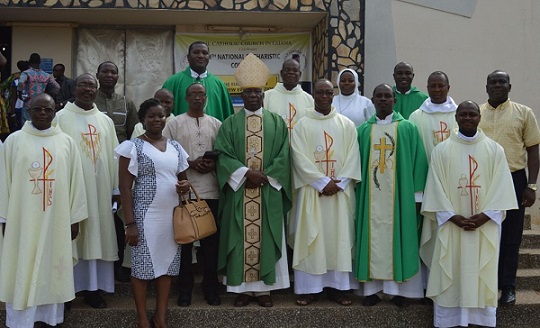
Le jour ensoleillé de janvier dernier, École professionnelle St. Monica pour les filles à Gulu, en Ouganda, était plein à éclater. Plus de 5 000 personnes ont couvert chaque pouce du campus verdoyant, célébrant le Gulu Episcopal Provincial Annual Peace Prayer Week, qui a culminé le 13 janvier 2017 avec une messe de célébration.
"Que chaque cœur ne favorise pas la violence! Que chaque bouche ne favorise pas la violence!» Les paroles de Mgr John Baptist Odama, archevêque de Gulu, échouèrent à travers les terrains de l'école.
Il y a 20 ans, L'Armée de résistance du Seigneur Joseph Kony Ils ont pris l'assaut de St. Monica avec des armes à feu, cherchant des enfants qu'ils pourraient contraindre à devenir de nouveaux soldats. Mais en ce jour de janvier 2017, les trous de balles qui pimentaient encore le plafond des salles de classe ont été opposés à des milliers de personnes à l'extérieur, en fermant les mains dans une prière pour la paix.
Assis parmi la foule était Sr. Nyirumbe de romarin, l'ancien directeur de l'école St Monica.
« J'étais très observatrice, et une chose que j'ai remarquée, c'est qu'aucune femme ou religieuse n'a pu donner sa voix [pendant la semaine de la paix] », a déclaré Nyirumbe. "Ils n'en ont même pas invité un ! Quand nous parlons de consolidation de la paix, je m'attendais à ce qu'ils disent : « Laissez-nous prendre certaines de ces femmes qui ont été profondément touchées par ce conflit pour donner leur voix, pour savoir comment elles sont impliquées dans la consolidation de la paix, quels sont leurs rôles. »
À la suite de la semaine de la paix dominée par les hommes, Nyirumbe a décidé de réunir certaines femmes à Gulu pour créer leur propre forum de la paix. « Nous, les femmes, devrions nous faire entendre, pourquoi attendons-nous d'autres personnes ? » demanda-t-elle.
Le pape François marque Journée mondiale de la paix le 1er janvier, offrant une vision d'un monde plus pacifique dans l'année à venir, un message Nyirumbe espère que les femmes prendront à cœur.
Nyirumbe supervise également un effort pour rédiger un « programme de paix » spécifique aux femmes avec des survivants du nord de l'Ouganda. Le programme utilisera des exemples concrets et des méthodes qui ont aidé les femmes de Gulu à apprendre aux femmes dans d'autres zones d'après conflit comment trouver la paix tant au sein d'elles-mêmes qu'au sein de leur communauté.
Nyirumbe dit que la consolidation de la paix exige une approche à deux volets : les femmes doivent obtenir l'indépendance financière grâce à l'éducation formelle et à la formation pratique; cela les conduit à un sentiment d'autonomisation bien au-delà de la survie. Alors la vraie guérison peut commencer. Les femmes doivent se pardonner et trouver le calme à l'intérieur avant de pouvoir se tourner vers l'extérieur et commencer à guérir les fractures dans leur société, dit-elle.
Trous de balles dans le plafond
St. Monica, comme beaucoup du nord de l'Ouganda, porte toujours les cicatrices physiques des années de troubles. Depuis 1989, plus de 30 000 enfants, garçons et filles, ont été enlevés dans le nord de l'Ouganda et forcés de commettre des atrocités contre leurs propres villages pendant la guerre de 25 ans menée par Kony.
Kony, un prophète auto-décrivé qui s'est penché sur le renversement du président de longue date de l'Ouganda, Yoweri Museveni, a demandé à ses disciples d'enlever des enfants dès 8 ans, de les laver le cerveau et de les forcer à brûler des maisons et à violer et tuer leurs voisins. La violence personnes déplacées de plus de 2,5 millions dans le nord de l'Ouganda et a fait 100 000 morts.
Les enfants appelés "voyageurs de nuit" encombrés dans les couloirs de St. Monica de chaque soir, des kilomètres de marche chaque jour pour avoir un espace sûr pour dormir, se cachant des kidnappeurs.
L'Armée de résistance du Seigneur s'est finalement effondrée alors que les enfants kidnappés s'échappaient, et la guerre s'est arrêtée. La Cour pénale internationale a mandat pour Kony en 2005, et le gouvernement ougandais a tenté de négocier la paix à partir de 2008. Le président Barack Obama a envoyé des troupes spéciales en 2012 pour tenter de capturer Kony en coopération avec l'armée ougandaise. Le Département de la Défense a dépensé $780 millions sur six ans à la poursuite de Kony, bien que l'opération s'est terminée au printemps dernier sans la capture de Kony.
Avec son armée affaiblie à seulement quelques centaines de combattants, Kony s'est retiré du nord de l'Ouganda il y a des années et est maintenant On croit qu'il se cache en République centrafricaine, au Soudan ou en République démocratique du Congo.
Lorsque le conflit a pris fin et que les enfants enlevés ont émergé de la brousse, ils ont dû retourner dans les mêmes villages qu ' ils avaient pillés. Beaucoup de communautés ont rejeté les rapatriés, parce que la présence des enfants était un rappel de ce qu'ils faisaient et des personnes qu'ils tuaient, un rappel de perte impossible. Le processus de réconciliation, dont certains utilisent les chefs religieux pour conduire cérémonies traditionnelles de pardon tribal, est en cours.
Les filles sont confrontées à un défi encore plus grand que les garçons en train de reconstruire une vie après le conflit. De nombreuses filles ont été « mariées » de force aux commandants rebelles de l'armée, et elles sont retournées dans leur village avec de jeunes enfants. Les filles avaient à peine terminé l ' école primaire et étaient maintenant mères célibataires sans éducation ni soutien social parce que leur famille les évitait.
Lorsque les premières vagues de femmes rapatriées sont revenues à la maison, les sœurs du Sacré-Cœur de Jésus, qui dirigent Sainte Monica depuis 1982, ont adapté leur programme professionnel pour les jeunes mères. Ils ont ouvert une école maternelle et une école maternelle pour que les mères puissent étudier, et ils ont offert des programmes d'alphabétisation pour les filles qui avaient quitté l'école si tôt qu'elles ne pouvaient pas lire. Ils ont intégré la thérapie dans leur formation professionnelle traditionnelle en agriculture, tissage, restauration et couture.
Plus de 1 500 filles et femmes sont diplômées des différents cours, qui vont de trois mois à deux ans.
Nyirumbe a dit que c'était un changement pour les sœurs de commencer à accepter les mères célibataires d'étudier à l'école. Mais nous avons dit: ‘Où est notre compassion? Où sont nos soins ? Notre souci est d'embrasser la mère et l'enfant, a - t - elle dit.
Au fil des ans, de nombreux diplômés de St. Monica ont trouvé le succès : Ils ont commencé leurs propres magasins, ont commencé à se réconcilier avec leur famille et leurs voisins, se sont mariés, ont eu plus d'enfants. « Vous pouvez voir une fille il y a 10 ans, elle était si malheureuse, profondément traumatisée, et je la vois maintenant très belle et bien habillée », a dit Nyirumbe. "Je vois que ces gens ont traversé leur propre douleur, qu'ils ont pris possession et qu'ils sont totalement transformés."
Une fois Nyirumbe, qui donne des discours et des interviews au sujet de St. Monica dans le monde, a rencontré l'un de ses diplômés à l'aéroport d'Addis-Abeba en Éthiopie. La diplômée était de retour d'une conférence des femmes en Egypte, où elle était une conférencière invitée. "Elle n'était pas [formellement] éduquée, mais elle obtient cette liberté de sortir et de parler au nom des autres," Nyirumbe dit.
Un groupe d'anciens diplômés de St. Monica a lancé le Réseau des femmes, un groupe indépendant de femmes qui offrent des prêts bancaires à petite échelle et un soutien émotionnel.
Josephine Amena, diplômée de St. Monica, qui travaille maintenant à l'école, est l'un des membres du groupe et a déclaré que l'indépendance financière qu'elle a acquise après avoir appris à coudre lui a permis de « rester ferme ».
« Parfois, je serai vaincu, mais [après mon entraînement] je n'ai pas besoin d'aller supplier les gens », dit-elle.
Amena a accompagné Nyirumbe à Washington, D.C., en 2016 pour le déjeuner de prière national et a parlé à une séance en petits groupes. Au lieu de se concentrer sur les difficultés, son kidnapping et sa survie dans l'armée de Kony, ou son rejet de famille à son retour chez elle, Amena préfère parler de prière.
« Je leur ai dit que Dieu m'avait relevé du buisson pour continuer à vivre », a-t-elle dit.
Amena comptait beaucoup sur son groupe de prière, composé d'anciens soldats et de victimes civiles de la terreur, pour l'aider à trouver la paix intérieure. « Je dis toujours à mes collègues dames: «Restez fermes, il y a des problèmes partout dans le monde; il n'y a nulle part où les gens ne souffrent pas. Même si je dors affamé, où que je aille, quand tu as cette paix de cœur, tu n'es pas seul," dit Amena. "La paix commence de l'intérieur, et puis vous avez plus dehors."
Comment enseignez-vous la paix ?
-- Vous ne pouvez pas enseigner la paix, dit Nyirumbe. "Vous devez diriger et voir cela fait pratiquement. Les gens qui ont tant souffert sont ceux qui peuvent devenir des enseignants de la paix.»
Nyirumbe supervise la création du programme d'éducation à la paix transformative, dans le cadre d'un partenariat avec l'Université d'Oklahomas Centre pour la paix et le développement. Il y a déjà beaucoup de plans pour programmes d ' éducation pour la paix partout dans le monde. Mais Nyirumbe donne aux survivants, et non aux universitaires, la responsabilité de concevoir le programme.
« Nous faisons participer des gens qui ont traversé ce passé et ils peuvent raconter l'histoire en utilisant leur propre exemple », a déclaré Nyirumbe.
Une leçon qu'ils envisagent d'inclure dans le programme d'études est un projet photo où les femmes créent trois photos qui représentent leur passé, présent et futur. « Les photos et les contes sont très bons pour ces femmes », a déclaré Nyirumbe. « Il les encourage non pas à oublier exactement le passé douloureux, mais à s'en souvenir et à en parler maintenant, et à le garder comme point de référence pour enseigner à leurs enfants. Pour leur dire: ‘ C'est ce que nous avons vécu, alors je m'occuperai de vous et je ne vous laisserai pas traverser cela. ' "
Nyirumbe a dit qu'elle se souvient avoir entendu des histoires traditionnelles de sa mère, y compris des histoires sur deux frères de la tribu Luo qui se battaient sans cesse. À ce jour, elle entend encore la voix de sa mère qui résonne dans son oreille avec la morale de cette histoire, l'avertit de ne jamais se venger. « Ce sont les femmes qui peuvent raconter ces histoires efficacement aux enfants, qui peuvent dire: «Vous devez briser le cycle de la violence. Les enfants passent tellement de temps avec leurs mères », a-t-elle dit.
Nirumbe dit que beaucoup de femmes sont en proie à leur culture ou à leur manque d'éducation.
« L'éducation libérera ces femmes de leur servitude, de leur esclavage psychologique, de leur torture psychologique et mentale parce qu'elles ne peuvent parler du passé. Je sais qu'il y a beaucoup de choses qui les tiennent captifs, et l'une d'elles est le manque d'éducation. Une fois capables d'écrire, de parler et de communiquer, ils ne vivent plus dans cette prison. »
Pennies et paix
Le programme donnera aux femmes du monde entier des outils pratiques pour sortir d'un traumatisme et d'un conflit vers la guérison personnelle, puis pour faire la paix à plus grande échelle.
Premièrement, il y a la partie pratique de faire la paix, qui est de gagner de l'argent. Plus que tout, ces femmes savent que vous ne pouvez pas prier sur un estomac vide. Dans les zones de conflit touchées par la pauvreté généralisée, la première chose est de veiller à ce que les femmes aient un moyen de survivre.
Amena et ses amis, assistés de saint Monica, ont créé de petits groupes de "banque de table," ou des groupes de micro prêts informels dans leurs communautés, pour créer de petites entreprises ou des magasins utilisant les compétences qu'ils ont acquises à St. Monica.
"Vous devriez toujours essayer d'économiser un peu d'argent, parce que le monde est comme une boule," dit Amena, et vous ne savez jamais comment le destin va rouler. Si vous pensez, les gens m'aideront, c'est fini. Vous devez rester fermes et dire: «Ce que je fais n'est pas seulement pour mon bien, mais aussi pour mes enfants.»
Alors vient le travail émotionnel.
Amena a dit dans les premières années, après que sa famille l'ait rejetée et qu'elle luttait pour survivre en tant que mère célibataire, les gens lui ont souvent dit d'oublier le passé et d'aller de l'avant. « Mais j'ai vu ces choses de mes propres yeux », dit-elle.
Instead, it took years of counseling and community prayer groups to address the trauma she went through and begin to heal. There is a pattern towards healing, one Amena and her friends will try to crystalize into part of the peace curriculum.
“Forgiving people is part of it, you must have a heart of forgiveness,” she said. One aspect of that forgiveness also focuses internally.
“You must have peace of mind, peace of heart, peace of body,” said Amena. “In families where there is no peace, life will be hard. People will be quarreling all the time. When you have peace of mind, it also helps the family to live in peace.”
It, too, is important to create a community of people dedicated towards the same goal of healing.
“When life becomes hard, you can say, ‘I have no one,’ it can be hard to share or ask for help,” said Amena. “I live and work with these people, and when I’m stuck with life they understand.”
Nyirumbe and the University of Oklahoma believe that people around the world will also learn and understand, gaining insight from the lessons these women have gleaned.
“We are working with them, but we are making them become the advocates,” said Nyirumbe. “They should find other women and say, ‘If we can do this, then you can reach it, too.’ “
Uganda now hosts more than a million South Sudanese refugees, who have been through their own traumas and need the same support and assistance.
“Someone can’t come and tell you to have peace in your heart and mind,” said Amena. “It depends on the way you live with people, what you do to people, and the life you’re going through.”
As Pope Francis reminds the world to pray for peace on Jan. 1, Nyirumbe hopes the message of the women of northern Uganda will also reach forgotten corners of the world where conflicts are just beginning to fade and wounds are still fresh.
“Peace is not just the absence of war, it’s also the peace of the heart,” said Nyirumbe. “And if we can get people to start living and feeling from their heart that they’re in peace, then development can start taking place. Without this, we will work in vain.”
[Melanie Lidman est correspondante au Moyen-Orient et en Afrique pour Global Sisters Report basé en Israël.]
Source: Global Sisters Report...