- Contact us on - Contactez-nous sur - Contacte-nos em
- +233-30-277-8867/8
- +233-30-277-2548
- secam@secam.org


Statement: AU-EU Civil Society Parallel Summit Statement
AU-EU CIVIL SOCIETY PARALLEL SUMMIT STATEMENT
LUANDA, 25 NOVEMBER 2025
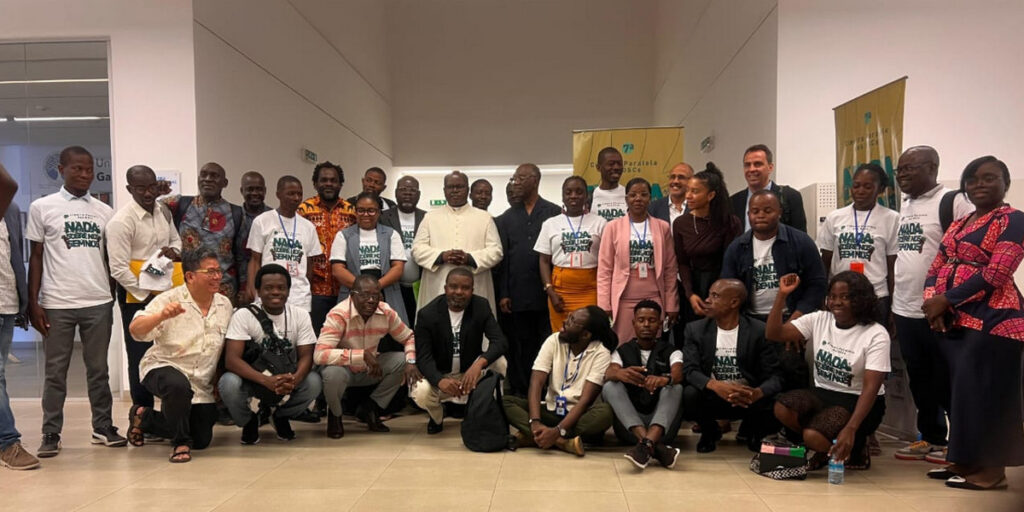
Civil society organisations from across Africa and Europe convened in Luanda, Angola on 19 November 2025 for the African Union–European Union Civil Society Parallel Summit under the banner “EU relations with Africa must mean justice and inclusion for African peoples.” Held ahead of the official AU–EU Summit, this gathering brought together social movements, NGOs, churches, youth networks, feminist groups, trade unions, environmental coalitions, and activists from both continents to articulate shared priorities and demands for a partnership rooted in dignity, equity, and genuine democratic participation.
The Summit centred its discussions on five interlinked themes: peace and governance; sustainable development; food systems and agroecology; the governance of natural resources and extractive industries; and debt and reparations. Although the thematic sessions addressed different policy arenas, a consistent thread ran through all contributions: the current AU–EU relationship is still shaped by deep structural inequalities, and without a fundamental shift in political will and power dynamics, it will continue to reproduce injustice rather than transform it.
Participants stressed that many African countries remain trapped in cycles of political instability, debt, insecurity, and corruption, all compounded by the shrinking of civic space. These challenges are not random; they stem from long historical trajectories, including colonial border-making, externally driven development agendas, and the persistence of political and economic elites who benefit from weak institutions. Civil society leaders argued that, decades after independence, many African states still operate within governance structures they did not design. This lack of rootedness in local identities and social realities continues to fuel tensions, exclusion, and mistrust.
Freedom of expression, independent journalism, and the right to information were highlighted as areas of profound concern. In many contexts, political interference, low pay, and the co-optation of experienced journalists into government structures have weakened media independence. Civil society warned that without a vibrant press, public accountability collapses. The AU–EU partnership, they argued, must include concrete commitments to protect civic freedoms, prevent repression, and ensure that the voices of citizens—not corporations or political elites—shape national and regional priorities.
On sustainable development, participants observed that although Africa has seen decades of infrastructure investment, the benefits remain uneven and, in many cases, fail to reach the communities who need them most. Vast regional disparities persist. Large projects rarely incorporate local participation, excluding women and youth, and too often they generate neither sustainable jobs nor long-term social mobility. Many speakers pointed out that the dominant development model focuses on economic growth, promoting market- based solutions without transforming structural inequalities. They emphasised the urgent need for decentralisation that empowers local governments and communities to shape their own development paths.
Economic relations between Africa and Europe were identified as a major sticking point. Africa continues to export raw materials while importing expensive processed goods—a pattern that mirrors the colonial economy and prevents industrialisation on the continent. At the same time, intra-African trade remains extremely low, limiting both productivity and the potential for regional integration. Participants criticised premature trade liberalisation, arguing that African countries cannot compete fairly with heavily subsidised European producers. Strengthening regional markets must precede any deepening of AU–EU trade arrangements.
The governance of natural resources—particularly mining, oil, and large-scale land use— emerged as one of the most urgent concerns. Communities living in resource-rich regions reported experiencing the worst impacts: poverty, displacement, land confiscation, water contamination, and environmental degradation. Meanwhile, the benefits flow outward—to corporations, intermediaries, and central governments. Civil society demanded transparent contracts; clear, enforceable revenue-sharing mechanisms; meaningful community participation; environmental rehabilitation; and investment in local value chains that create jobs where extraction occurs. Participants also raised concerns about global double standards, highlighting that many international companies follow strict environmental and social rules in Europe but ignore them when operating in Africa.
Women and young people face especially high barriers to meaningful political and economic participation. Across sectors, they encounter wage inequality, gender discrimination, moral and sexual harassment, and limited opportunities for advancement. Training centres and higher education remain concentrated in urban centres, and the high cost of studying excludes many. In addition, the mismatch between education and labour market needs leaves many young people with qualifications that do not translate into employment. Civil society called for stronger technical and vocational training, work–family balance policies, safer environments for women, and the progressive formalisation of informal work.
From these discussions, the Summit set out a series of shared priorities for the AU, the EU, and member states. These include:
- protecting civic space, strengthening independent media, and enabling direct democratic participation;
- decentralising governance to empower local authorities and ensure equitable access to services;
- improving cross-border regional cooperation to boost productivity and enable fair trade;
- placing communities at the centre of natural resource governance through transparency, accountability, and revenue sharing;
- adopting active employment strategies that prioritise women and youth;
- and safeguarding food sovereignty by supporting agroecology, farmer-managed seed systems, and the elimination of hazardous pesticide exports to Africa.
Participants also agreed to develop a joint African-European civil society agenda in advance of major processes in 2026. Key joint campaigns will focus on defending community rights over land and natural resources, protecting local seeds and biodiversity, and advancing pesticide justice and environmental health.
The Summit concluded with a clear and unified message: Africa and Europe must build a new relationship grounded not in extraction or dependency, but in solidarity, justice, and shared responsibility. Civil society stands ready to work together, across borders and movements, to ensure that the voices of people—not political elites or vested interests— shape the future of AU–EU cooperation.
Download this statement here: AU-EU CIVIL SOCIETY PARALLEL SUMMIT STATEMENT