Les sœurs écoutent aider à guérir comme le Rwanda marque 23 ans depuis le génocide
Les sœurs écoutent aider à guérir comme le Rwanda marque 23 ans depuis le génocide
Global Sisters Report (GSR) || Par Melanie Lidman || 6 avril 2017
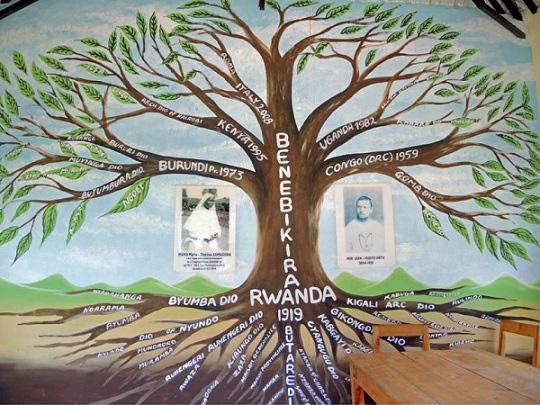
Comme partout, les sœurs Benebikira, la plus ancienne congrégation autochtone du Rwanda, ont des sœurs qui sont enseignantes, infirmières, pharmaciennes, formatrices et administrateurs. Mais ils ont aussi un titre religieux unique : Sœur auditeur.
« Le génocide a créé de nombreux problèmes, certaines personnes ne veulent pas vivre à cause de ce qui s'est passé », a déclaré Sr Marie Venantie Nyirabaganwa, la supérieure générale des Sœurs Benebikira et le chef de l'Association des Supérieurs Majeurs du Rwanda, le groupe national de coordination pour les religieux et les religieuses.
Le génocide rwandais de 1994, où jusqu'à un million de personnes ont été tuées pendant 100 jours de combats et dans le chaos avant et après, se cache sous la surface de chaque interaction, bien que 23 ans se soient écoulés depuis que les tueurs ont posé leurs machettes.
Le pays est sorti avec succès de certaines des dévastations physiques après le génocide, l'économie augmentant à des taux impressionnants. Les gratte-ciels atteignent les cieux dans la capitale de Kigali et des routes bien pavées traversent la majeure partie de la campagne.
Maintenant le pays est perché dans un équilibre délicat, tandis que le peuple essaie d'honorer la mémoire de ceux qui ont été tués tout en regardant fermement vers l'avenir. Cette loi d'équilibre se concentre chaque année le 7 avril, date anniversaire du début du génocide. Il marque le début d'une période de trois mois où le pays s'en souvient.
« Il y a beaucoup de problèmes au Rwanda, et beaucoup de gens ont des problèmes mentaux à cause du génocide », a déclaré Nyirabaganwa. « Ceux qui ont tué ont leurs propres problèmes, et ceux qui ont perdu des personnes en raison du génocide ont leurs propres problèmes. »
« Surtout les mères qui ont perdu tous leurs enfants et maris, ou les jeunes qui ont perdu tous les membres de leur famille », a ajouté Nyirabaganwa. Beaucoup de gens ont juste besoin de quelqu'un pour écouter. Certains ont le VIH [le viol par des hommes séropositifs était l'un des outils utilisés pour brutaliser pendant le génocide]. Il y a différents problèmes avec les familles."
Six sœurs Benebikira sont dédiées à l'écoute à plein temps. Certaines des sœurs organisent des séances de thérapie de groupe, d'autres font des conseils individuels au besoin. Ils ont étudié différentes approches, y compris le travail pastoral ou le conseil, et vont à la formation continue sur une base régulière, Nyirabaganwa expliqué.
Le rôle de l'auditeur est moins formel que le thérapeute, mais il s'adapte mieux à la culture rwandaise, a-t-elle dit. "Les sœurs chargées d'écouter les aident spirituellement. Nous les aidons à résoudre leurs problèmes et à obtenir des réponses.
D'autres congrégations, y compris les Sœurs Saint-Boniface, ont adopté le modèle des « auditeurs », trouvant des façons de combiner le soutien psychologique avec les besoins et la culture uniques du Rwanda. Le rôle de ces auditeurs est particulièrement important au printemps.
« En avril, le pays ferme ses portes en mémoire pendant environ deux semaines. C'est une période de souvenir », a déclaré Nicole Sparbanie, bénévole du Peace Corps de Chicago qui travaille avec les sœurs Bernardines dans le village de Kamonyi, à 25 milles de Kigali. Chaque village ou district a son propre mémorial, habituellement une tombe et un mini-musée. De plus, chaque district observe les anniversaires des événements majeurs qui se sont produits localement pendant le génocide de 100 jours.
"Tous les écoliers marchent ensemble et lisent les noms des personnes qui sont mortes dans cette région. Ils racontent les histoires des victimes, et il y a aussi de l'art et de la musique », a déclaré Sparbanie.
Parce que chaque anniversaire local est marqué chaque année pendant cette période de 100 jours, les journaux et les émissions de radio sont pleins de rapports à leur sujet, en gardant l'accent sur le passé difficile du pays, même lorsque les gens essaient de passer à autre chose.
Bien que le gouvernement limite sévèrement la liberté d'expression au Rwanda, certains militants et organisations internationales se demande tranquillement si le gouvernement est utilisant les mémoriaux limiter l'opposition et maintenir son autorité. Mémorials officiels du gouvernement, y compris Mémorial du génocide de Kigali, l'appeler « le génocide contre les Tutsis », qui efface toute référence aux milliers de Hutu qui ont été tués, parfois tout en protégeant les Tutsis. Le titre nie également toute référence aux crimes contre les Hutus avant le génocide ou les meurtres de vengeance qui ont eu lieu par la suite. Le président Paul Kagame est Tutsi, bien qu'il soit illégal de parler d'ethnicité au Rwanda, dans le cadre d'une initiative gouvernementale appelée "Ndi Umunyarwanda" ("Je suis rwandais").
"La reconnaissance des atrocités commises et la recherche du pardon sont soulignées comme un aspect central de ce projet "Rwandasition" Patrick Hajayandi, un chef de projet principal pour l'organisation sud-africaine Institut pour la justice et la réconciliation, écrit sur les mémoriaux rwandais"Cependant, le thème récurrent est la nécessité pour tous les Hutus de demander pardon aux Tutsis." Il craignait qu'en ignorant consciemment la douleur des victimes hutues, le gouvernement ne crée un ressentiment qui pourrait exploser à l'avenir. « Bien que les monuments commémoratifs aient une fonction utile, s'ils ne sont pas inclusifs, ils ne favorisent pas nécessairement la réconciliation », a-t-il ajouté.
Les sœurs trouvent des moyens de travailler dans le cadre gouvernemental acceptable des monuments commémoratifs pour offrir leurs services de conseil à toutes les victimes — Hutu et Tutsi, quel que soit le rôle qu'ils ont joué dans le génocide.
Les sœurs font partie intégrante des observations du gouvernement. Ils mènent des discussions et des prières pendant la période commémorative, fournissant un soutien spirituel pendant les événements officiels et des conseils extérieurs sur une base personnelle.
« Nous travaillons avec le gouvernement », a déclaré Sr Donatille Mukurabayaza, le supérieur local des Sœurs Bernardines à Kamonyi. Mukurabayaza a formé à Capacitar, une formation internationale de pleine conscience visant à la réconciliation dans les zones de conflit. Capacitar met l'accent sur l'équilibre interne et la paix plus que le partage externe que fournissent les « Sœurs d'écoute » de Benebikira. Ces deux programmes permettent aux sœurs d'offrir des conseils et un soutien spirituel à des groupes et à des particuliers en privé, et de jouer un rôle de premier plan pendant la période commémorative d'avril.
« Le gouvernement donne la ligne principale à suivre pour la réconciliation, puis la société civile apporte sa contribution après cela. Le gouvernement a des programmes différents, donc nous les faisons et parfois nous les améliorons », a-t-elle dit.
Mukurabayaza a souligné que l'appui du gouvernement est essentiel à leur travail. « Parfois, vous avez une bonne vision, mais quand il y a une barrière avec l'autorité locale, vous ne pouvez rien obtenir », a-t-elle dit. «Au Rwanda, le gouvernement a la même vision que le peuple – tous les Rwandais sont les mêmes, tous les Rwandais sont égaux, tous les gens doivent contribuer au bien-être du peuple.»
Sr Laurentine Musomayire, directrice adjointe du projet pour la congrégation de Benebikira, a déclaré qu'elle tentait de donner un exemple aux villageois qui ont encore du mal à se réconcilier. "Les sœurs sont réunies, nous ne nous sommes pas séparées [dans les tribus Hutu et Tutsi pendant le génocide]", dit-elle. « Nous avons parlé ensemble, nous avons vécu ensemble, nous avons mangé ensemble sans problème. Si nous n'étions pas ensemble, plus de sœurs seraient mortes. Quand les gens sont venus et ont essayé de tuer des sœurs d'une tribu, les sœurs les ont protégés et ont refusé de les abandonner.
Cela signifie aussi que, dans certains endroits, des communautés entières de sœurs ont été assassinées parce qu'elles refusaient de donner des sœurs tutsis aux tueurs hutus. La congrégation de Benebikira a perdu 22 sœurs, Hutu et Tutsi.
« Pendant le génocide, ils ont tout détruit », dit-elle. "Ils ont volé tant de choses, même ce bâtiment a été détruit. C'était terrible. Il fallait partir de rien. Nous avons continué à travailler avec les gens, essayé de parler aux gens de ce qui s'est passé ici, nous avons essayé de leur apprendre. Certaines personnes étaient en colère contre l'église."
L'église a joué un rôle compliqué dans le génocide. Dans de nombreux cas, les prêtres et les sœurs ont activement soutenu les tueurs, en particulier lorsque les victimes ont fui vers les églises pour se réfugier et ont été remis aux tueurs. Les tribunaux internationaux ont inculpé quatre prêtres et deux sœurs pour crimes de guerre liés au génocide. Les deux sœurs bénédictines, Sr Gertrude Mukangango et Sr Maria Kisito Mukabutera, condamnés à des peines de 15 et 12 ans, respectivement, pour leur rôle dans l'abandon de 7 000 Tutsis qui se cachaient dans leur couvent Sovu dans le sud du Rwanda.
Les L'Église catholique au Rwanda s'est officiellement excusée pour le rôle de l'Eglise dans le génocide le 20 novembre 2016, dernier dimanche de l'Année de la miséricorde. Cependant, le gouvernement rwandais a remis en question la sincérité de la déclaration et a qualifié les excuses d'une tentative visant à « exonérer l'Église catholique dans son ensemble de toute culpabilité liée au génocide ».
Le pape François a présenté des excuses officielles quand il a rencontré le président rwandais Paul Kagame le 20 mars. François « a raconté sa profonde tristesse, et celle du Saint-Siège et de l'Eglise, pour le génocide contre les Tutsis », a déclaré le Vatican dans une déclaration"Il a exprimé sa solidarité avec les victimes et avec ceux qui continuent de subir les conséquences de ces événements tragiques."
Au Rwanda, les militants croient que l'Église catholique a un rôle important à jouer dans la réconciliation malgré son passé. «Ces institutions ont un grand rôle à jouer parce qu'elles sont celles qui ont accès aux gens», a expliqué Honore Gatera, le directeur de Mémorial du génocide de Kigali, lors d'un événement commémorant la Journée internationale de l'Holocauste en février. Des représentants du Vatican et de l'ambassadeur israélien en Afrique de l'Est ont également assisté au mémorial.
«L'Église a une énorme responsabilité», a déclaré Gatera, surtout dans leurs écoles. « Ils doivent participer à des événements et à des activités de commémoration et de commémoration, mais surtout ils doivent faire partie du parcours éducatif que nous avons commencé. »
Les sœurs mènent ce voyage, en s'adressant aux gens où ils se sentent les plus à l'aise pour parler, y compris leurs maisons ou lieux en dehors de l'église. Comme le pays marque une autre année depuis le génocide du 7 avril, les sœurs qui fournissent un soutien psychosocial sont encore plus occupées pendant la saison commémorative.
« Les émotions sont si élevées à cette époque, même si vous n'avez pas vécu le génocide », a déclaré Jean Claude Nkulikiyimfura, directeur d'une école secondaire dans la région de Rwamagana dans l'est du Rwanda. « Toutes les écoles sont en pause du 28 mars au 21 avril, afin que les enfants puissent retourner dans leur communauté », a-t-il déclaré. Les gens ont soif de connexion et de confort, parfois les faisant se tourner vers un comportement risqué. "Les émotions sont si élevées, nous trouvons que c'est une époque où certaines filles tombent enceintes", a ajouté Nkulikiyimfura.
Bien que la période mémoriale puisse être la plus intense, Mukurabayaza, la sœur Bernardine, souligne le besoin de communication et de compréhension pendant toute l'année. « Chaque personne doit apprendre à s'accepter et à se respecter », a-t-elle déclaré. Toute personne doit exprimer ce qu'elle ressent. Vous avez besoin de cet échange."
[Melanie Lidman est correspondante au Moyen-Orient et en Afrique pour Global Sisters Report basé en Israël.]
Source: Global Sisters Report (GSR)...