Une longue route vers les soins de santé ruraux : les sœurs servent les villages éloignés du Ghana
Une longue route vers les soins de santé ruraux : les sœurs servent les villages éloignés du Ghana
Global Sisters Report (GSR) || Par Dana Wachter || 15 février 2018
De quatre minutes à 16 heures, Sr Mary Nyarko a quitté un grand camion, le mode de transport le plus luxueux pour elle ce jour-là, qui a commencé à 7 heures. Il a rendu la route boueuse cahoteuse de son trajet en ferry ponton au petit village où ses sœurs gèrent une clinique de santé rurale un peu plus supportable.
La clinique des Sœurs Missionnaires Saint-Esprit n'est pas loin de la maison de Nyarko à la capitale du Ghana, Accra, elle est loin de partout. Même les patients qui ont besoin de soins marchent souvent deux ou trois heures pour atteindre la clinique, ce qui signifie qu'ils peuvent être trop tard pour recevoir des soins médicaux pour les aider. Avec des ressources et des effectifs limités, les trois sœurs qui dirigent l'établissement ont les mains pleines et les jours chargés de servir au moins 1 000 patients par mois.
La clinique a été créée dans le cadre de la mission de la congrégation « poursuivre le ministère de guérison du Christ », a déclaré l'administrateur de la clinique, Sr Mary Nkrumah. Initialement, des sœurs d'Allemagne et des États-Unis étaient venues comme missionnaires au Ghana en 1946 et des années plus tard ont cherché des zones isolées pour s'occuper de ceux qui étaient loin des soins médicaux établis.
« La plupart des gens d'ici [étaient] mourants de morsures de serpent, d'autres mourants lorsqu'ils livrent [des bébés], d'autres aussi avaient toutes sortes d'autres maladies. Les gens n'étaient pas vraiment pris en charge », a déclaré Nkrumah.
Il n'y avait même pas de routes pour amener les patients dans les établissements de santé, alors Nkrumah a dit que les sœurs sont allées vers le peuple.
Après la création d'hôpitaux dans des villes comme Nkrawkraw, les sœurs ont d'abord basé leurs missions éloignées d'une ville appelée Donkor Krom, la capitale du district d'Afram Plains. De petits villages de quelques maisons une ligne de routes boueuses; ils ont une culture à petite échelle et élever des poulets, et dans les régions du lac Volta, les gens capturent et fument du poisson. En tant que sœur pendant 25 ans, Nyarko a passé du temps à travailler au centre de santé de Nkrawkraw et connaît bien les sœurs qui travaillaient dans les zones rurales. Elle a décrit les sœurs qui faisaient des voyages quotidiens dans des villages isolés et a trouvé impossible pour beaucoup d'entre elles de faire le voyage de retour le même jour. Ils ont vu la région près de Kwesi Fante particulièrement négligée. Dans les zones où il n'y avait pas de routes du tout, Nyarko a dit que les sœurs ont parlé avec les chefs locaux pour obtenir un logement pendant quelques jours à la fois. Bientôt, la collectivité a construit une petite structure en briques pour l'hébergement et la clinique a été lancée à la fin des années 1990.
"À Donkor Krom, il y a un hôpital là-bas, donc au moins ils peuvent gérer," dit Nyarko. "Mais cet endroit, rien. C'est ainsi que Kwesi Fante a commencé."
La longue randonnée vers le village
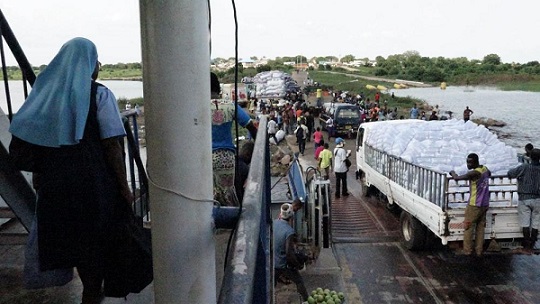
Le voyage de Nyarko de Accra à Kwesi Fante a pris environ neuf heures, la plupart utilisant les transports en commun. En voiture privée, il faudrait environ 5. S'arrêtant dans plusieurs villes via Tro Tro (passager van), taxi partagé et un ponton de ferry, Nyarko essaie d'aller à la clinique tous les deux mois, ou quand le besoin de prendre soin des affaires administratives se fait sentir. Après 28 ans dans la congrégation, dont 14 dans le pays voisin, le Togo, Nyarko coordonne maintenant les activités de mission sous la direction des Sœurs Missionnaires Saint-Esprit au Ghana.
"C'est toujours mieux quand vous avez votre propre voiture," Nyarko a mentionné le camion de ramassage blanc Toyota Helix que Nkrumah et leur chauffeur sont arrivés au port du ponton sur le lac Volta. C'était encore 45 minutes avant son arrivée.
Nyarko décrit Kwesi Fante comme un sous-district; environ 61 000 personnes y vivent et dans les villages environnants, dit-elle. C'est un village si petit qu'il n'est pas listé sur listes en ligne de la population ghanéenne. En revanche, Accra compte près de 1,6 million de personnes.
La clinique elle-même est séparée par des murs à l'intérieur du village; il y a des terrains pour plus de bâtiments, mais le financement rend difficile d'agrandir l'hébergement ou les établissements de santé. Sans service d'internet et de cellule, le couvent Mère Josepha fonctionne avec un réservoir d'eau et des lumières solaires lorsque l'électricité s'éteint inévitablement. La clinique est à quelques dizaines de mètres du couvent, dans le même complexe fermé. Il peut y avoir un personnel médical nommé par le gouvernement, mais il est difficile de retenir des travailleurs qualifiés après la fin de leur service national obligatoire.
Arrivé au couvent à 16 heures, Nyarko a déposé son petit sac de voyage dans sa chambre d'amis et a rejoint ses collègues pour le déjeuner. Les autres avaient déjà mangé, mais ils ont sauvé la sauce Palava, faite avec kontumbre (un légume ghanéen semblable aux verts à collier), riz, igname bouillie et plantain, pour chaque fois qu'elle arriverait.
Trois sœurs vivent maintenant au couvent : Nkrumah, l'administrateur; Sr Eunice Tamea, qui dirige la pharmacie, et Sr Petra Manalo, qui est une sage-femme. Ils travaillent avec des infirmières sur place, des infirmières en santé communautaire qui visitent des villages de la région, des adjoints médicaux, des adjoints pharmaceutiques, une autre sage-femme et des techniciens de laboratoire.
La vie à la clinique
De retour après avoir vérifié une mère dans sa maternité, Manalo a rejoint Nyarko et les autres à la table à manger. Elle avait passé la nuit à accoucher le bébé d'une femme séropositive.
« Nous ne sommes que deux [travaillant dans la salle]. Donc, la plupart d'entre nous, nous prenons une double équipe. Et vous savez, [nous sommes] toujours prêts quand ils nous appellent pour les aider. Parfois, nous n'avons pas le temps pour nous-mêmes », a dit Manalo en retenant les larmes.
Elle a fait face à une grande courbe d'apprentissage pour s'habituer à cette petite communauté qu'elle a rejointe quelques mois plus tôt. Elle est venue au Ghana il y a trois ans de chez elle en Indonésie, en tant que sœur missionnaire du Saint Esprit. Manalo devait d'abord étudier l'anglais, puis obtenir une nouvelle certification en sage-femme dans son nouveau pays.
Travaillant sans oxygène pour aider les mères à accoucher, Manalo dit qu'elles font de leur mieux, mais elle lutte en sachant qu'elles ne sont souvent pas en mesure de se rendre à l'hôpital le plus proche, qui est au moins deux heures de route non pavée. Elle voit des mères qui arrivent sans rien, qui ne peuvent pas se permettre le voyage à l'hôpital de toute façon.
Beaucoup de patients ne peuvent pas se permettre de payer les services, bien que les sœurs sont patientes en attendant le paiement de ceux qui peuvent. Quelle que soit la capacité de payer, les sœurs offrent des soins. « Nous venons ici, [et essayons] de sauver la vie. Nous n'avons que la foi, et nous avons la mission et la vision de sauver la vie. Juste celui-là", a dit Manalo.
Par la fenêtre du laboratoire sont les toits de chaume des villageois. La plupart vivent dans des cabanes en boue, avec de la paille et des branches disposées sur le dessus.
Nkrumah a expliqué que les villages comme Kwesi Fante, composé de 10 à 20 maisons, manquent généralement d'électricité, d'Internet ou de réseau cellulaire, de routes décentes et même d'eau. Parce qu'il y a peu de commodités, dit-elle, il est difficile de trouver du personnel qualifié prêt à rester ici.
Récemment, un assistant médical qui disait qu'il allait rendre visite à sa famille n'est jamais revenu. Nkrumah sent le besoin de construire de meilleurs logements pour le personnel de la clinique, pour les inciter à rester, mais cela nécessite le financement que les sœurs n'ont pas.
Défis dans le village
"C'est très difficile pour quelqu'un d'être dans le village pendant près de 18 ans," dit Amatus Arko, le microscopiste de la clinique.
Il sait qu'il est inhabituel en ce sens qu'il a travaillé avec les sœurs pendant toutes ces « bonnes années », comme il les appelle. Sa famille vit à quatre ou cinq heures de route dans la ville de Kumasi, où il dit que ses enfants peuvent recevoir une meilleure éducation. Il voyage pour les voir quelques week-ends, et ils restent avec lui à Kwesi Fante pendant les vacances scolaires. Il admet que c'est difficile mais pas inhabituel pour les pères de vivre loin de leur famille au Ghana.
Originaire de Sunyani, à environ sept heures de route, Nkrumah a déménagé à Kwesi Fante il y a environ un an. Elle a rejoint les sœurs en 1993, professé en 1997 avant d'enseigner au Ghana et a finalement passé quatre ans en pastorale sociale dans une mission sud-africaine. Après avoir travaillé dans un hôpital Saint-Esprit à quelques heures de Kwesi Fante et retourné à l'école pour étudier la santé publique, Nkrumah est arrivée à Kwesi Fante il y a environ un an et a réalisé combien la clinique a besoin de son leadership.
Bien que leurs services soient appréciés, Nkrumah sait s'ils pourraient créer une atmosphère plus hospitalière, avec un médecin accrédité, un théâtre de chirurgie et un service de consultation externe approprié, leurs patients seraient mieux servis.
« Nous avons des assistants médicaux, ils ont aussi leurs limites », a dit Nkrumah.
Technicien de laboratoire, Aboo Thomas est arrivé seulement un an plus tôt, aussi, de la région du Haut-Ouest du Ghana. Il explique les processus manuels de comptage des cellules sanguines utilisés pour diagnostiquer le paludisme, la drépanocytose et la tuberculose. Un patient sur 10 ici a généralement le paludisme, donc Thomas appelle leur région "endémique", mais son processus n'est qu'une estimation puisqu'ils n'ont pas d'analyseurs hématologiques pour compter des cellules spécifiques.
Lorsque l'établissement a ouvert ses portes, Nkrumah dit qu'il y avait moins de 200 clients par mois parce que les gens craignaient qu'ils ne soient renvoyés ailleurs, ce qui signifie que le long voyage serait pour rien. Maintenant, elle a expliqué, ils savent au moins qu'ils vont probablement se droguer pour leurs maux, mais son personnel se bat pour fournir des soins d'urgence.
"Par exemple, la route maintenant, à cause des pluies, est totalement hors d'usage. Donc, nous emmenons [patients] à Donkor Krom; [il faut] environ trois heures avant d'y arriver," Nkrumah décrit. Et quand nous nous rendons à Nkrawkraw, vous n'avez qu'à attendre au ferry, [souvent] pendant plus de deux heures, avant de pouvoir traverser.»
Comme ils ne peuvent pas effectuer des transfusions ou offrir des solutions de haute technologie, les sœurs doivent orienter les patients malades et les femmes enceintes qui font face à des complications vers un plus grand établissement de santé. Nkrumah sait que même leur ambulance n'est pas assez rapide pour aider ces patients.
« Si l'affaire vient, et qu'elle est déjà en mauvais état, avant d'arriver à l'hôpital, la personne est partie », a dit Nkrumah.
Ce n'est pas toujours possible pour des résultats positifs, les sœurs et leurs infirmières travaillent pour des soins préventifs. Ils maintiennent des programmes de sensibilisation en passant par les bois le long de routes non pavées pour visiter les collectivités et offrir des vaccins ou des conseils médicaux.
Nkrumah, cependant, n'est pas dissuadé.
« Je suis heureuse d'être ici parce que les gens ont besoin de nous », dit-elle. "Parfois on y arrive, il n'y a pas de route — Vous devez créer la route pour vous-même. ...C'est une sorte de joie, vous savez."
[Dana Wachter est une journaliste indépendante et storyteller numérique basée à London, en Ontario.]
Source: Global Sisters Report...