SECAM: Addis Ababa Declaration on Catholic Education
Symposium of Episcopal Conferences of Africa and Madagascar (SECAM)
Addis Ababa Declaration on Catholic Education
Adopted Following the Continental Conference on Catholic Education in Africa
Addis Ababa, Ethiopia
6-7 August 2026
- Preamble
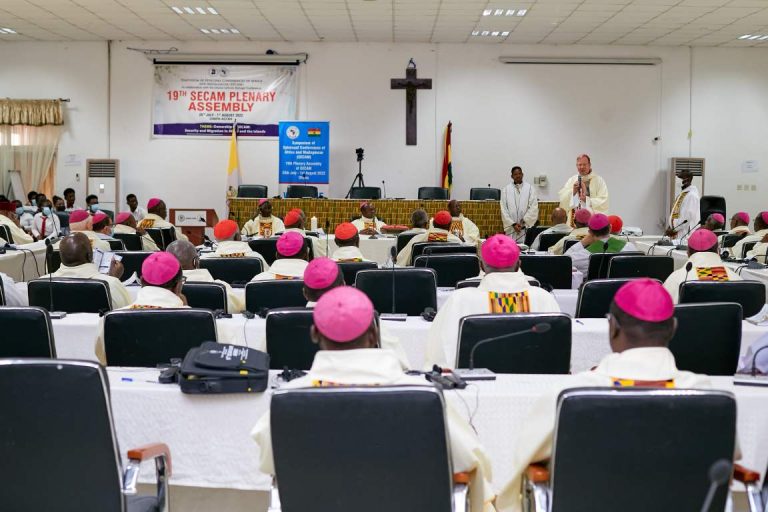
We, the Presidents of the Episcopal Conferences, Bishops, Catholic educators, leaders of Catholic universities and schools, members of Institutes of Consecrated Life and Societies of Apostolic Life, clergy, lay faithful, young people, and partners in Catholic education from across Africa and Madagascar, gathered in Addis Ababa for a four-day conference from 5-8 August 2026 for the First Continental Conference on Catholic Education. We examined the stakes, challenges and perspectives for catholic education in our continent of Africa.
Inspired by the Gospel of Jesus Christ, the teaching of the Church, the Global Compact on Education, the Kampala Document and the rich cultural heritage of Africa and Madagascar, we reaffirm that Catholic education is an essential ministry of the Church, a privileged instrument of evangelization, and a powerful force for moulding of character as well as the essential tool for integral human development.
Having reflected together on the opportunities and challenges facing Catholic education in our continent, and having listened to experiences from the different regions of our continent and intending to reinforce the results already achieved, we make the following declarations:
- Doctrinal Considerations
Based on the teachings of the Church, we affirm:
- The dignity of every human person, created in the image and likeness of God (Genesis 1,26-27).
- The inalienable right of every child and young person to receive a quality education rooted in truth, justice, faith, and human dignity (GS 26, GE 1).
- Catholic education as an integral part of the Church’s evangelizing mission (EN 44, Catholic School 1977, 9).
- The indispensable role of families as the primary educators of their children (FC 36).
- The contribution of Catholic educational institutions to nation-building, peace, ethical leadership, scientific advancement, and social transformation (GS 26,31,60, GE 8).
- School as a precious instrument for learning to weave bonds of peace and harmony within society from childhood through education in moral and spiritual values (AM, 76).
- The importance of participatory education based on the noble values of African culture, open to the contemporary world and inspired by the Gospel, as a guarantee of the New Evangelization and the integral development of our peoples (Kampala Document 198).
- Historical Considerations
Based on indisputable historical facts, we recognize:
- The historic contribution of Catholic schools, colleges, universities, seminaries, and formation centres throughout Africa and Madagascar.
- The dedication and sacrifices of bishops, priests, religious, teachers, parents, and lay collaborators in sustaining Catholic education.
- The growing challenges posed by poverty, conflict, forced migration, unemployment, inequality, digital transformation, climate change, declining moral values, and inadequate educational resources.
- The opportunities presented by technology, research, innovation, artificial intelligence and continental collaboration.
- Contextual necessities of our continent
Based on the realities that proper to our continent, we commit ourselves to:
- Strengthening the Catholic identity and mission of all Catholic educational institutions.
- Promoting academic excellence integrated with spiritual, moral, intellectual, social, and ecological formation.
- Investing in the recruitment, formation, and continuing professional development of Catholic educators and leaders.
- Ensuring that Catholic educational institutions are safe, inclusive, accountable, and committed to safeguarding children and vulnerable persons.
- Expanding access to quality Catholic education, especially for the poor, the physically challenged, the marginalized, the displaced, and the vulnerable communities.
- Promoting ethical leadership, peacebuilding, reconciliation, and responsible citizenship.
- Investing on new technologies and encouraging responsible and ethical use of artificial intelligence in teaching, learning, research, and administration.
- Strengthening collaboration among Catholic schools, universities, seminaries, religious congregations, and Episcopal Conferences across Africa and Madagascar.
- Promoting research, innovation, entrepreneurship, and skills development that respond to Africa’s realities and aspirations, capable of engendering job creation for those who go through catholic educational institutions.
- Advancing ecological education inspired by integral ecology and care for creation.
- Promoting the integral wellbeing of teachers and educators.
- Sharing of gifts between institutions and countries
- A call to co-responsibility
Knowing that the task for the formation of integral personality requires a synergy of action and co-responsible collaboration, (Final Document of Synod on Synodality 111), we call upon:
- Episcopal Conferences to make Catholic education a pastoral priority by establishing a functional national structure for Catholic education.
- Governments to recognize and support the contribution of Catholic educational institutions to national development.
- Catholic universities, schools, and formation institutions to strengthen quality assurance, good governance, and accountability.
- Religious congregations and Catholic organizations to continue investing in educational ministry.
- Parents and families to partner actively in the education and faith formation of their children.
- Development partners, African Union and others international bodies to collaborate in strengthening Catholic education throughout Africa and Madagascar.
- Continental Coordination
To ensure the realization of this Declaration, we recommend the establishment of SECAM Episcopal Commission for Catholic Education whose work would be to:
- Develop a SECAM Continental Framework for Catholic Education.
- Establish mechanisms for collaboration, monitoring, evaluation, and reporting.
- Encourage each Episcopal Conference to prepare national implementation plans.
- Convene periodic continental meetings to review progress, share best practices, and renew commitments.
VII. Conclusion
Putting ourselves at the disposition of Christ who through his Spirit working in us “is able to do immeasurably more than all we ask or imagine” (Eph3,20), we entrust this Declaration to the intercession of the Blessed Virgin Mary, Seat of Wisdom. We renew our commitment to forming generations of faithful disciples, competent professionals, ethical leaders, inventive entrepreneurs and responsible citizens who will contribute to the flourishing of the Church and society.
May Catholic education continue to be a beacon of hope, faith, knowledge, justice, and peace for Africa and Madagascar.
Adopted in Addis Ababa, Ethiopia
On 7 August 2026
Download | Télécharger| Descarregar
English: Addis-Ababa-Declaration-on-Catholic-Education
Français: Declaration-Addis-Abeba-Education-Catholique
Português: Declaracao-de-Adis-Abeba-sobre-a-Educacao-Catolica