
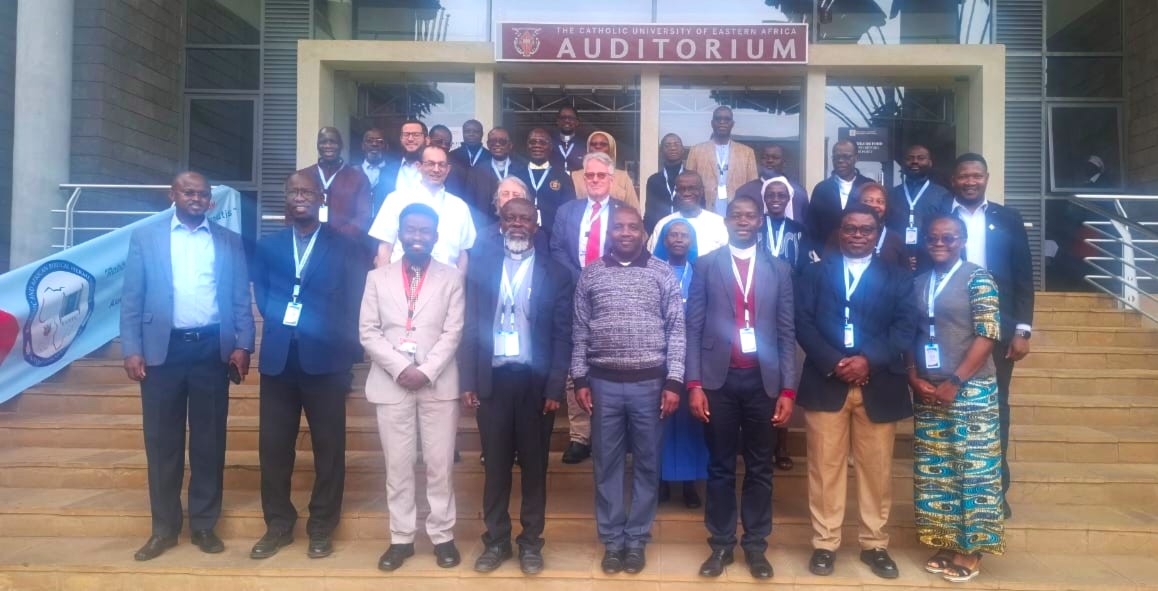
International Colloquium on Rabbinic and African Biblical Hermeneutics in Nairobi
Scholars from Africa, Europe, and North America are gathering from June 8 to 10, 2026 for the International Colloquium on Rabbinic and African Biblical Hermeneutics, an academic forum dedicated to exploring the diverse ways biblical texts are interpreted across cultures and traditions.
On June 10, final day of the International Colloquium on Rabbinic and African Biblical Hermeneutics, the agenda proposes presentations on inculturation, contextual and decolonial interpretations, biblical interpretation through drama, reception aesthetics, and integrated African approaches to Scripture. The day will conclude with a general debate, evaluation session, and closing remarks delivered by Fr. Anselm Kamuyu, Director of Biblical Centre for Africa and Madagascar (BICAM), a service of the Symposium of Episcopal Conferences of Africa and Madagascar (SECAM).
The ongoing colloquium underscores the growing importance of intercultural dialogue in biblical studies, bringing together Jewish and African perspectives to enrich contemporary understanding of Scripture. Participants are reflecting on how biblical texts can be interpreted through historical, linguistic, cultural, and contextual lenses, making them more meaningful for today’s faith communities.
The role of orality in biblical interpretation
A central theme throughout the meeting is the role of orality and communication in biblical interpretation. Presentations highlighted the oral origins of many biblical traditions and emphasized the importance of listening, performance, storytelling, and traditional modes of communication in understanding Scripture. Scholars also explored pragmalinguistic and ethnostylistic approaches that integrate language sciences into biblical exegesis.
The colloquium featured extensive discussions on Jewish interpretive traditions, including studies of the Dead Sea Scrolls, Philo of Alexandria, rabbinic ritual practices, atonement theology, and Greek interpretations of the Bible in the Greco-Roman world. These contributions demonstrated the diversity and enduring relevance of early Jewish biblical thought.
African biblical hermeneutics
During the discussions, African biblical hermeneutics occupied a prominent place. Indeed, researchers examined inculturation, intercultural mediation, African oral traditions, proverb-based interpretations, and contextual readings of Scripture addressing contemporary challenges such as poverty, conflict, gender inequality, and cultural identity.
Ps: Below are some details about this International Colloquium on Rabbinic and African Biblical Hermeneutics
Communication Officer of SECAM
——-
THE CATHOLIC UNIVERSITY OF EASTERN AFRICA (AMECEA) | FACULTY OF THEOLOGY | Department of Biblical Theology
INTERNATIONAL COLLOQUIUM (CUEA) | Theme: Rabbinic and African Biblical Hermeneutic
OPENING
- Opening Prayer by the University Chaplain (Rev. Dr. William Kosgei)
- Welcome by Very Rev. Prof. Stephen M. Mbugua, VC/DVC Research, Innovation, DVC academics and Students affairs)
- Opening Remarks: Rabbinic and African Biblical Hermeneutics Why? (Prof. Albert Ngengi Mundele)
SPEAKERS/ORATEURS, THEMES & ABSTRACT/RÉSUMÉ
- Paul Béré (Biblical Pontifical Institute/Rome): “Aural Criticism: What Is It and How Does It Operate?”
- Judith H. Newman, (Emmanuel College, University of Toronto): “Scripture and Early Jewish Interpretation in the Dead Sea Scrolls (200 BCE-70 CE)”
- Jean Bosco Matand Bulembat (Emeritus – Université Catholique du Congo/RDC): “Que les femmes se soumettent, comme le dit aussi la loi” (1 Co 14,34c-d). Enjeux herméneutiques de cette disposition paulinienne en contexte africain.
- Jean Koulagna (Institut luthérien de théologie de Meiganga (ILTM) au Cameroun): “Anthropologie et Science du langage en dialogue au service de l’exegese biblique: Illustrations avec l’ethno-stylistique”
- Jean-Claude Loba Mkole (University of the Free State/Bloemfontein-South Africa): “Philo: Life, Works and Methods”
- Francois Ngole Batuafe (Université Catholique du Congo/RDC): “Analyse pragmalinguistique de la Bible: Perspectives herméneutiques et procédés méthodologiques”
- Gerbern S. Oegema ( McGill University/Canada): “Greek Biblical Interpretations in Greco-Roman Judaism”
- Caroline Nkoberany (The Catholic University of Eastern Africa/Kenya): “An Exposition of Jean-Claude Loba-Mkole’s Approach of Intercultural Mediation”
- Naftali S. Cohn (Concordia University/Canada): “Ritual Practice, Rabbinic Biblical Interpretation, and a Theology of Closeness with God”
- Musa W. Dube (University of Boswana): “African Biblical Interpretation Frameworks”
- Michael Kodzo Mensah (University of Ghana/Ghana): “He Will Return the Evil” (Ps 54:5). Adamo, the Psalter’s Theology of Retribution and its Echoes in African Christianity”
- Shlomo Zuckier (University of Toronto/Canada): “Atonement in Rabbinic Biblical Interpretation”
- Josée Ngalula (Université Catholique du Congo/RDC): “Lectures africaines féminines de la Bible en dialogue avec les interprétations rabbiniques sur les menstrues”
- Moïse Adéniran Adékambi (Université Catholique de l’Afrique Centrale): “Pour une herméneutique parémiologique : concepts opératoires et illustration”
- Luke Emehiele Ijezie (Catholic Institute of West Africa/Nigeria): “African Biblical Hermeneutics: A Critical Appraisal of Justin Ukpong’s Inculturation Hermeneutics”
- Elizabeth W. Mburu (Africa International University/Kenya): “African Hermeneutics- An Intercultural Re-Reading of John 4”
- Ignace Ndongola (Université de Montreal/Canada): “La Théologie africaine Post colonial Boka di Mpasi Londi, une herméneutique narrative et existentielle des marges : relecture décoloniale”
- Yolande Gisèle N’Guessan (Missionary in Maputo Mozambique): “L’art dramaturgique, Instrument de Narration des textes bibliaques”
SCIENTIFIC SECRETERIAT – RAPPORTEURS
- Dr. Christophe Ntagwabira
- Dr. Joseph Ekalemon
- Dr. Anthony Kadyampakeni
- Anastasie Mbaya Kanza
- Oloserian Lesanga
- Maurice Owinyo
- Joe n’Cube
- Samuel Siraj
- Josephine Nyagwoka
- Pierre Claver Lonema
- Jane Nambiri
TRANSLATORS
Sr. Carine M. Tarla & Sr. Anastasie Mbaya Kanza: English>French & French>English



