Criado por irmãs, um órfão ruandês olha para o futuro
Criado por irmãs, um órfão ruandês olha para o futuro
Relatório Global Sisters (GRS) || Por Melanie Lidman || 20 de março de 2017
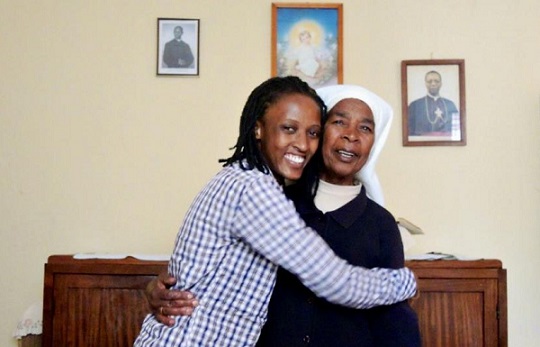
Quando Pacifique Uwimbabazi, 23, tem um problema, como muitos millennials em todo o mundo, a primeira coisa que ela faz é chegar para o telefone para mandar mensagem para alguém em quem ela pode confiar e pedir conselhos.
A pessoa que recebe a mensagem de texto é Ir. Athanasie Kayigamkia, uma Irmã Abizeramariya que criou Uwimbabazi desde o nascimento, depois que seus pais foram mortos no genocídio ruandês em 1994. A mãe de Uwimbabazi foi morta poucos dias depois de dar à luz, de modo que Uwimbabazi foi criado como um recém-nascido na casa Abizeramariya em Huye (anteriormente Butare; muitos nomes de lugares mudaram após o genocídio).
"Nossos orfanatos só vieram depois do genocídio", disse Kayigamkia, agora enfermeira que supervisiona o Centro de Saúde Matyazo, uma clínica de saúde católica em Huye. "Acolhemos crianças porque não tinham para onde ir. Nosso principal objetivo eram os idosos, mas vimos tantas crianças nas ruas que vinham nos pedir ajuda, então decidimos abrir orfanatos."
Quase da noite para o dia, os seis lares Abizeramariya para os idosos foram transformados em orfanatos agitados com mais de 40 crianças cada. Em cada domicílio, as crianças conviviam com cerca de meia dúzia de idosos, pois as irmãs queriam manter seu compromisso com os idosos.
"Ajudámos as crianças não só para as próprias crianças, mas também para o país", disse Marie Agnes Nysera, outra irmã Abizeramariya que vive no orfanato e lar de idosos em Huye. "Ajudar essas crianças estava vivendo pelo amor de Deus."
Abizeramariya significa "Aqueles que confiam em Maria" na língua local de Kinyarwanda. A congregação é a segunda mais antiga em Ruanda e foi fundada em 1956. Hoje, eles têm 160 irmãs em 13 comunidades em Ruanda, Quênia e Uganda.
Durante o genocídio, muitos de seus conventos eram refúgios para Tutsis fugindo do assassinato, e muitas pessoas procuraram as irmãs para esconder membros da família e crianças, de acordo com Testemunho do Tribunal Penal Internacional.
"Eu nasci basicamente na casa e vivi lá toda a minha vida até que eu estava no primário quatro [escola secundária]", disse Uwimbabazi. "Eu cresci lá. Tomaram-me como filha."
Uwimbabazi tem duas irmãs mais velhas, uma tia e um punhado de primos que sobreviveram ao genocídio. Ela manteve contato com sua família sobrevivente e foi visitá-los nas férias. Mas com o país em farrapos após o genocídio, cuidar de crianças extras às vezes era impossível, então Uwimbabazi ficou com as irmãs.
Kayigamkia deu seu primeiro nome a Uwimbabazi, Pacifique. "Queríamos que você tivesse paz e bênção de Deus", disse ela.
Para o ensino médio, Uwimbabazi seguiu os passos de um primo e ganhou admissão ao Aldeia da Juventude de Agahozo-Shalom, um internato para adolescentes vulneráveis que é celebrado por sua ênfase na criatividade e empreendedorismo.
No Agahozo-Shalom, Uwimbabazi entrou para o clube de liderança e para o clube de TV, onde ela criou notícias semanais sobre notícias internacionais e locais que foram exibidas durante os almoços de sexta-feira.
Agora ela espera frequentar a universidade, seja em Ruanda ou no exterior. Ela está esperando para ouvir sobre uma bolsa de estudos para estudar economia na McGill University no Canadá, ou negócios internacionais na African Leadership University em Kigali, ou a Universidade Nacional de Ruanda.
"Eu vou ser uma empresária, ou talvez uma designer de roupas, porque Ruanda tem um monte de roupas de segunda mão, mas eu acho que em 10 anos haverá mais um mercado para roupas novas", disse Uwimbabazi.
Ela voltou para o orfanato onde cresceu para compartilhar boas notícias com as irmãs que a criaram: Ela tinha recentemente marcado 67 de 73 em seus Exames Nacionais (semelhantes aos SATs).
Kayigamkia disse que as irmãs oraram para que Uwimbabazi se sentisse chamada para ser freira, o que faz Uwimbabazi rir. Embora tenha sido criada católica, no ano passado ela decidiu se tornar anglicana. "Eu expliquei às irmãs, a escolha é minha, agora que sou mais velho posso escolher, e elas disseram OK", disse Uwimbabazi.
"Ver esses jovens se formando é incrível", disse Kayigamkia. "Estes graduados terão um bom futuro." Duas outras crianças que cresceram com Uwimbabazi no orfanato estão agora no Agahozo-Shalom Youth Village e vão se formar em dezembro.
"Devemos ajudar os jovens, dar-lhes cuidado e amor, pois eles são o futuro de Ruanda", acrescentou Kayigamkia. "São os médicos e os professores de amanhã."
Uwimbabazi está entre os últimos sobreviventes do genocídio a se formar no ensino médio e deixar as irmãs. Agora, quase 60 por cento da população de Ruanda é 24 ou mais jovem, significando que eles eram bebês durante o genocídio ou nasceram depois.
Na última década, o país abraçou o UNICEF e abordagem internacional dos órfãos, que enfatiza colocá-los com parentes em suas comunidades em vez de em orfanatos separados.
"É bom ajudar os jovens, mas é melhor crescer com suas próprias famílias e não com as freiras", disse Kayigamkia, embora ela note que essa abordagem era impossível após o genocídio, quando a pobreza e a fome eram generalizadas.
Ela disse que a maioria das crianças que cresceram em suas instalações foram embora, para estudar ou para começar suas próprias famílias. "Um dos desafios com os órfãos é que não somos capazes de financiar sua educação [continua]", disse Kayigamkia. Alguns órfãos, como Uwimbabazi, conseguiram obter bolsas de estudo e continuar sua educação, às vezes até mesmo através da universidade.
Algumas crianças, agora jovens adultos, estão lutando e ainda vivem com as irmãs. Alguns têm problemas mentais ou emocionais e são incapazes de viver por conta própria. Mas, na maior parte, as Irmãs Abizeramariya voltaram ao seu propósito original de servir os idosos. Serviram cerca de 240 idosos em suas seis casas, fornecendo - lhes alimentos, acomodações, roupas e apoio espiritual, disse Kayigamkia.
Hoje, Uwimbabazi mora no fim da rua do orfanato onde ela cresceu, ficando com uma prima enquanto espera para saber onde ela vai estudar no próximo ano. Ela está ocupada observando os três filhos de sua prima e não visita sua antiga casa o tempo todo, disse ela.
Mas quando o faz, as irmãs sempre se lembram de colocar um prato de nozes torradas. — amendoins — sobre a mesa, enquanto se sentam na sala comum e alcançam, ouvindo sobre os planos de Uwimbabazi para o futuro. "Eles se lembram que eu gosto das nozes", disse Uwimbabazi.
"É como voltar para casa. É bom voltar para casa. São como minhas mães", disse. "Ser órfão não é uma escolha, mas se você tem um propósito em sua vida, você não precisa se sentir sozinha."
[Melanie Lidman é correspondente do Oriente Médio e África para o Global Sisters Report com sede em Israel.]
Fonte: Relatório Global de Irmãs...