Nous avons été scandalisés par une religieuse ghanéenne, et nous l'avons fait venir
Nous avons été scandalisés par une religieuse ghanéenne, et nous l'avons fait venir
Crux || Par Ines San Martin || 30 mars 2017
Pourquoi les tragédies en Amérique et en Europe sont-elles couvertes, mais d'autres tragédies encore plus importantes ne sont-elles même pas mentionnées ? Les peuples d'Afrique et d'autres pays non-occidentaux veulent que les médias internationaux couvrent leurs nouvelles, bonnes et mauvaises. Si les consommateurs donnaient des signes d'intérêt et de clameur pour ces histoires, les producteurs les fourniraient.
Permettez-moi d'être franc : La valeur médiatique perçue d'un événement est généralement mesurée par sa capacité à vendre des papiers ou à conduire du trafic. Pour cette raison, les pages d'accueil et les couvertures imprimées sont souvent remplies de tragédie. Autant que nous puissions être horrifiés, nous voulons également obtenir toutes les informations disponibles sur les catastrophes comme les attentats terroristes ou les catastrophes environnementales.
C'est presque tout.
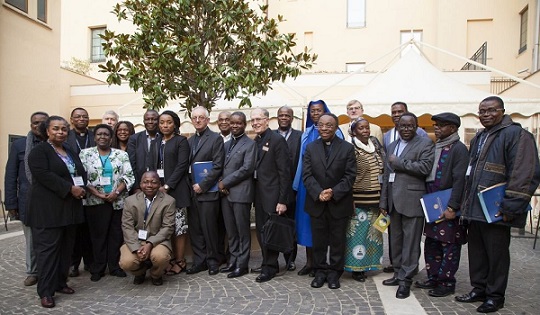
Mes collègues Crux, John L. Allen Jr, Claire Giangravè, et moi avons passé la plupart de la semaine dernière à couvrir une grande conférence sur la théologie africaine qui a lieu à Rome. Tard le premier jour de la conférence, une attaque terroriste à Londres a pris la vie de cinq personnes et laissé au moins 50 blessés.
Puisque trouver des voix pour écrire un article sur les réactions africaines à l'événement tragique était assez facile, nous nous sommes mis à les entendre. Et on a ces voix : Chaque fois que des gens sont tués dans ce que le pape François a souvent surnommé « actes de violence insensés », le monde sympathise.
Nous devenons tous français, britanniques, américains, espagnols dans de tels moments, et cette empathie est évidemment une bonne chose.
Pourtant, au même moment, Londres a été frappé par le terrorisme, au moins 20 personnes ont été tuées République centrafricaine. Ces derniers jours, plus de 80 personnes sont mortes et plus de 500 000 personnes ont perdu leur foyer au Pérou en raison de pluies intenses.
Plus de 200 âmes se seraient noyées dans les Méditerranée la semaine dernière, après que cinq corps aient été récupérés près de deux chavirements près de la côte libyenne. Comme l'a écrit l'organisation d'aide espagnole Proactiva Open Arms, qui a trouvé les corps, sur leur Facebook, « c'est un dur contrôle de la réalité de la souffrance ici invisible en Europe ».
Ils ont trouvé un sixième corps un jour plus tard, le 24 mars.
Mais aucun évêque n'a envoyé une déclaration sur les bateaux chavirés, et autant que lui le fait et dit pour les migrants et les réfugiés, même le pape François ne peut pas envoyer un télégramme chaque fois qu'une de ces tragédies se produit, ni mentionner la situation dramatique en Pérou tous les dimanches.
Tout ce qui a conduit Soeur M. Maamalifar Poreku du Ghana à nous demander, qui parle des nombreuses personnes vivant sous le travail forcé et la prostitution forcée en Afrique? Bien qu'elle ne l'ait pas voulu dire ainsi, il était difficile de ne pas se sentir réprimandé par une sœur missionnaire de Notre-Dame d'Afrique.
« Certains sont coupés vifs et leurs organes enlevés, et laissés mourir », dit-elle. "Ce n'est pas du terrorisme ?"
Comme elle l'a souligné, le problème n'est pas dans la couverture de l'attaque terroriste à Londres, mais dans le manque de couverture des attaques terroristes qui ont lieu quotidiennement en Afrique. Ces « questions graves », a-t-elle dit, devraient attirer « au moins la même attention ».
Et elle avait raison. Je me souviens d'une conférence de mes années universitaires dans laquelle un professeur, sans cacher son embarras, nous a dit que "accident de train aux États-Unis, dix morts" est une histoire de couverture, même dans notre nation d'Argentine. Pourtant, si cela se produit en Inde, quelques zéros doivent être ajoutés au bilan de la mort pour qu'elle reçoive la même attention.
Cette histoire est aussi ancienne que l'industrie de l'information, et elle parle autant de ceux qui produisent l'information que de ceux qui la consomment. La plupart des biais des médias sur l'allocation des ressources sont très simples : Il y a des factures à payer, et les histoires qui les paient, le plus souvent, sont celles qui reçoivent une couverture.
Les producteurs de médias réagissent aux fortes pressions du marché. Si les consommateurs donnaient des signes d'intérêt et de clameur pour ces histoires, les producteurs les fourniraient. Quand est-ce qu'il y a eu pour la dernière fois une manifestation massive de solidarité entre les utilisateurs occidentaux de Facebook, par exemple, pour soutenir les victimes du génocide en Syrie et en Irak ?
À bien des égards, il s'agit d'un appel aux consommateurs des médias en général: Nous avons tous le pouvoir de renforcer le système. Pour les catholiques en particulier, cela devrait être un impératif. « Catholique », après tout, signifie « universel ». L'Église s'est mondialisée avant que la mondialisation ne soit cool.
Une telle universalité est supposée être le paramètre par défaut catholique. Considérant qu'il y a 1,2 milliard de catholiques dans le monde, et plus de 60 millions aux seuls États-Unis, un intérêt clair à regarder au-delà de notre petit coin du monde pourrait être un changement de jeu.
De plus, si nous nous concentrions davantage sur les endroits qui semblent être loin, loin, nous connaîtrions aussi les gens en Afrique, en Asie et au Moyen-Orient. Cela nous permettrait de regarder au-delà des tragédies dont nous parlons parfois pour raconter les bonnes histoires aussi. Nous n'en faisons pas assez.
Sur ce front aussi, Poreku avait quelque chose à dire, et ce n'était pas flatteur.
« Je sais que les médias doivent exposer les choses mauvaises, mais j'aimerais qu'ils parlent aussi des bonnes choses qui viennent d'Afrique », a-t-elle dit.
"Quand nous entendons parler de l'Afrique, c'est la guerre, c'est la famine, c'est quelque chose de terrible. Mais est-ce là l'objectif de ce continent ? Je plaide avec les médias: Faites ressortir le bien et le positif de l'Afrique, parce que l'Afrique est l'avenir du monde!"
Ce plaidoyer s'applique non seulement aux professionnels des médias, mais à tous.
Comme note de bas de page, Poreku a parlé avec Allen à un moment différent lors de la conférence du 22 au 25 mars sur le rôle des femmes dans l'Église et bien plus encore, dans le cadre d'une série de vidéos en direct sur Facebook que nous avons fait de Notre-Dame de Global Gateway Center à Rome. Si vous avez 12 minutes, cela vaut une montre:
Source: Crux...