RAPPORT TRIENNAL DU BUREAU DES COMMUNICATIONS POUR LA 17ème ASSEMBLÉE PLÉNIÈRE DU SECAM À LUANDA, ANGOLA
#Plénaire17 #communications
“Allez annoncer la Bonne Nouvelle aux gens de toutes les nations (Matthieu 28:19).
La communication, où qu'elle se produise, a ouvert des horizons plus larges à de nombreuses personnes. C'est un don de Dieu qui implique une grande responsabilité. J'aime parler de ce pouvoir de communication comme de « proximité ». La rencontre entre la communication et la miséricorde sera fructueuse au point qu'elle génère une proximité qui soigne, réconforte, guérit, accompagne et célèbre. Dans un monde brisé, fragmenté et polarisé, communiquer avec miséricorde signifie contribuer à créer une proximité saine, libre et fraternelle entre les enfants de Dieu et tous nos frères et sœurs de la seule famille humaine. De: Message de la Journée mondiale des communications 2016.
Vos Éminences, Vos Grâces et Mon Seigneur Évêques, Agences Partenaires, Invités invités, que la Paix du Seigneur soit avec vous tous et meilleurs vœux du Bureau de Communication de SECAM.
1) Présentation
Ce rapport, qui couvre la période allant d'août 2013 au 10 juin 2016, donne un aperçu des activités générales du Bureau de la communication, des projets en cours d'exécution et de ceux qui n'ont pas encore été entrepris. Nous avons présenté quelques suggestions et nous avons demandé votre aimable considération. Ceux-ci visent à rendre l'Office plus efficace en ce qui concerne le rôle des médias dans la promotion des efforts d'évangélisation de l'Église en Afrique.
2) Nomination du président du CEPACS/président des communications sociales du SECAM.
Le Bureau des communications tient à exprimer sa gratitude aux membres du SECAM pour avoir nommé le révérend Emmanuel AdetoyeseBadejo, évêque d'Oyo Diocèse, au Nigéria, président épiscopal de CEPACS-SECAM Communications. La lettre de sa nomination, entrée en vigueur en février, a été signée par le Président de la SECAM, Mgr Gabriel Mbilingi, archevêque de Lubango, Angola.
La nomination de Mgr Badejo contribuera à la relance du Comité épiscopal panafricain pour les communications sociales. CEPACS, dérivé du nom français original : Comité épiscopal panafricain des communications socialess. Le CEPACS, qui n'avait pas de président depuis 2002, a été créé à Ibadan (Nigéria) à l'issue d'une réunion qui s'est tenue du 28 novembre au 2 décembre 1973 des évêques africains en collaboration avec le Conseil pontifical pour les communications sociales et Stem Van Afrika (Voix d'Afrique) aux Pays-Bas.
Mgr Badejo, également vice-président du Bureau des communications sociales de la Conférence épiscopale régionale de l'Afrique de l'Ouest (RECOWA-CERA0), est le cinquième président du CEPACS-Communications.
Le nouveau président du CEPACS a été officiellement présenté au président du Conseil pontifical pour les communications sociales, Mgr Claudio Maria Celli, à Rome, par Mgr Gabriel Mbilingi, président du SECAM, le 6 février 2015. C'était lors de la visite du Comité permanent du SECAM au Vatican.
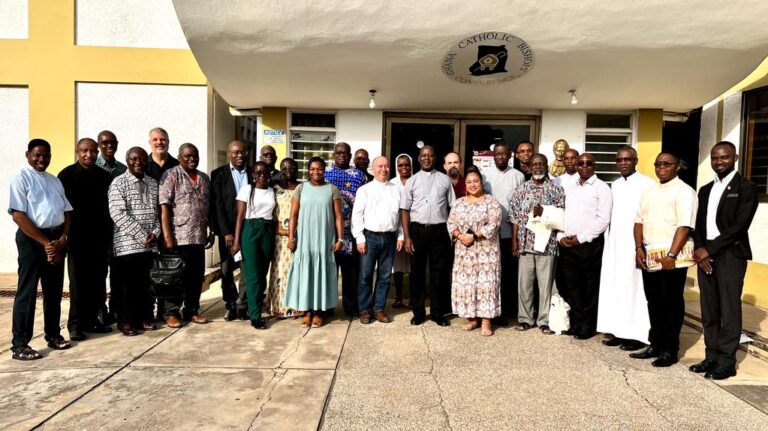
Afin de relancer le CEPACS, Mgr Badejo a déjà présidé une réunion des Présidents et Coordonnateurs épiscopals régionaux des Communications sociales et des Organismes partenaires, qui s'est tenue à Accra, au Ghana, en juin de cette année. Pour plus de détails, voir le communiqué et les résolutions joints au présent rapport.
Qu'est-ce que le CEPACS? Voici certains des objectifs du CEPACS :
a. Encourager, promouvoir et coordonner les activités des médias de masse en Afrique aux niveaux régional et continental.
b. Promouvoir la dimension chrétienne par l'utilisation de tous les aspects des médias dans le processus d'évangélisation, qui inclut le développement intégral de la personne humaine.
c. Favoriser de bonnes relations avec les médias chrétiens et laïques aux niveaux régional, continental et international.
d. Travailler de manière très spéciale et en étroite collaboration avec le Conseil pontifical pour les communications sociales et avec les organisations catholiques internationales des médias, par exemple SIGNIS. UCAP et CAMECO.
e. Collaborer avec d'autres organisations africaines et mondiales qui entretiennent des relations avec ces organisations catholiques internationales des médias.
3) Activités générales
Outre ses activités quotidiennes, le Directeur des communications continue de fournir des services pertinents aux autres bureaux du Secrétariat du SECAM. Il s'agit de publier des communiqués de presse, des informations générales, des protocoles, des réseaux avec les organisations de médias, etc. Les principaux domaines d'activité du Bureau sont les suivants :
i) Publications:
a) Qu'est-ce que SECAM? : Bureau de la communication a publié une version électronique mise à jour de Qu'est-ce que SECAM? De temps à autre, il sera mis à jour sur le site de SECAM.
b) Calendrier 2017: Un Calendrier SECAM 2017 avec des photos qui dépeignent les activités de SECAM ces dernières années est en cours d'impression pour nous par les Clarétiens au Cameroun sans frais pour SECAM.
c) SECAM Newsletter: En raison des coûts élevés d'impression et d'affranchissement de la publication des newsletters, le Bureau a trouvé opportun d'envoyer des informations sur les activités du SECAM, par exemple, sur les nominations de nouveaux évêques, les messages de solidarité et de condoléances, les messages des Conférences épiscopales régionales et nationales, entre autres, seulement par email jusqu'à nouvel ordre. Nous reprendrons la publication du bulletin SECAM lorsque des fonds seront disponibles pour fournir des versions électroniques et papier.
d) Répertoire de l'Église catholique en Afrique.
Suite à la publication réussie du premier Répertoire catholique pour l'Afrique par le SECAM en collaboration avec les Œuvres pontificales missionnaires de la Conférence épiscopale française en 2010, nous vous informons qu'il y a un retard dans la sortie de la deuxième édition. Cela est dû au fait que nous n'obtenons pas de fonds pour ce projet. Toutefois, des travaux ont été entrepris pour que le répertoire soit sous forme électronique. Il est placé sur le site web de SECAM au fur et à mesure que les informations sont reçues des diocèses et des conférences. La plupart des diocèses et des Conférences épiscopales ont peu d'informations pour mettre à jour le Répertoire. Nous demandons donc à ceux qui n ' ont pas communiqué leurs informations actualisées de bien vouloir les envoyer le plus tôt possible.
e) Affiche sur l'Année continentale de la réconciliation
Le Bureau des communications, avec les suggestions d'autres membres du personnel, a conçu l'affiche pour l'Année continentale de réconciliation SECAM, de juillet 2015 à juillet 2016. Il y a beaucoup de choses que le Bureau peut faire s'il y a une collaboration plus étroite et plus étroite entre le Bureau et certains de ses bureaux. (Elaborer).
ii) Communiqués de presse et articles sélectionnés:
Parfois, le bureau publie des communiqués de presse sur les activités du SECAM. Les informations qui intéressent les membres du SECAM sont compilées et envoyées de temps à autre aux évêques, aux agences de presse, à la radio du Vatican, etc. Nous sommes heureux que certaines des Conférences épiscopales régionales et nationales nous aient envoyé des nouvelles afin que nous puissions diffuser le plus largement possible en leur nom. On trouvera ci-dessous quelques-uns des principaux communiqués de presse et articles d'actualité sélectionnés publiés au cours de la période considérée :
a) Réunions du Comité permanent de 2014 à 2016.
b) Le décès du père Pierre Ile Bosangia, premier secrétaire général adjoint de SECAM (novembre 2014)
c) Atelier continental sur les petites communautés chrétiennes.
d) Nomination de Mgr Badejo au poste de président des Communications (février 2015).
e) Visite du Comité permanent au Vatican (février 2015). Un rapport narratif de cette visite est sur le site Web de SECAM.
f) Nomination de M. BerhanuTamene en tant qu'agent de liaison du SECAM avec l'Union africaine (UA), février 2015.
g) Congrès du JPDC en Namibie (mars 2015).
h) Nomination de l'archevêque Gabriel Justice Anokye au poste de président de Caritas Afrique et deuxième vice-président de Caritas Internationalis, Vatican. (mai 2015).
i) Séminaire CEEE-SECAM sur la famille au Mozambique (mai 2015).
j) Réunion consultative des évêques africains sur le Synode de la famille (Accra, juin 2015).
k) Un appel à la diffusion efficace du manuel de formation pastorale sur le VIH/sida (Accra, juin 2015).
l) Journée SECAM et lancement de l'Année continentale de la réconciliation (Accra, juillet 2015)
m) Séminaire sur le rôle des jeunes dans la consolidation de la paix et la réconciliation en Afrique (Kinshasa, RDC, août 2015.
n) Séminaire sur le rôle des femmes dans la consolidation de la paix et la réconciliation en Afrique (Nairobi, Kenya, août/septembre 2015).
o) SECAM obtient le statut d'observateur à l'Union africaine. (septembre 2015).
p) Atelier du personnel du SECAM sur la gestion du site Web (Accra, septembre 2015)
q) Session d'étude du Secrétariat de la SECAM sur Laudato Si (Accra, septembre 2015).
r) Assemblée plénière du BICAM au Rwanda en novembre 2015.
s) Assemblée plénière RECOWA-CERAO au Ghana, février-mars, 2016
t) Réunion des Secrétaires généraux des Conférences épiscopales régionales de l'Afrique, au Ghana, mars 2016.
u) Atelier BICAM en Afrique du Sud, mars 2016.
iii) Rapport narratif du Comité permanent Visite au Vatican
Nous avons également préparé un rapport narratif d'une visite officielle du Comité permanent au Vatican en février dernier. Le rapport a été affiché sur le site Web du SECAM.
iv)Conférence de presse au Vatican.
Lors du Synode sur la Famille en octobre dernier, le Directeur des Communications a organisé une conférence de presse et des entretiens individuels pour les Pères synodaux d'Afrique. Une trentaine de professionnels des médias accrédités au Vatican ont couvert la Conférence de presse.
4) Projets/programmes en cours
a) Centre d'information et de documentation.
Grâce à l'initiative du Bureau des communications, le Secrétariat du SECAM met à jour son Centre d'information et de documentation/enregistrements. Le Père KibromTseggai, prêtre érythréen travaillant dans l'Archidiocèse d'Accra, a achevé la première phase du projet grâce à une subvention du Fonds de solidarité de l'USCB pour l'Afrique. Il est prévu que ce centre devienne numérique dans le cadre de la deuxième phase du projet. Il s'agit d'un projet important que nous appelons à entreprendre à tous les niveaux dans l'Église catholique d'Afrique.
b) Mise à niveau et atelier du site Web SECAM.
La nouvelle adresse du site web SECAM est: WWW.SECAM.org ou SCEAM .org). Elle remplace la précédente:www.secam-sceam.org.Un atelier de formation sur le site Web a été organisé au secrétariat du SECAM, en septembre 2015, à l ' intention du personnel du secrétariat.
Le révérend Emmanuel A. Badejo, président épiscopal de CEPACS- Communications dans un discours lu en son nom a souligné la nécessité pour SECAM de construire un site Web très fort et interactif. Il a déclaré que le site web du SECAM devrait être une ressource précieuse et toujours disponible d'information sur les nombreuses activités des différents bureaux du SECAM et d'autres activités et initiatives pastorales en Afrique. « Nous devons faire savoir au monde ce que nous faisons - nous devons raconter notre histoire et la présenter efficacement. Personne d'autre ne peut faire mieux que nous-mêmes.»
La personne ressource pour l'atelier était M. Norman Servais de Metonia et AWESTRUCK Studios dans l'archidiocèse du Cap, en Afrique du Sud. Il a donné aux participants une formation de base sur la façon de gérer le contenu du site Web et d'utiliser l'interface Web. Au moment de votre Assemblée beaucoup de travail aurait été fait pour rediriger les visiteurs de l'ancien domaine vers le nouveau. Le nouveau site sera bientôt équipé d'une puissante fonctionnalité de réseau avec un design propre et simple.
Dans un proche avenir, le site regroupera les informations issues des différentes conférences épiscopales régionales. Cela constituerait un service précieux que le SECAM pourrait offrir et promouvoir les travaux des conférences régionales. Les Conférences pourront également se faire une maison sur le nouveau site dans un groupe interactif axé sur leur Conférence particulière. Cela facilitera une approche plus consolidée que le SECAM essaie d'encourager dans un effort pour illustrer une vision africaine de l'Eglise. Il y aura une fourniture de contenu supplémentaire tels que les lectures liturgiques quotidiennes, un flux TV EWTN personnalisé pour l'Afrique, etc. Nous prévoyons inclure des installations multimédias qui offriront la possibilité de tenir des vidéoconférences au besoin. Avec notre propre nom de domaine, nous avons maintenant des adresses électroniques plus sécurisées créées pour le personnel du Secrétariat. Vous êtes invités à rejoindre cette plateforme et à créer vos propres adresses email officielles pour éviter d'utiliser vos adresses privées pour des questions officielles.
Il a été recommandé que le secrétariat du SECAM équipe un de ses membres des compétences et des outils de conception graphique ou emploie un concepteur graphique pour gérer son flux d'information. Cela réduira la charge de travail qui doit être confiée aux concepteurs de sites Web.
L'atelier, organisé par le Bureau de communication du SECAM, a été rendu possible grâce à une subvention du Fonds de solidarité pour l'Afrique de la Conférence des évêques catholiques des États-Unis (USCCB). Nous leur sommes très reconnaissants pour ce grand soutien.
c) Les Agence de presse catholique pour l'Afrique (CANAA).
L'Agence de presse catholique pour l'Afrique (CANAA) projet lancé par le Bureau des communications en 2007 et finalement approuvé lors de votre Assemblée plénière en juillet 2013 fonctionne bien, mais a besoin de moyens financiers nécessaires à son travail et à sa croissance. Nous considérons cette initiative continentale comme un projet de communication digne qui vise à faire raconter à l'Afrique sa propre histoire.
La mission fondamentale de la CANAA est de recueillir des informations et de faire rapport sur et d'intérêt pour les Eglises locales d'Afrique et de diffuser ces informations à l'ensemble de l'Eglise en Afrique, ainsi qu'à l'Eglise mondialement et à tous ceux qui veulent en apprendre davantage sur la réalité et le développement de l'Eglise en Afrique.
Depuis 2013, la CANAA fournit des informations pastorales, sociopolitiques, économiques, des éléments, des commentaires et des analyses pertinents pour les personnes en Afrique et à l'étranger. Pour votre information, vous pouvez vous abonner gratuitement aux Nouvelles électroniques de la CANAA par l'entremise du site Web de la CANAA. www.canaafrica.org pour un abonnement en ligne ou en envoyant undemander à: canaa.coordinator@gmail.com.
Un conseil d'administration a été mis en place, avec des membres issus de tout le continent. Il est présidé par M. Charles G. Palmer-Buckle. Un coordonnateur, le père Don BoscoOnyalla, s'occupe du travail quotidien de la CANAA. Depuis 2014, la CANAA est officiellement enregistrée à son siège à Nairobi, au Kenya.
CANAA a besoin du soutien de tous les membres de l'Église, en particulier de la hiérarchie du continent pour survivre et prospérer. Nous appelons donc votre générosité à soutenir ce projet pour qu'il réussisse à promouvoir la mission d'évangélisation de l'Église en Afrique. Avec votre engagement et votre dévouement, un projet aussi important ne passera pas.
Depuis vous avez lancé une collection de jour SECAM, une partie du produit de cette collection et le soutien de certains évêques individuels peuvent aller beaucoup pour la soutenir. Nous devons exprimer notre reconnaissance au Révérend Charles G. Palmer-Buckle, Archevêque d'Accra, qui a personnellement soutenu la CANAA avec plus que les États-Unis$30 000 au cours des trois dernières années. Il en va de même pour la Conférence épiscopale catholique du Nigeria qui a soulevé des questions sur les États-Unis$11 000,00 à l'occasion de Mgr Emmanuel Badejo pour soutenir les travaux de la CANAA. Il s'agit d'un geste qui devrait être reproduit dans d'autres domaines et pays d'Afrique. Aujourd'hui, l'information et la communication sont la vie des organisations modernes et la CANAA est bien placée pour y parvenir.
Outre la collection SECAM DAY, il peut être nécessaire d'organiser une campagne spéciale de collecte de fonds pour la CANAA. Certains partenaires étrangers sont prêts à soutenir la CANAA à condition que les Evêques d'Afrique fassent preuve d'un plus grand engagement envers la durabilité du projet.
Nous devons comprendre que le succès de ce projet est entre les mains de l'Eglise en Afrique. Nous devrions résister en fonction uniquement des fonds des donateurs étrangers. Nous devons essayer autant que possible d'obtenir une grande partie du financement local pour qu'il décolle en plein essor. (L'archevêque Palmer-Buckle Bishop et Badejomay détaillent cela.)
d) Documentaire sur les activités de l'Église en Afrique.
Afin de donner une plus grande visibilité au travail du SECAM et, en fait, à celui de toute l'Église en Afrique, le Bureau des communications préparait un projet qui comporterait la production d'un film ou d'un documentaire sur les activités de l'Église catholique en Afrique. Le documentaire serait structuré comme suit : Ecclésia en Afrique et AfriqueeMunus. Les questions socio-économiques, de bonne gouvernance et de démocratie, d'environnement, etc. seront prioritaires dans ce documentaire. Beaucoup est fait dans nos différents pays dans le domaine de l'évangélisation et du développement humain intégral, mais peu ou rien n'est mis en avant ou domaine public. Nous espérons que le documentaire abordera cette question. Même si vous avez donné votre approbation en 2013 pour la réalisation de ce projet, nous l'avons malheureusement mis en attente pour le moment afin de nous concentrer sur le travail de l'agence de presse continentale-CANAA. La ou les raisons sont auto-explicites-élaborées.
5) Programmes et séminaires de formation
a) Séminaristes et religieux en formation
Nous voudrions répéter une demande faite dans des rapports précédents sur la nécessité d'amener les prêtres et les religieux à engager les médias plus qu'ils ne le font actuellement. Cela peut commencer lors de leur formation dans les séminaires et les noviciates. Il a été souligné à maintes reprises que les séminaires et les centres de formation religieuse intègrent l'enseignement des communications sociales dans leurs programmes. Un guide 1986 de la Congrégation pour l'éducation : Guide de formation des futurs prêtres concernant les instruments de communication sociale donne des détails sur ce besoin. Il faut faire davantage en réponse à l'appel lancé dans ce guide. Là où cela ne peut pas être fait immédiatement, il serait bon que de courts cours ou séminaires puissent être organisés pour les prêtres aux niveaux diocésain et national. Il y a un dicton selon lequel si votre enfant vit près de la plage, il vaut mieux lui apprendre à nager que de construire un mur pour l'empêcher de nager.
b) Collaboration avec SIGNIS et l'UCAP
L'une des priorités du Bureau des communications est d'aider à la formation des professionnels des médias catholiques sur le continent afin de renforcer leurs capacités dans le domaine des communications sociales. Dans la plupart des cas, nous le faisons en collaboration avec SIGNIS-Africa et l'Union de la presse catholique africaine (UCAP).
Il est prévu d'organiser un programme de formation pour les membres de SIGNIS-Africa l'année prochaine. SIGNIS (Association mondiale catholique pour la communication). La formation sera axée sur les stations de radio et de télévision catholiques. Il y a beaucoup de stations de radiodiffusion catholiques qui doivent être aidés à trouver de meilleures productions/programmes. SIGNIS International par la Propagation de la Foi a soutenu certains de nos projets; nous leur en sommes reconnaissants.
En juillet-août 2014, un atelier et un congrès de l'Union des journalistes catholiques en Afrique (UCAP) ont eu lieu à Bamako, au Mali. Le prochain programme aura lieu l'année prochaine au Cap, en Afrique du Sud. De nouveaux membres du Bureau ont été élus lors du Congrès de Bamako, notamment :
Président : M. George Sunguh, Kenya
Premier Vice-Président : M. Desire Baere (République démocratique du Congo).
Deuxième Vice-Présidente : Mme Victoria Lugey (Ghana)
– Secrétaire général: M. RoderiqueDembele, Mali
- Monsieur CleophasTyenou, Mali.
Inventaire: L'Eglise catholique en Afrique a certainement au fil des ans parrainé la formation du personnel—Clergé, religieux et laïcs—dans différents domaines des médias en Afrique, en Europe, au Canada et aux États-Unis. Ne serait - il pas utile de connaître ceux qui ont été formés, à quel niveau et à quel niveau? Travaillent-ils dans l'apostolat de la communication? Dans les médias de l'Église ou à l'extérieur ? Un tel inventaire pourrait être établi par le bureau national et régional des communications sociales pour chaque pays et les résultats pourraient être communiqués au secrétariat du SECAM.
6) Informations générales
a) Relations avec les professionnels du Vatican et des médias étrangers
Nous avons également établi des relations très solides avec les médias internationaux, en particulier avec les responsables rattachés au Bureau de presse du Vatican; VIS; MISNA; FIDES; EWTN; CNS; La Croix de France; Aleteia; National Catholic Reporter; ANSA; Rome Reports, LUMEN TV au Nigeria, pour ne citer que quelques-uns.
b) Programme radiophonique hebdomadaire sur Radio Veritas, Afrique du Sud.
Le Directeur des Communications de SECAM, depuis septembre 2013, à la demande du Fondateur et Directeur de Radio Vartias, le Révérend Père Emil Blaser OP, participe à un programme hebdomadaire sur Radio Veritas à Johannesburg, en Afrique du Sud. Ce programme nous donne l'occasion de donner des informations sur le travail des différents bureaux du SECAM et parfois sur l'actualité autour du continent. C'est en effet l'une des façons de contribuer à rendre SECAM plus visible. Le programme est diffusé tous les jeudis matins sur une fréquence de 92,7 FM. Il est également disponible sur Internet/en ligne.
c) Nouvelles stations de télévision privées catholiques.
Plusieurs conférences diocésaines et épiscopales ont mis en place des chaînes de télévision, par exemple en Tanzanie, en Zambie, en République démocratique du Congo et au Burkina Faso. Les mesures suivantes ont été mises en place au cours des trois dernières années:
i) Lumen Christi, une station privée de télévision par satellite a été créée par un Lay au Nigeria. Selon le fondateur, la LCTC sera finalement remise aux évêques catholiques du Nigéria.
ii)La Conférence épiscopale de Côte d'Ivoire a récemment créé une station de télévision nationale à Abidjan.
d) Diffusions du Vatican et de la Journée mondiale des communications
Un certain nombre de pays ont maintenant un lien direct pour la diffusion des programmes de Radio Vatican. Nous encourageons donc tous les pays à faire en sorte que leurs stations nationales de radio et de télévision diffusent quotidiennement des émissions de la Radio Vatican, en particulier celles présidées par le Saint-Père à Noël et à Pâques.
Nous voudrions également souligner la nécessité de célébrer la Journée mondiale des communications aux niveaux national et régional.
e) Relations avec d'autres organisations
Ce bureau entretient des relations de travail étroites avec le Conseil pontifical pour les communications sociales, le Conseil des médias catholiques (CAMECO) d'Allemagne et l'Association mondiale catholique pour les communications (SIGNIS). Nous avons également de très bonnes relations de travail avec l'Office de communication du Conseil des Conférences épiscopales européennes (CEPE). Le directeur des communications a été invité à une réunion des coordinateurs des conférences épiscopales nationales en Europe qui s'est tenue au Portugal en mai 2014.
7) Quelques-unes de nos principales demandes de considération aimable
a) Sondage auprès du CEPACS - Bureau des communications
Le Conseil catholique des médias (CAMECO) à Aix-la-Chapelle, en Allemagne, en collaboration avec le Conseil pontifical pour les communications sociales, a réalisé une enquête sur les communications CEPACS. Le rapport résume le processus mis en œuvre jusqu'à présent en ce qui concerne l'élaboration d'un aperçu des tâches, du rôle et des fonctions futures de la communication SECAM. Le CAMECO sollicite l'approbation du SECAM pour organiser un atelier sur les résultats de l'enquête et recueillir davantage de suggestions/recommandations concernant l'avenir du CEPACS et du Bureau des communications du SECAM.
b) Nomination de coordonnateurs régionaux des communications.
Encore une fois, nous vous invitons à bien vouloir aider vos régions à nommer des coordonnateurs des communications à temps plein au niveau régional. Outre AMECEA et RECOWA-CERAO, les autres régions d'Afrique n'ont pas d'agents de communication à temps plein ni même de bureaux. Il nous est donc difficile d'avoir des programmes de communication significatifs aux niveaux régional et continental et la situation doit changer avec votre aide.
c) Appel au financement des communications du SECAM
L'obtention de fonds auprès des agences partenaires pour la réalisation de projets et d'activités du Bureau de la communication et la rémunération du personnel deviennent de plus en plus difficiles. C'est pour cette raison que nous voudrions recommander de trouver une source de financement plus durable pour alléger le fardeau qui pèse sur le Bureau. Nous passons trop de temps à chercher du financement pour nos activités. Depuis dix ans, le Bureau est géré par pratiquement une personne. Un appel est de nouveau lancé pour l'emploi de plus de personnel (par exemple un secrétaire de bureau qui peut également gérer le site Web de SECAM) pour lui permettre de donner de son mieux pour le bien de l'Eglise en Afrique.
d) Objet: SECAM DAY et auto-reliance - une proposition
Il est gratifiant de noter que des mesures sont prises concernant l'approbation que vous avez donnée suite à une suggestion du Bureau des communications pour la célébration du JOUR SECAM/ COLLECTIONS. Pour aller plus loin, nous suggérons que, sur la question de l'autonomie, vous envisagez la création d'un comité de levée de fonds continental pour définir les modalités. (Elaborer).
e) Rôle et fonction du Bureau de la communication.
Nous vous invitons à examiner avec insouciance le rôle et la fonction du Bureau de la communication en ce qui concerne l'organigramme du SECAM. Cela n'a rien à voir avec les Statuts. Une explication sur cette question figure dans la note qui a déjà été envoyée au président du SECAM. Mgr Badejo peut donner des précisions sur cette question.
f) Répertoire
Nous appelons les diocèses et les Conférences qui n'ont pas encore soumis leurs informations actualisées pour le Continental Directory of the Catholic Church in Africa à le faire le plus tôt possible.
8) Préoccupations générales concernant l'avenir des communications dans l'Église en Afrique.
Il doit être a souligné que l'Eglise en Afrique doit se relever des défis des médias, sinon nous serons encombrés par d'autres corps ou groupes religieux. Avec le nombre croissant de stations de radio catholiques sur le continent couplé avec les nouvelles technologies des médias, par exemple, les services Internet, les médias sociaux- twitter, face-time, twitter, facebook, linkedin, whatsapp,etc. l'Eglise devrait s'efforcer de profiter d'eux pour sa mission d'évangélisation.
L'Eglise en Afrique doit également investir dans les ressources humaines et matérielles si nous voulons vraiment atteindre le plus de personnes possible dans nos efforts d'évangélisation en ces temps modernes et sécularisants.
C'est donc notre espoir et notre prière que SECAM Communications obtiendra le soutien nécessaire de vous pour lui permettre offrir des services efficaces pour le bien de l'Église et de notre continent.
Comme l'a dit G. K. Chesterton : Nous ne voulons pas ... une Église qui va bouger avec le monde. Nous voulons une Église qui fera bouger le monde.
9. Nécrologie:
Nous vous informons et vous prions de bien vouloir vous souvenir dans vos prières de nos collaborateurs décédés au cours des trois dernières années, en particulier:
a) Son Éminence, Bernard Cardinal Agre, Archevêque émérite d'Abidjan, Côte d'Ivoire. Il est décédé à Paris le 9 juin 2014 à l'âge de 88 ans. Cardinal Agre a été pendant de nombreuses années président du CEPACS.
b) Révérend Joseph Befe-Ateba, évêque de Kribi décédé en Afrique du Sud le 4 juin 2014 à l'âge de 52 ans. Il a immédiatement été directeur de la Commission des communications de SECAM.
c) Rev, P. Andre Quenum, rédacteur en chef de La Croix du Bénin, décédé l'an dernier. Il était l'un des membres du Groupe de travail qui a appuyé ce bureau dans le travail initial pour la mise en place de la CANAA.
d) Mother Angelica, a Nun who founded the worldwide Eternal Word Television Network (EWTN), passed on Easter Sunday this year at age 92. In addition to founding the Eternal World Television Network, Mother Angelica was the foundress of Our Lady of the Angels Monastery, Franciscan Missionaries of the Eternal Word, the Shrine of the Most Blessed Sacrament, and the Knights of the Holy Eucharist. Her work, begun in the cloister, reached across the globe. She was a convincing sign as to how even the humblest of beginnings can yield abundant fruit.
e) Knight Commander Robert Molhant born in 1940 died on April 12, 2016 at his home in Brussels. He was the first Secretary General of SIGNIS (2002-2005) and Secretary General of OCIC, the International Catholic Organization for Cinema, (1979-2002). On his retirement from SIGNIS, he took on the Presidency of CREC International, a Communications and Media Training Institute in Lyon, France. To mark his retirement from SIGNIS in 2005, Robert was appointed by the Pope as a Knight Commander of the Order of St. Gregory the Great. In December 2006, he was honoured by the Salesian University in Rome with a Doctorate in Social Communications (HonorisCausa) for his contribution to communications. He was a devoted family man, with three children and six grandchildren.
10) Appreciation and Gratitude
We wish to express our sincere thanks to all our Partner Agencies, our Technical Consultants and all those who have given invaluable contribution to the work of this Office.
On a personal note, I will like to let you know that this is the last time that I will be presenting you a report in my capacity as Director of Communications of SECAM. I informed the Standing Committee, verbally, during its meetings of October 2015 and, in writing, in February this year about my decision to leave SECAM after 11 years of service. I had earlier spent about 24 years in the Communications Commission of the Ghana Catholic Bishops’ Conference. (Give a verbal elaboration on the reasons for having taken this decision).
I would like to convey special thanks and appreciation to the past and present Presidents and Standing Committee members and all of you Bishops of SECAM for having given me the opportunity to serve the Church in Africa in this capacity. Please permit me to mention the following for the enormous role that they have played in my life at SECAM Secretariat:
a) Members of the Ghana Catholic Bishops’ Conference under the then Presidency of Cardinal Peter Turkson for having released me to serve at the Communications Office of SECAM.
b) Two former Presidents of SECAM- His Eminences, Cardinals John Cardinal Onaiyekan& Polycarp Pengo for having employed me, supported me and indeed for their fatherly advice during their Presidency at SECAM.
c) Archbishop Palmer-Buckle of Accra and Treasurer of SECAM; we have gone through thick and thin together from my days at the National Catholic Secretariat of Ghana up till this point. Without his encouragement and support in my work CANAA, in particular, would not have seen the light of day.
d) Most Rev. Emmanuel Badejo, the new President of CEPACS/SECAM Communications, whom I am more than convinced will move the Communications activities at SECAM to higher levels.
e) Rev. Fr. Francois-Xavier Damiba, the immediate past Secretary General of SECAM for the great collaboration, cordial working relations, his pastoral and brotherly support, etc.
f) A number of Partner Agencies, organisations and individuals; the USCCB Solidarity Fund for Africa and two of its staff- Messrs Patrick Markey and Fritz Zuger; the Episcopal Conferences of Spain, Italy and CCEE( Council of Episcopal Conferences of Europe; Aid to the Church in Need, Germany; SIGNIS; Propagation of Faith; CAMECO; former President of the Pontifical Council for Social Communications, Cardinal John Patrick Foley, who showed great interest in my work in the Church.
g) Past and present staff of SECAM Secretariat; National and Regional Episcopal Conferences in Africa, etc. To each and every one of you I say THANK YOU VERY MUCH!!!
May Mary, the Queen of Africa, bless you in your esteemed apostolate in this Extraordinary Jubilee Year of Mercy. And may we be merciful as the Father is Merciful so that the Jubilee of Mercy may be a year of grace with renewed enthusiasm for the Church in Africa.
Thank you so much. God bless!
Approved by:
Most Rev. Emmanuel A. Badejo, Chairman of CEPACS-Communications Office of SECAM.
And Presented by:
By Benedict Batabe Assorow.
Directeur des communications
CEPACS/Communications Office, SECAM.
Tel: 00 233 244274186