L ' impact des changements climatiques en Afrique et les efforts déployés pour y faire face
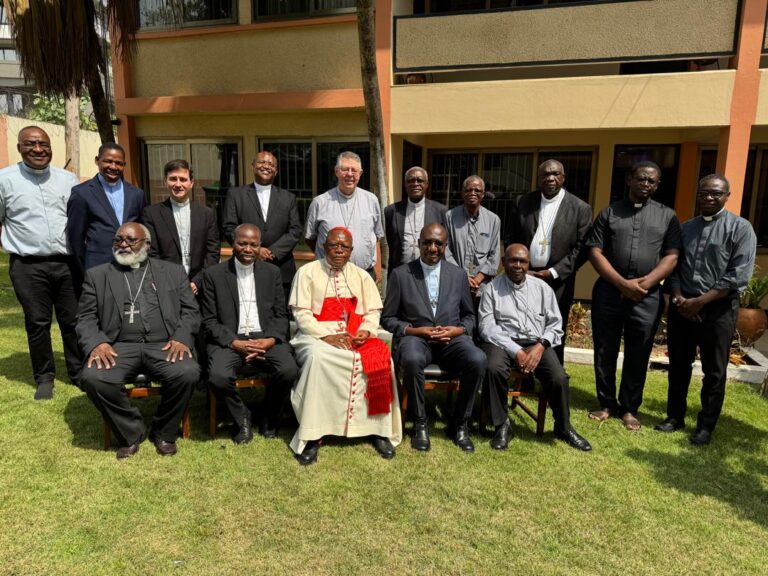
Mgr Sithumbele Sipuka, évêque de Mthatha représentant le SECAM lors d'une réunion des évêques avec les délégations gouvernementales à l'occasion de la CdP 20
1. L ' impact des changements climatiques en Afrique
Mon mandat est de partager avec vous "comment le changement climatique affecte les communautés les plus vulnérables et comment SECAM est engagé sur les questions de changement climatique, et objectif de développement durable" En 2010, la SECAM a participé au dialogue des continents de l'hémisphère Sud, appelé dialogue Sud-Sud. Dans ce dialogue, il a été observé que « les changements climatiques qui se manifestent dans l'élévation du niveau de la mer, les changements de configuration des précipitations, la fonte des glaciers dans les montagnes, la fonte des glaces, l'augmentation des temparatures et les phénomènes météorologiques extrêmes (tempêtes, vagues de chaleur et de froid, inondations prolongées, sécheresses graves, etc.) affectent de diverses manières tous les peuples de la terre et en particulier les pauvres » (Dialogue Sud-Sud). Ces observations sont étayées par des recherches scientifiques difficiles à ignorer.
Pour moi, le fait du changement climatique et de son effet a été confirmé dans un récent atelier animé par Fastenopfer pour la communauté de Pella dans la partie nord de l'Afrique du Sud. Bien que ces gens ordinaires n'aient pas été en mesure d'exprimer en termes scientifiques le fait du changement climatique et ses effets, ils ont été clairs sur la façon dont les conditions météorologiques ont changé de 1960 à nos jours.
Entre autres choses, ces gens ordinaires se sont exprimés en relation avec le changement climatique et ses effets, car ils ont vécu des «sécheresses répétées, des températures plus élevées, des tempêtes de poussière fréquentes et des inondations dévastatrices causées par de fortes chutes de pluie» (atelier de Pella). Ils ont également noté l ' impact de ces risques sur la santé humaine et sur les moyens de subsistance économiques essentiels. Les observations faites dans le cadre de cet atelier sont confirmées dans l'analyse approfondie et détaillée de l'impact des changements climatiques en Afrique réalisée par la Convention-cadre des Nations Unies sur les changements climatiques.
Nous ne parlons donc pas ici de quelque chose de théorique, ni de l'Église qui pousse notre propre idéologie sur la façon dont le monde doit être géré, mais nous parlons de l'expérience des gens que nous servons qui ressentent les effets négatifs du changement climatique. Nous osons faire une présentation à cette réunion internationale parce que les effets du changement climatique ne connaissent pas de frontières. Les comportements et les pratiques peu respectueux de l'environnement pratiqués dans une partie de la planète affectent également d'autres parties de la planète.
Comme l'ont fait observer certains observateurs, l'Afrique, par rapport à l'Europe, à l'Amérique du Nord et à la Chine, contribue le moins aux changements climatiques, mais elle souffre le plus des effets négatifs des changements climatiques et continuera de le faire de façon progressive si rien n'est fait. L'aggravation des effets des changements climatiques entraînera une pénurie de ressources, ce qui entraînera des conflits sociaux et politiques en raison de la pénurie de ressources. Ce n'est donc pas parce que nous aimons faire le tour du monde que nous sommes ici; nous sommes ici parce que nous voyons les effets du changement climatique détruire la vie de notre peuple, et nous voudrions mettre leur sort au service des décideurs en matière de climat. Nous sommes ici pour que les pauvres ne soient pas oubliés sur une question cruciale du changement climatique qui a des répercussions sur eux.
2. Que peut-on faire?
Comme on le sait, et comme il a été clairement indiqué dans le communiqué de presse du CIDSE sur les résultats du Sommet de New York sur le climat en septembre 2014, l'économie basée sur le carbone, les industries d'extraction destructrice, la production de combustibles fossiles et la désaffectation sont parmi les principales causes du changement climatique. En tant que SECAM, nous nous associons aux appels à explorer et à trouver des méthodes d'économie et de production plus amicales afin d'assurer une vie juste et harmonieuse avec la planète. Notre appel ne se limite pas aux dirigeants internationaux, mais aussi aux personnes qui nous sont proches, à savoir nos gouvernements en Afrique et, plus important encore, les personnes que nous servons pour qu'elles deviennent elles aussi des agents actifs dans la lutte contre le changement climatique.
2.1 Appeler contre la tentation de recourir à la production d'énergie destructrice.
La cause la plus importante et la plus importante des changements climatiques est l'émission de dioxyde de carbone provenant du charbon, qui est en grande quantité en Afrique. Comme la production d'énergie à base de charbon est la plus largement utilisée par les pays développés, l'Afrique est tentée et peut même être persuadée de suivre la même voie de production d'énergie à base de charbon. Tentant comme tel, l'Afrique est appelée à donner l'exemple en ne prenant pas part à la production d'énergie à base de charbon, mais en adoptant des méthodes de production d'énergie plus propres et respectueuses de l'environnement.
Une autre génération d'énergie apparemment peu respectueuse de l'environnement est la fracturation. Actuellement en Afrique du Sud, il y a une grande inquiétude au sujet de la fracturation prévue de la région de Karroo du pays. Alors qu'il est prévu que les effets immédiats de la fracturation donneront des résultats positifs de l'approvisionnement en gaz, pesés par rapport à son côté et les effets à long terme pour l'écologie et pour les gens, cette entreprise ne semble pas viable, et pourtant il y a des indications qu'elle sera lancée. En raison de ses effets nocifs à long terme, SECAM s'oppose à la fracturation.
Nous affirmons que l'Afrique doit bien exploiter et gérer ses ressources, en particulier ses ressources naturelles et minérales, pour générer davantage de revenus qui seront ensuite utilisés, entre autres, pour se lancer dans des méthodes plus propres de production d'énergie. Nous appelons donc les dirigeants africains à mettre fin à l ' extraction injuste et destructrice des ressources afin que les revenus provenant des ressources naturelles et minérales puissent être utilisés pour produire des énergies propres. Deuxièmement, les pays développés doivent aider l'Afrique à se lancer dans la production d'énergie propre. On se souviendra que les pays développés se sont engagés à allouer des fonds aux pays sous-développés pour faire face aux effets des changements climatiques. Il n'y a aucune raison que ces fonds ne puissent pas être utilisés pour aider l'Afrique à produire des énergies propres.
2.2 Faciliter l ' engagement de la population face aux changements climatiques
Le SECAM cherche à impliquer les gens ordinaires comme agents du changement dans la lutte contre le changement climatique, et pas seulement les dirigeants. Il y a peu d'exemples où des ateliers ont été organisés pour sensibiliser davantage le public au fait et aux effets des changements climatiques. Comme je l'ai déjà indiqué, en Afrique du Sud, nous avons organisé un atelier sur les changements climatiques. Un autre atelier similaire s ' est tenu au Kenya en juillet 2014 à l ' intention des jeunes afin de les sensibiliser aux changements climatiques et à leurs effets.
C'est important parce que certains de nos peuples se sont soumis au destin du changement climatique, pensant que c'est quelque chose au-delà de leur pouvoir et peut-être que c'est même l'acte de Dieu que le modèle du temps a changé, alors qu'il n'a que très peu de rapport avec Dieu. Le changement climatique est fait par l'homme, et parce qu'il est fait par l'homme, l'homme peut l'inverser au lieu de se résigner. Le changement climatique doit être présenté d'urgence, car plus nous attendons longtemps les conséquences désastreuses et plus tôt nous serons confrontés à une crise inimaginable. Comme le Pape François l'a récemment déclaré dans sa manière simple typique, mais très profondément que, "Dieu pardonne toujours, nous pardonnons parfois, mais quand la nature est blessée, elle ne pardonne jamais, elle cherche à se venger", le dommage à la nature atteint une proportion de crise. Le Pape semble suggérer que si nous ne réduisons pas ces dommages maintenant, il restera très longtemps avec des conséquences catastrophiques pour les générations à venir.
Comme l'a dit un auteur, « nous devons convaincre les gens que nous sommes confrontés à un problème moral massif et global, plus grave que la guerre, bien plus grave que les effondrements financiers, étroitement liés mais transcendant même les inégalités sociales, et certainement beaucoup plus que nos préoccupations personnelles. Ce n'est qu'à ce moment-là que nous pourrons engager la collectivité à une profondeur suffisante pour changer les comportements au-delà du recyclage et réduire leur empreinte carbone. Pour utiliser explicitement le langage biblique et chrétien, le réchauffement climatique doit être considéré dans le contexte du bien et du mal, de la vertu et du péché. Nous devons parler dans un langage qui indique que ce que nous faisons au monde naturel est mal... nous tuons le système de vie de la planète et nous tuons la planète elle-même ». (Collins 2011 : 52).
Puisque nous nous engageons dans des questions de changement climatique du point de vue d'être chrétiens et catholiques, SECAM's réflexion sur le changement climatique s'inspire de la théologie catholique de la création et de l'enseignement social de l'Église qui est un récit formidable (perspective) basé sur des valeurs incontestées de bien commun et de valeur intrinsèque des choses. L'approche de la valeur intrinsèque est qu'on apprécie l'importance des choses et qu'on ne les voit pas seulement en ce qui concerne ce qu'elles fournissent pour nos besoins, mais aussi pour leur valeur inhérente et donc leur droit d'exister et d'être protégés. Ainsi, la planète n'existe pas seulement pour les êtres humains, elle a aussi une valeur intrinsèque à elle comme la création de Dieu.
Le deuxième principe est le bien commun qui suggère que si nous devons utiliser certaines parties de la planète, nous devons le faire en considération des autres, parce que nous ne sommes pas seuls sur cette planète et que ce faisant, nous le faisons aussi en considération du bien de la planète elle-même. Nous le faisons de telle manière que la planète ne soit pas détruite. Ce sont donc les principes que nous utilisons en catéchisant ou en sensibilisant notre population au changement climatique dans SECAM.
2.3 L ' élimination de la pauvreté en tant que partie intégrante du climat normalisation
Cette prise de conscience de la pollution de l'environnement et de l'exploitation égoïste des ressources doit aussi s'accompagner de la lutte contre la pauvreté abjecte, car les pauvres deviennent pollueurs non par intention mais par défaut. Ils se trouvent écrasés dans des endroits non viables, et dans leur instinct de survivre, ils commencent à surutiliser les ressources limitées qui les entourent, et contribuent ainsi à la pollution et à la destruction de l'environnement. Un exemple où les pauvres sont complices du changement climatique est la déforestation, dans laquelle les pauvres s'engagent pour leur propre survie.
Une participation réussie des citoyens ordinaires à la lutte contre le changement climatique doit non seulement se limiter à la sensibilisation par l'éducation et l'atelier, mais aussi inclure des efforts pour réduire la pauvreté, sinon l'éliminer, sinon les pauvres eux-mêmes deviennent par inadvertance pollueurs et destructeurs de l'environnement. C'est pourquoi le SECAM et ses partenaires (CAFOD, Fastenopfer, etc.) participent à des projets de développement social et économique visant à réduire la pauvreté afin que les pauvres ne contribuent pas au changement climatique.
2.4 Réaction immédiate aux conséquences actuelles des changements climatiques
J'ai appris à défendre un fonds pour faire face aux conséquences des changements climatiques. Je pense que c'est une bonne chose, car tout en essayant d'inculquer des comportements et des pratiques qui garantiront que le changement climatique et ses effets ne se produisent pas à l'avenir, le fait est qu'il nous affecte maintenant, et nous devons donc fournir des fonds pour faire face à ses conséquences. Sur le même raisonnement, nous devons sensibiliser les gens afin de trouver les meilleurs moyens de survivre alors que les effets actuels des changements climatiques demeurent. Nous ne pouvons pas continuer à faire de l'agriculture en termes de ce que nous plantons et de la méthode que nous utilisons comme nous l'avons fait dans le passé, car dans les conditions climatiques actuelles, les méthodes passées de production alimentaire ne sont plus viables. C'est pourquoi le SECAM et ses partenaires participent à la formation de la population sur diverses méthodes de production alimentaire qui peuvent être efficaces dans les conditions météorologiques actuelles.
Je suppose que cela peut aussi s'étendre à d'autres sphères de la vie. Dans ces conditions météorologiques actuelles, nous ne pouvons pas construire des maisons comme nous les avons construites dans le passé parce qu'elles ne pourront pas faire face aux conditions météorologiques d'aujourd'hui. Nous ne pouvons pas non plus construire de routes et de ponts comme nous l'avons fait dans le passé parce qu'ils ne peuvent survivre au climat rigoureux des inondations et des tempêtes d'aujourd'hui. Donc, ce que je dis, c'est que dans la lutte contre le changement climatique, nous devons faire plus qu'une simple prise de conscience, nous devons aussi aider les gens à faire face aux situations climatiques actuelles, nous devons les aider à renforcer leur résilience face aux effets du changement climatique.
2.5 Appeler les dirigeants africains contre l'extraction destructrice et injuste
Des méthodes plus propres de production d'énergie sont coûteuses et les ressources pour atténuer la pauvreté sont rares. Le dernier argument de cette présentation est que si les ressources naturelles et minérales étaient bien gérées en Afrique, et avec l'aide des pays développés, l'Afrique aurait assez d'argent pour générer de l'énergie plus propre et atténuer la pauvreté parmi ses habitants, d'où cet appel aux dirigeants africains pour bien gérer les ressources du continent. Bien que les extractions destructrices de ressources naturelles et minérales ne causent pas directement le changement climatique comme le font les émissions de gaz, elles font indirectement jusqu'à ce que les revenus gaspillés de ces ressources ne servent pas à produire et à maintenir une énergie propre.
Comme on le sait, l'Afrique est riche en ressources naturelles et minérales, et pourtant les méthodes d'extraction de ces ressources sont à la fois néfastes pour l'environnement et injustes. Ils ne sont pas respectueux de l'environnement car lorsque les investisseurs supposés prennent des mesures pour extraire des ressources, on ne tient pas compte des effets négatifs à long terme de l'extraction.
Deuxièmement, les extractions sont injustes parce qu'elles ne profitent pas au peuple. Encore une fois pour faire un exemple d'une situation bien connue de moi en Afrique du Sud, (il peut y avoir beaucoup plus de situations similaires), la zone minière de Rustenburg en Afrique du Sud où il y a deux ans les grévistes ont été tués par la police est le deuxième plus grand fournisseur de platine dans le monde. Pourtant Rustenburg avec toutes ses riches ressources minérales est l'une des régions pauvres d'Afrique du Sud parce que le produit des ressources va aux investisseurs.
Comme on le sait, de nombreuses régions d'Afrique infestées par la guerre civile et les conflits comme la RDC, la Sierra Leone, l'Angola, etc. sont riches en ressources naturelles et minérales. Les analystes ont suggéré qu'une partie de la raison pour laquelle ces conflits se poursuivent, est que certains pays bénéficient des situations de guerre civile en ayant un accès libre ou bon marché aux minéraux. On soupçonne que certains pays développés, passivement ou activement, soutiennent les conflits afin qu'ils puissent avoir accès aux ressources naturelles africaines.
Ainsi, les ressources naturelles et minérales en Afrique sont à la fois une bénédiction et une malédiction. Ce sont des bénédictions parce que nous les avons et une malédiction parce qu'à cause de les avoir, le continent est pillé, et dans le processus de pillage, la cohésion sociale et politique est déstabilisée en alimentant les conflits. C'est pour cette raison que les Evêques, au 2ème Synode pour l'Afrique, ont lancé un appel aux gouvernements africains et aux politiciens pour qu'ils ne se joignent pas aux soi-disant investisseurs dans la déforestation du continent et le pillage de ses ressources naturelles et minérales.
Le pillage du continent africain considéré comme une question de justice est assez mauvais, mais quand vous considérez aussi ses effets environnementaux négatifs à long terme, il est encore pire. Comme suite à l'appel des Pères synodaux aux politiciens, SECAM dans son message au Sommet de Rio, a fait des propositions concrètes aux gouvernements d'Afrique pour être transparent sur les accords faits par les développeurs pour extraire des ressources. Elle a noté que les relations avec les investisseurs ne devraient pas nuire à l'environnement et qu'ils devraient améliorer le bien commun, et non pas les investisseurs et peu de politiciens qui sont parfois soudoyés.
Pour répéter les paroles des Pères synodaux, « les multinationales doivent arrêter leur dévastation criminelle de l'environnement dans leur exploitation gourmande des ressources naturelles. C'est une politique à courte vue de fomenter des guerres afin de faire des gains rapides du chaos, au prix de vies humaines et de sang » (Message synodal de 2009). Notre tâche en tant que SECAM est de persuader les dirigeants africains d'adopter une bonne gouvernance de leur pays en étant responsables devant leur peuple pour le bien commun. L'engagement avec les dirigeants africains consiste notamment à les dissuader de s'associer à la destruction des ressources africaines. Avec le nouveau statut d'observateur à l'Union africaine (UA), SECAM espère utiliser ce statut entre autres pour lutter contre l'extraction destructrice et injuste des ressources en Afrique.
3. Le plan pastoral SECAM sur les changements climatiques
Permettez-moi de conclure en mettant sous forme de résumé ce que SECAM cherche à faire sur le changement climatique d'ici à Paris et au-delà.
1. Augmenter les programmes de sensibilisation à tous les niveaux de l'Eglise de la Petite Communauté chrétienne à la Conférence épiscopale en utilisant tous les moyens et espaces disponibles;
2. Mettre en place un mécanisme de suivi pour rendre compte régulièrement des incidences des changements climatiques sur les communautés locales et l ' Église en tant qu ' institutions;
3. Élaborer une politique prônant un mode de vie simple et écologique chez les membres de l'Église;
4. Former les membres de l ' Église locale pour qu ' ils puissent dialoguer avec leur gouvernement respectif sur les questions liées aux changements climatiques et leur impact sur le développement de leur pays;
5. Promouvoir les meilleures pratiques en faveur de l ' environnement qui peuvent contribuer à atténuer les effets des changements climatiques ou à s ' y adapter;
6. Élaborer et adopter la Prière SECAM sur les changements climatiques en vue de la Conférence des Nations Unies sur les changements climatiques de 2015;
7. Demander à chaque Conférence épiscopale d'organiser en 2015 une manifestation nationale (Initiative Politique ou plaidoyer) dans le cadre de la contribution SECAM à une COP 21 réussie à Paris, avec un engagement fort et courageux de la part des gouvernements africains respectifs;
8. Mettre à profit le statut d ' observateur auprès de l ' Union africaine de la SECAM pour faire pression pour une extraction juste et constructive des ressources naturelles et des minéraux.
9. Information disponible sur les fonds pour faire face aux conséquences des changements climatiques
4. Sources
1. Documents SECAM
1) Dialogue Sud-Sud : le changement climatique : un appel à la justice (Rome)
2) Message de la SECAM pour le Sommet Rio+20: L'Eglise en Afrique en faveur de la transparence des ressources naturelles pour soutenir le développement de l'Afrique
3) Document de position SECAM sur les OMD : maximiser notre potentiel au profit de notre peuple
4) Travaux et progrès du SECAM sur les questions liées aux changements climatiques
5) Déclaration sur le cadre fondé sur la valeur pour l ' après-2015
2. Documents du CIDSE
1) Position Paper: les organisations internationales catholiques face au changement climatique
2) Communiqué de presse sur les résultats climatiques de l'ONU. Septembre 2014 : New York.
3. Documents sur l ' impact des changements climatiques en Afrique
1) Document d ' information sur les incidences des changements climatiques sur la vulnérabilité et l ' adaptation à ces changements en Afrique pour l ' atelier africain sur l ' adaptation à la mise en œuvre de la décision 1/CP.10 de la Convention-cadre des Nations Unies sur les changements climatiques (CCNUCC): Accra (Ghana), 21-23 septembre 2006.
2) 2010 Faire la paix : www.makepeacehappen.net
4. Rapports des ateliers
1) Atelier Pella sur les changements climatiques 12-16 mai 2014: Afrique du Sud
2) Atelier sur la durabilité environnementale pour les jeunes: Kenya
5. Documents religieux
1) Message au peuple de Dieu de la 2ème Assemblée Spéciale pour l'Afrique du Synode des Evêques. Vatican.va/roman curia/synode
6. Livres
1) Collins P. 2011. Le Jugement, la lutte pour la vie et la mort. Des orbis.
2) Susan S et al (Eds) 2007. changements climatiques. Cambridge: Cambridge University Press.