Les Africains soutiennent la vie dans les batailles de l'ONU sur la santé génésique
Les Africains soutiennent la vie dans les batailles de l'ONU sur la santé génésique
Agence de presse catholique || Par Courtney Grogan || 9 avril 2018
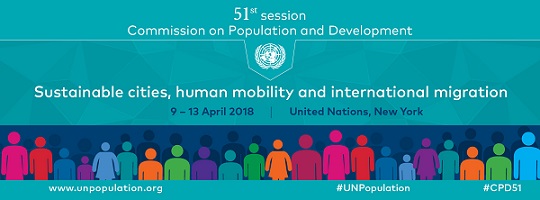
Les catholiques africains sont restés préoccupés par les efforts déployés par les dirigeants occidentaux pour promouvoir l'avortement et la contraception en Afrique au nom du développement économique, d'autant plus que la Commission de la population et du développement de l'ONU a commencé sa réunion annuelle lundi.
Le pape François a maintes fois mis en garde contre la « colonisation idéologique » occidentale des pays en développement où l'aide financière est liée aux contraceptifs, à l'avortement, à la stérilisation et aux idéologies de genre.
« La santé reproductive est l'expression qui est le champ de bataille de chaque réunion de la Commission des Nations Unies que nous assistons », a déclaré la professeure de droit Teresa Collett, qui assistera à la 51e session de la Commission des Nations Unies sur la population et le développement, du 9 au 13 avril.
"Maintenant, la «santé reproductive» comme une phrase ne sonne pas que mauvais," a poursuivi Collett, "Le problème est que c'est diplomate parler pour l'avortement sur demande. Le diplomate parle de contraception" Collett a expliqué la semaine dernière lors d'une conférence à l'Université catholique d'Amérique pour souligner le 50e anniversaire de Humanae vitae.
Lors de la réunion des Nations Unies sur la population et le développement qui s'est tenue à New York l'an dernier, le débat sur la santé en matière de reproduction a été « tellement échauffé que nous n'avions pas de document final », a expliqué Collett. Elle l'accrédite en partie du fait que « les nations africaines étaient fortes ».
L'ONU document préparatoire Recommande implicitement des politiques visant à réduire les taux de natalité en Afrique :
« Dans une grande partie de l'Afrique et des régions d'Asie, le nombre d'enfants et de jeunes augmente rapidement. Des politiques ... visant à assurer l ' accès universel aux services de santé en matière de sexualité et de procréation sont essentielles pour réduire encore la mortalité maternelle et infantile. En général, de telles politiques entraînent également une réduction du taux de natalité.
Le document poursuit ainsi : « Dans les pays où la croissance du nombre d'enfants et de jeunes s'est ralentie récemment, il existe une possibilité historique de croissance économique plus rapide. Avec une baisse soutenue du taux de natalité, la population en âge de travailler (âgée de 25 à 64 ans) peut continuer à croître pendant quelques décennies, augmentant temporairement le ratio des travailleurs à charge. »
Selon Obianuju Ekeocha, catholique nigériane, l'auteure d'un projet de loi sur les femmes africaines, ces débats de l'ONU sont des suppositions occidentales nouveau livre"Cibler l'Afrique."
"Pour les dirigeants mondiaux, le plan d'action est très clair — un effort spécifique de contrôle de la population dans les pays en développement. Mais dans leur obsession unique de réduire le taux de fécondité des femmes en Afrique subsaharienne, la seule considération importante que les experts ont omise est le taux de fécondité souhaité des femmes en question », a écrit Ekeocha.
Ekeocha cite un rapport de l'USAID de 2010 sur le nombre d'enfants désirés par la population dans différentes parties du monde, qui a montré que « le nombre d'enfants désirés est le plus élevé en Afrique de l'Ouest et en Afrique centrale, allant de 4,8 au Ghana à 9,1 au Niger et 9,2 au Tchad, avec une moyenne de 6,1 enfants pour la région ».
« Contrairement à ce que nous voyons dans le monde occidental développé, il y a en fait très haut respect avec le pape Paul VI. Pour ces femmes africaines, en toute humilité ont entendu, compris, et accepté les paroles précieuses du pape prophétique », écrit Ekeocha dans une lettre ouverte de 2012 à Melinda Gates.
Malgré l'opposition morale généralisée à la contraception dans de nombreux pays africains, 77 225 741 unités de pilules contraceptives non spécifiées ont été données aux pays africains en 2014 par les gouvernements et organisations occidentaux, selon les recherches d'Ekeocha.
« Les dons de programmes de population à l'Afrique étaient auparavant la part la plus faible de l'aide sociale étrangère, bien inférieure à l'aide à l'éducation, à la santé, à l'eau, à l'assainissement, etc. Mais depuis 2009, le financement de la lutte contre la population est en avance sur le financement de tout le reste. En 2014, les États-Unis et le Royaume-Uni ont ciblé respectivement 31 % et 43 % de leur aide africaine au contrôle de la population », a écrit Ekeocha.
Mary Eberstadt, chercheuse principale à l'Institut de la foi et de la raison, a confirmé ces conclusions lors de la semaine dernière.
"En Afrique, les protestants et les catholiques se penchent sur le traditionalisme dans l'enseignement moral... C'est dans une Afrique traditionnelle que le christianisme s'est développé de façon explosive dans les années qui ont suivi Humanae vitae », a déclaré Eberstadt.
« Comme l'a dit le Pew Research Center il y a quelques années, les Africains sont parmi les plus opposés moralement à la contraception. Un nombre important de personnes au Kenya, en Ouganda et dans d'autres pays subsahariens, catholiques et autres, sont d'accord pour dire que la contraception est inacceptable. Au Ghana et au Nigéria, elle représente plus de la moitié de la population », a poursuivi Eberstadt.
Dans un article présenté à la même conférence, Collet a écrit que « pendant une grande partie des soixante dernières années, les intellectuels et les philanthropes occidentaux ont activement promu la contraception comme une réponse morale à une variété de problèmes mondiaux réels ou perçus. L'Occident, et plus particulièrement les États-Unis, le Royaume-Uni et les pays scandinaves, se sont engagés activement dans ce qu'on pourrait appeler la « colonisation idéologique » par leur promotion mondiale d'une mentalité contraceptive.
En 1968, la même année où Humanae vitae a été promue, « l'USAID a commencé à acheter des contraceptifs à distribuer dans les pays en développement » et « Robert McNamara, en tant que président de la Banque mondiale, annonce que le contrôle de la population sera un élément de l'examen des prêts », a déclaré Collett.
Dans les années qui ont suivi, les gouvernements ont commencé à mettre en œuvre des politiques obligatoires de contrôle de la population, tout comme le pape Paul VI l'avait prédit dans son encyclique.
En Inde, 10 millions de stérilisations ont été effectuées dans les 20 mois suivant l ' entrée en vigueur d ' une politique démographique nationale en 1976. « On a dit à tous les fonctionnaires qu'il y aurait des compressions d'emplois ou que leur salaire serait éliminé s'ils ne seraient pas stérilisés », a déclaré M. Collett.
Deux ans plus tard, la Chine a mis en œuvre sa « politique de planification familiale », mieux connue sous le nom de « politique d'un seul enfant ».
Cette politique a permis aux fonctionnaires locaux (et les a incités) de surveiller les menstruations des femmes et d'avorter et de stériliser de force les femmes qui n'étaient pas conformes. En 1983, le Ministère chinois de la santé a déclaré 21 millions de naissances, 14,4 millions d'avortements, 20,7 millions de stérilisations (principalement féminines) et 17,8 millions d'insertions d'IUD ont été effectuées », explique M. Collett.
«Malgré ces pratiques horribles permises par les politiques indiennes et chinoises, en 1984, le premier prix de l'ONU pour la population a été décerné à Indira Gandhi, Premier ministre de l'Inde, et à Qian Xinzhong, ministre chargé de la Commission nationale de planification familiale de la République populaire de Chine.»
Lors de la prochaine Conférence mondiale sur la population, le président Ronald Reagan a annoncé la politique de Mexico, qui stipule que les États-Unis ne financeront aucun programme international impliquant l'avortement forcé ou l'avortement en général.
« Sous chaque présidence républicaine, nous avons pris la décision, conformément à la loi fédérale, que l'APF des Nations Unies participe à des programmes qui impliquent l'avortement forcé et, par conséquent, nous ne financerons pas le FNUAP. Chaque président démocrate a rétabli ce financement. C'est le sujet de la réunion annuelle de la Commission de la population de l'ONU... la semaine prochaine », a déclaré Collett au CUA le 5 avril.
En 2017, le président Donald Trump a élargi la politique de Mexico et a affecté des fonds au Fonds des Nations Unies pour la population (FNUAP) à l'Initiative de santé mondiale du Département d'État afin de « contribuer à aider les nations africaines ... à former les accoucheuses ... à assurer des accouchements sains, à assurer la disponibilité de sang propre et d'eau propre pour les femmes qui travaillent », a-t-elle ajouté.
Dans "Target Africa", Ekeocha a écrit que "lorsque le président Trump a rétabli la politique de Mexico en 2017, un certain nombre de dirigeants occidentaux brouillaient pour compenser la $600 millions que l'Amérique allait retenir des organisations pro-avortement. Ils ont soulevé $190 millions dans le cadre de la campagne She Decisions lancée à Bruxelles, où la Suède, la Finlande et le Canada se sont engagés chacun $20 millions pour l'avortement."
"Un donateur anonyme aux États-Unis s'est engagé $50 millions, la Fondation Bill et Melinda Gates a promis $20 millions, et le gestionnaire de fonds spéculatifs et philanthrope Chris Hohn promis $10 millions. En plus de l'engagement du Canada envers Elle décide, quelques jours après la collecte de fonds de Bruxelles, le Premier ministre canadien Justin Trudeau a promis $650 millions vers les programmes de santé génésique des femmes du monde entier, y compris les services d'avortement », a poursuivi Ekeocha.
Les recherches d'Ekeocha indiquent que les pays qui encouragent le plus l'avortement dans le monde sont les mêmes que ceux qui connaissent de faibles taux de fécondité. Le Canada, la Finlande et la Belgique ont tous des taux de fécondité inférieurs au taux de remplacement.
« Sans exception, ces pays sont confrontés à la menace réelle et imminente d'un hiver démographique, mais ils unissent leurs forces pour faire en sorte que les bébés à naître d'Afrique puissent être avortés sans aucun obstacle », a-t-elle écrit.
« Dans leurs tentatives de légaliser l'avortement en Afrique, les défenseurs de l'avortement disent que l'avortement légalisé est un moyen de réduire les taux élevés de mortalité maternelle. »
"On ne sait pas combien de vies pourraient être sauvées si même une fraction des milliards de dollars dépensés par les donateurs occidentaux pour la contraception et l'avortement en Afrique étaient destinés à améliorer la qualité des soins obstétriques."
Source: Agence de presse catholique...