Semaine mondiale des missions 2025
Semaine mondiale des missions 2025
Par le Révérend Père Zéphirin Moubé
- Mission mondiale Semaine en bref
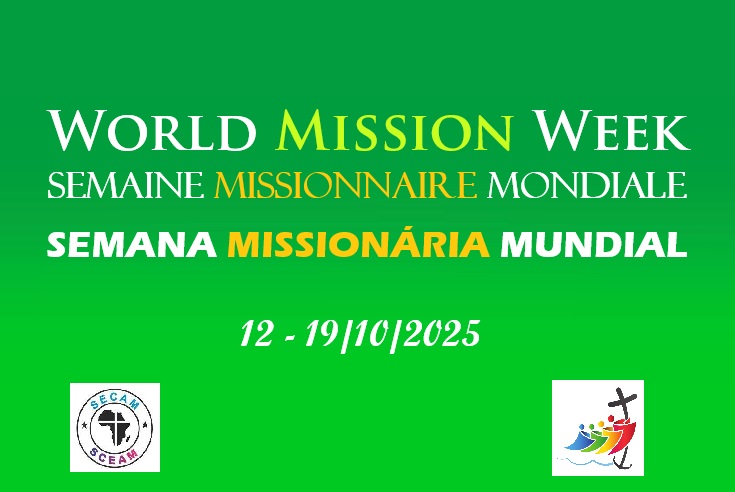
Tout le mois d'octobre est consacré à la mission, jusqu'à la Semaine mondiale des missions, qui se termine le dimanche de la mission. Cette année, la semaine va du dimanche 12 octobre au dimanche 19 octobre 2025.
Le Pape Léon XIV a choisi le thème « Missionnaires de l'espérance parmi les peuples » pour cette semaine. A travers ce thème, il nous invite à prier et à soutenir la mission de l'Eglise universelle et des Eglises locales. En effet, la Semaine Missionnelle Mondiale appelle tous les catholiques à prier et à partager pour soutenir la vie et la mission des églises locales dans le monde entier. À cette fin, une collection est organisée le dimanche de la Mission. Il a été créé par le Pape Pie XI en 1926 et est consacré aux Œuvres pontificales missionnaires.
- Historique de la Semaine Mission
Mission mondiale La semaine existe depuis 1926. Il a été établi par le Pape Pie XI. La bienheureuse Pauline Jaricot (1799-1862) en fut l'inspiration. À l'âge de 17 ans, elle a tourné le dos à sa vie mondaine et s'est alliée avec de jeunes travailleuses dans les usines de son père pour collaborer à la diffusion de l'Évangile par la prière et le travail missionnaire.
Après trois ans de réalisation des besoins matériels dans les pays dits de mission, la jeune Pauline a inventé un système ingénieux de collecte de fonds pour la mission. Une collection pour répandre l'Évangile par l'activité missionnaire. La pratique s'est répandue dans toute l'Europe et a inspiré l'engagement de milliers de personnes.
La chaîne financière et spirituelle de Pauline Jaricot devint officiellement l'Association pour la Propagation de la Foi le 3 mai 1822. La croissance rapide de cette organisation dans toute l'Europe a finalement attiré l'attention du Saint-Siège, qui a demandé à l'accueillir. La Société pour la Propagation de la Foi, avec deux autres (la Missionary Childhood Association fondée par Charles de Forbin en 1843 à Paris et la Société de Saint-Pierre l'Apôtre fondée en 1889 par les sœurs Bigard à Caen), qui ont été établies plus tard, est devenue pontificale le 3 mai 1922. L'Union pontificale missionnaire, fondée en Italie par le père Paolo Manna en 1916, a été déclarée pontificale en 1956. Ces diverses œuvres sont regroupées sous le nom d'œuvres pontificales missionnaires, dont l'objectif commun et principal est de "promouvoir l'esprit missionnaire universel parmi le peuple de Dieu " (Redemtoris Missio n. 84).
Pour y parvenir, les œuvres susmentionnées, en tant qu'organes du Saint-Siège, fournissent des informations sur la vie et les besoins de la mission universelle, encouragent les Eglises à prier les unes pour les autres et œuvrent à promouvoir l'échange, la communion et le partage mutuels. Ils ont pour tâche première de promouvoir la coopération pour harmoniser les forces missionnaires et assurer une répartition équitable des ressources pour la mission, en accordant une attention particulière aux pays les plus nécessiteux.
Mission mondiale La semaine est célébrée avec ferveur dans les diocèses et les paroisses du monde entier, et tous les fidèles du Christ sont invités à évaluer leur engagement missionnaire en cette occasion. Que pouvons-nous dire de l'Église, de la Famille de Dieu, en Afrique?
- Missionnaires d'espoir parmi les peuples. La mission de SCEAM
Le Pape Léon XIV a choisi de placer cette 99ème Semaine Missionnelle Mondiale sous le thème « Missionnaires d'espérance parmi les peuples ». Cette devise proposée par le Pape en cette année jubilaire « rappelle chaque chrétien et l'Eglise, la communauté des baptisés, de leur vocation fondamentale d'être, sur les traces du Christ, des messagers et des bâtisseurs d'espérance » (Leo XIV). Que chaque personne baptisée, disciple et missionnaire du Christ, fasse briller l'espérance autour d'eux et en tout lieu! Tel est le souhait exprimé par le Pape Léon XIV dans son message.
Il faut rappeler que 1969 a été une année spéciale pour l'Eglise en Afrique et ses îles en termes de mission intracontinentale. En effet, quelques années après la clôture du Concile Vatican II (1962-1965), le continent africain a eu le privilège d'accueillir pour la première fois une visite du Souverain Pontife, le Pape Paul VI, à Kampala, en Ouganda. Dans son discours aux peuples d'Afrique, il a prononcé ces paroles prophétiques et engageantes: ‘Vous les Africains êtes devenus vos propres missionnaires. Vous pouvez et devez avoir un christianisme africain.
Cette visite a marqué le lancement officiel du Symposium des Conférences épiscopales d'Afrique et de Madagascar (SECAM), qui est le moteur de l'évangélisation en Afrique et dans ses îles. Que nos prières durant cette Semaine de la Mission renforcent le dynamisme de cette structure de communion et de consultation, pour une synergie qui remplit sa mission et, à son tour, la mission même de l'Eglise, la famille de Dieu, qui est en Afrique !
- Faits saillants du Message pour cette 99ème Semaine Missionnaire Mondiale signée par le Pape François
a) Sur les traces du Christ, notre espérance
- Alors que nous célébrons le premier Jubilé ordinaire du troisième millénaire, après celui de l'an 2000, nous gardons les yeux fixés sur le Christ, qui est au centre de l'histoire, « le même hier, aujourd'hui et à jamais » (Hébreux 13:8). Dans la synagogue de Nazareth, il a déclaré l'accomplissement de l'Écriture dans «aujourd'hui» de sa présence historique. Il s'est ainsi révélé comme Celui envoyé par le Père, avec l'onction de l'Esprit Saint, pour apporter la Bonne Nouvelle du Royaume de Dieu et inaugurer «l'année du Seigneur en faveur de toute l'humanité» (cf. Lc 4, 16-21).
- Dans ce «aujourd'hui» mystique qui dure jusqu'à la fin du monde, le Christ est l'accomplissement du salut pour tous, surtout pour ceux dont la seule espérance est Dieu. Dans sa vie terrestre, il ‘a voulu faire le bien et guérir tout ce qui vient du mal et du mal (cf. Actes 10:38), restaurer l'espérance en Dieu aux nécessiteux et au peuple.
- De plus, il a connu toutes les fragilités humaines, sauf le péché, même en passant par des moments critiques qui auraient pu conduire au désespoir, comme dans son agonie à Gethsémani et sur la croix. Il est ainsi devenu le divin Missionnaire de l'espérance, le modèle suprême pour ceux qui, au cours des siècles, poursuivent la mission reçue de Dieu, même dans des épreuves extrêmes.
- Par ses disciples, envoyés à tous les peuples et mystiquement accompagnés par lui, le Seigneur Jésus poursuit son ministère d'espérance pour l'humanité. Il se penche encore sur toute personne pauvre, affligée, désespérée et ridiculisée, pour verser « l'huile de consolation et le vin de l'espérance sur leurs plaies » (Préface Jésus le Bon Samaritain).
- Obéissant à son Seigneur et Maître et avec le même esprit de service, l'Église, la communauté des disciples missionnaires du Christ, poursuit cette mission, offrant sa vie pour tous parmi les peuples. Alors qu'il doit faire face, d'une part, aux persécutions, aux tribulations et aux difficultés et, d'autre part, à ses propres imperfections et échecs en raison des faiblesses de chacun de ses membres, il est constamment poussé par l'amour du Christ à avancer unis avec Lui sur ce chemin missionnaire et à prendre, comme Lui et avec Lui, le cri de l'humanité, et même le gémissement de toute créature attendant la rédemption finale.
- Sentons-nous donc inspirés de partir sur les traces du Seigneur Jésus pour devenir, avec Lui et en Lui, des signes et des messagers d'espérance pour tous, en tous lieux et en toutes circonstances que Dieu nous donne pour vivre. Que tous les disciples missionnaires du Christ baptisés fassent briller son espérance dans tous les coins de la terre!
b) Chrétiens, porteurs et bâtisseurs d'espérance parmi les peuples
- En suivant le Christ le Seigneur, les chrétiens sont appelés à transmettre la Bonne Nouvelle en partageant les conditions de vie concrètes de ceux qu'ils rencontrent et en devenant ainsi porteurs et bâtisseurs d'espérance. En effet, «les joies et les espérances, les chagrins et les angoisses des gens de cet âge, en particulier ceux qui sont pauvres ou en aucune façon affligés, sont aussi les joies et les espérances, les chagrins et les angoisses des disciples du Christ. Rien de vraiment humain ne trouve un écho dans leurs cœurs.
- L'horizon de cette espérance va au-delà des réalités de ce monde et s'ouvre aux réalités divines que nous prévoyons déjà dans le présent. En effet, comme nous l'a rappelé saint Paul VI, le salut dans le Christ que l'Église offre à tous comme don de la miséricorde de Dieu n'est pas seulement « immanente, proportionnée aux besoins matériels ou même spirituels [...] en s'identifiant totalement avec des désirs, des espoirs, des affaires et des luttes, mais un salut qui déborde toutes ces limites à accomplir en communion avec l'Absolu unique, celui de Dieu : un salut transcendant, eschatologique, qui a certainement son commencement dans cette vie, mais qui s'accomplit dans l'éternité » (Exhortation apostolique Evangelii nuntiandi, n. 27).
c) Renouveler la mission d'espoir
- Face à l'urgence de la mission de l'espérance aujourd'hui, les disciples du Christ sont appelés d'abord et avant tout à s'entraîner à devenir des «artisans» de l'espérance et des restaurateurs d'une humanité souvent distrait et malheureux.
- Les missionnaires de l'espérance sont des hommes et des femmes de prière, car « la personne qui espère est une personne qui prie », a souligné le vénérable cardinal Van Thuan. Il a gardé l'espérance vivante pendant sa longue tribulation en prison grâce à la force qu'il a reçue de sa prière persévérante et de l'Eucharistie (cf. F.X. Nguyen Van Thuan, The Way of Hope, Rome 2001, n. 963).
- N'oublions pas que la prière est la première action missionnaire et en même temps « la première force d'espérance » (catéchèse, 20 mai 2020).
- Enfin, l'évangélisation est toujours un processus communal, comme le caractère de l'espérance chrétienne (cf. Benoît XVI, Encyclique Lettre Spe Salvi, n. 14). Ce processus ne se termine pas par la première proclamation ou par le baptême, mais se poursuit par la construction de communautés chrétiennes par l'accompagnement de chaque personne baptisée sur le chemin de l'Évangile.
- Je souligne une fois de plus cette synodalité missionnaire de l'Église, ainsi que le service des Œuvres pontificales missionnaires dans la promotion de la responsabilité missionnaire des Eglises baptisées et soutenant de nouvelles Eglises particulières. Et je vous exhorte tous, enfants, jeunes, adultes, personnes âgées, à participer activement à la mission commune d'évangélisation par le témoignage de votre vie et par la prière, par vos sacrifices et votre générosité. Merci beaucoup pour tout cela!
- Chers sœurs et frères, tournons-nous vers Marie, Mère de Jésus-Christ, notre espérance. Confions-lui ce souhait pour le Jubilé et pour les années à venir: «Que la lumière de l'espérance chrétienne atteigne chacun comme un message de l'amour de Dieu adressé à tous! Que l'Église soit un témoin fidèle de cette proclamation dans toutes les parties du monde ! (Bull Spes non consolidé, n. 6).
Accra (Ghana), 15 octobre 2025
Père Zéphirin Moubé
Premier Secrétaire général adjoint du SECAM
Chef de la Commission d ' évangélisation